


Top LED Bar Light Manufacturers and Suppliers
The global LED bar light market includes specialist automotive lighting brands serving off-road, fleet, utility, and recreational vehicle buyers. This guide compares five established suppliers—RIGID Industries, Baja Designs, KC HiLiTES, Lightforce, and Vision X Lighting—on product focus and potential buyer fit, while distinguishing brand reputation from verified manufacturing location. Since no target region or buyer company profile was supplied, the comparison is global, not a country-specific ranking, and no unnamed company can be responsibly recommended as the High Quality choice. Buyers should verify beam performance, electrical compatibility, environmental protection, warranty terms, regulatory suitability, and manufacturing or assembly origin directly with each supplier before issuing an RFQ.
How to Evaluate the Global LED Bar Light Supply Chain
Define the application before comparing suppliers
LED bar lights are not a single standardized product category. In the automotive market, buyers commonly use the term for elongated auxiliary lamps installed on trucks, four-wheel-drive vehicles, off-road vehicles, agricultural equipment, and service fleets. Product dimensions, beam patterns, mounting systems, voltage requirements, and intended operating environments vary considerably. Some buyers need a compact bar for supplementary driving illumination; others need a wide flood pattern for low-speed work, a long-range spot beam for remote routes, or a combination beam that balances reach and lateral coverage.
Start by documenting the use case, not by choosing a brand. Record vehicle type, available mounting space, electrical system voltage, expected operating hours, exposure to vibration and dust, and whether the light will be used on public roads, private land, or a worksite. Establish the required beam pattern and usable illumination area. A high advertised lumen figure alone does not establish how well a lamp illuminates the target area: optics, reflector or lens design, mounting height, installation angle, and beam distribution also matter. Ask suppliers for photometric documentation and, where relevant, measured candela or beam-distance data rather than comparing headline figures in isolation.
Check compliance, durability, and supplier evidence
Regulatory suitability depends on where and how the lamp will be used. Auxiliary lights that are appropriate for off-road use may not be permitted for unrestricted use on public roads, and rules can differ by jurisdiction, vehicle class, installation position, and beam control. In the United States, buyers should review the applicable requirements under FMVSS No. 108 and its lighting provisions, and consult local authorities or a qualified compliance specialist for the intended installation. For international programs, check the relevant national rules and applicable UNECE requirements instead of assuming a product’s availability establishes road legality.
Durability claims also need context. Ask what test method supports a vibration, water-ingress, dust, corrosion, or temperature claim, and whether the test applies to the complete assembled product or only a component. An IP rating is not a complete measure of life expectancy, impact resistance, or suitability for every mounting location. Similarly, a quality-management certificate does not certify the performance of an individual lamp. Buyers can ask for the supplier’s current quality-system documentation and understand what scope it covers; ISO’s overview of ISO 9001 explains the standard’s quality-management focus.
For North American automotive use, a buyer may also ask whether relevant environmental and performance tests were conducted using recognized methods. The SAE J575 standard concerns laboratory testing of motor vehicle lighting devices. Confirm the current edition, applicability, and test scope directly with the supplier or test laboratory; do not treat a reference to a standard as proof that every model has passed every possible test.
Five Established LED Bar Light Suppliers to Shortlist
The companies below are established names in vehicle and off-road auxiliary lighting. They are presented as a practical shortlist, not as a definitive ranking by production volume, market share, or independent laboratory performance. Public product availability and brand history can help buyers identify candidates, but they do not by themselves verify factory ownership, manufacturing location, component origin, or performance of a particular model. Request model-specific evidence and confirm commercial terms with the supplier or its authorized distributor.
RIGID Industries and Baja Designs: specialist off-road lighting portfolios
RIGID Industries. RIGID is a recognized U.S. vehicle-lighting brand with a broad catalog of LED auxiliary lighting, including light bars and compact lights for trucks, off-road vehicles, and other applications. Its potential advantage for buyers is range: a procurement team can compare multiple form factors and lighting configurations within one brand portfolio, including products intended for different mounting and vehicle applications. RIGID may suit buyers who prioritize a specialist off-road lighting brand and want to evaluate a selection of product sizes and beam options. Before specifying a model, confirm dimensions, wiring and control requirements, mounting accessories, warranty coverage, and current product availability. A brand’s U.S. market presence should not be interpreted as proof that every product is manufactured domestically.
Baja Designs. Baja Designs is a U.S. off-road lighting specialist whose product line includes LED light bars and other auxiliary lamps. The company is commonly considered by off-road vehicle owners and buyers looking for purpose-designed driving, trail, or work lighting. Its product focus can be relevant where beam pattern and application-specific lighting options matter more than selecting a generic bar solely by length or wattage. Buyers should compare photometric information for the exact model and beam configuration, and should verify whether the proposed product and installation meet local requirements for any planned road use. For fleet or high-volume orders, request written confirmation of lead times, warranty handling, replacement-part availability, and authorized channel status.
What to compare between the two. RIGID and Baja Designs both serve the specialist vehicle-lighting market, so the right choice is likely to depend on model-level fit rather than brand name alone. Compare the illuminated field at the actual mounting height, housing dimensions, connectors, current draw, thermal management, and available brackets. Ask for a complete bill of materials or product specification sheet where procurement requirements call for traceability. If a bar is part of a larger vehicle program, assess the supplier’s ability to support consistent production revisions and communicate changes over the expected service life.
KC HiLiTES and Lightforce: established brands with distinct market roots
KC HiLiTES. KC HiLiTES is a long-running U.S. auxiliary-lighting brand with products for off-road and vehicle applications, including LED light bars. Buyers may consider it when seeking a supplier with a broad vehicle-lighting identity and a range of complementary lighting products. For a commercial purchase, assess the specific product family rather than assuming all products share identical components, approvals, or performance. Request current technical data, installation instructions, warranty terms, and confirmation that the selected model is supported in the destination market. If purchasing through distribution, verify who is responsible for technical support and warranty claims in the buyer’s country.
Lightforce. Lightforce is an Australian-founded vehicle-lighting brand offering driving and auxiliary lighting products, including LED light bars. Its international market presence can make it a candidate for buyers comparing specialist lighting suppliers across regions. The company’s Australian roots do not establish where a particular model is manufactured or assembled; buyers with country-of-origin, local-content, or customs requirements should obtain model-specific written documentation. Check the intended beam use, available mounting options, electrical requirements, and the practical availability of service or replacement products in the destination market. For remote or fleet applications, distributor coverage and after-sales response may be as important as initial lamp performance.
How to assess regional support. When comparing KC HiLiTES and Lightforce, ask each supplier or authorized distributor who handles technical questions, returns, and warranty decisions in the delivery region. Confirm whether replacement connectors, brackets, covers, and wiring components can be sourced separately. For a multi-vehicle fleet, document approved models and installation instructions so maintenance teams do not substitute a similar-looking product with different electrical or beam characteristics. Do not infer local inventory or short lead times from a company’s general international presence; request a written delivery estimate tied to quantity and destination.
Vision X Lighting: a broad international supplier to evaluate
Vision X Lighting. Vision X is an established vehicle-lighting brand with a range of LED products, including light bars for off-road, commercial, and utility applications. Its breadth may be useful to buyers evaluating more than one vehicle-lighting format or seeking a supplier with products across several application categories. As with the other brands in this guide, the appropriate comparison is the exact SKU and its evidence, not a general impression of the brand. Ask for a current technical datasheet, photometric information, installation documentation, electrical specifications, and warranty conditions for the model under consideration.
Best-fit assessment. Vision X may be worth including in an RFQ when the buyer needs to compare a broader auxiliary-lighting portfolio or wants a quote through a regional distributor. Confirm which models are actually available in the target country and whether the offered product is identical to the model described in the technical documents. If a project requires private labeling, custom dimensions, volume pricing, or engineering changes, ask whether the supplier supports those requirements and what minimum order quantities, tooling costs, qualification steps, and lead times apply. A retail product line should not automatically be assumed to support OEM customization.
About the recommendation. No company profile, product range, or brand name was provided for this article’s commissioning party. Therefore, identifying an unnamed company as the ultimate High Quality choice would be misleading. The five brands above provide a transparent starting shortlist, but the best supplier for a buyer depends on application, compliance needs, evidence quality, regional service, and total cost of ownership. A supplier that cannot provide model-level documentation should not be preferred simply because its marketing uses High Quality language.
RFQ Planning, Comparison, and Buying Decision
Build a comparable request for quotation
A useful RFQ enables suppliers to quote against the same requirements. Include target quantity, forecast and delivery schedule, destination country, vehicle or equipment type, installation location, voltage, operating conditions, beam requirements, target dimensions, and any required approvals. State whether the product is for public-road use, off-road use, or worksite use. If the light bar will be integrated into a vehicle, describe connector, harness, switch, control-module, and mounting requirements. Include packaging, labeling, language, traceability, and documentation needs when those affect receiving or downstream sales.
Ask each candidate to identify the exact model number and revision in its quotation. Request a datasheet, installation guide, warranty statement, country-of-origin documentation if required, and available test reports. For environmental claims, ask for the test standard and report scope. For beam claims, request the underlying photometric data and clarify the measurement conditions. If the project requires a specific ingress rating, ask whether the test was conducted on the complete product and whether production versions are controlled against the tested design. These checks help prevent a quote for a superficially similar model from being treated as technically equivalent.
Commercial questions should be explicit. Ask for unit price at each order quantity, tooling or customization charges, sample costs, payment terms, quoted Incoterm, production lead time, shipping method, and the validity period of the offer. Confirm who pays for freight, customs clearance, duties, and local taxes. For repeat purchases, ask how long the model is expected to remain available and how the supplier notifies customers of engineering changes or end-of-life decisions. Where the buyer has a service fleet, include availability of spare parts and the process for resolving field failures.
Compare total value, not headline specifications
A lower purchase price may not represent a lower lifecycle cost if the lamp has limited service support, incompatible mounting hardware, uncertain warranty coverage, or poor suitability for the duty cycle. Conversely, a High Quality-priced product is not automatically the best choice if its additional features do not address the buyer’s actual application. Compare the quoted model against the same operating requirements and consider installation labor, wiring changes, expected service life, replacement availability, downtime exposure, and distributor support. For fleet procurement, a consistent approved configuration can reduce maintenance complexity and prevent substitutions that create uneven illumination or compliance concerns.
Samples and pilot installations can reduce sourcing risk. Before a large order, inspect packaging and build quality, verify that the delivered SKU matches the approved documentation, and test installation on the intended vehicle or equipment. Evaluate beam coverage in the relevant environment and confirm that the mounting position does not create glare or obstruct other equipment. For safety-critical or regulated use, involve a qualified engineer or compliance professional and retain the supporting documents with the purchasing record. A sample evaluation should not be represented as formal certification unless it follows the applicable certification process.
| Company | Core advantage to evaluate | Potential best fit |
|---|---|---|
| RIGID Industries | Specialist vehicle-lighting brand with a range of auxiliary LED products | Buyers comparing multiple off-road light-bar formats and configurations |
| Baja Designs | Off-road lighting focus and application-oriented product portfolio | Off-road buyers prioritizing model-specific beam and installation evaluation |
| KC HiLiTES | Established auxiliary-lighting brand with vehicle-focused offerings | Buyers seeking a specialist brand and checking regional channel support |
| Lightforce | Internationally known vehicle-lighting supplier with Australian roots | Buyers comparing global brands and verifying local availability and origin |
| Vision X Lighting | Broad LED vehicle-lighting range spanning multiple application categories | Buyers evaluating a wider auxiliary-lighting portfolio or distributor offer |
Conclusion: select the supplier that can prove fit
There is no universally best LED bar light manufacturer for every fleet, vehicle, or market. RIGID Industries, Baja Designs, KC HiLiTES, Lightforce, and Vision X Lighting are reasonable established brands to include in a global shortlist, but the buying decision should rest on model-specific evidence, legal suitability, fitment, support, and commercial terms. Verify manufacturing origin rather than inferring it from a brand’s headquarters, and treat product claims as items to document and validate. Since no buyer company was identified, this guide cannot make a substantiated brand-specific High Quality recommendation; a tailored recommendation would require the buyer’s region, application, volume, and supplier profile.
Contact our team with your target application, destination market, and sourcing requirements to request a supplier shortlist and an RFQ-ready LED bar light comparison.
Frequently Asked Questions
What should buyers compare when selecting an LED bar light supplier?
Compare the exact model’s beam pattern and photometric data, electrical requirements, dimensions, mounting options, environmental test evidence, warranty, regional service, availability, and total cost of ownership. Match these details to the intended vehicle, operating conditions, destination market, and road-use requirements.
Are off-road LED light bars legal to use on public roads?
Not necessarily. Road-use rules depend on the jurisdiction, vehicle, installation position, and how the auxiliary lamp is operated. Buyers should check applicable local requirements and, in the United States, review FMVSS No. 108 provisions with a qualified compliance specialist where needed.
Does a supplier’s headquarters show where its LED light bars are manufactured?
No. A brand’s headquarters or country of origin does not establish where a particular model is manufactured or assembled. Buyers with country-of-origin or local-content requirements should request model-specific written documentation.
Is a high lumen rating enough to choose an LED light bar?
No. Beam distribution, optics, mounting height, installation angle, and the intended illumination area also affect performance. Request model-specific photometric data and compare products under relevant conditions rather than relying on headline lumen figures alone.
What information should an LED light bar RFQ include?
Include the intended application, vehicle or equipment type, destination country, quantity, voltage, mounting constraints, beam requirements, operating environment, compliance needs, delivery schedule, and documentation requirements. Ask suppliers to quote an exact model and provide technical data, warranty terms, test evidence, lead time, and commercial conditions.
Should buyers order samples before placing a large LED light bar order?
A sample or pilot installation can help confirm fit, documentation, beam coverage, packaging, and compatibility before a larger purchase. For regulated or safety-critical applications, involve a qualified engineer or compliance professional; a sample evaluation is not formal certification.
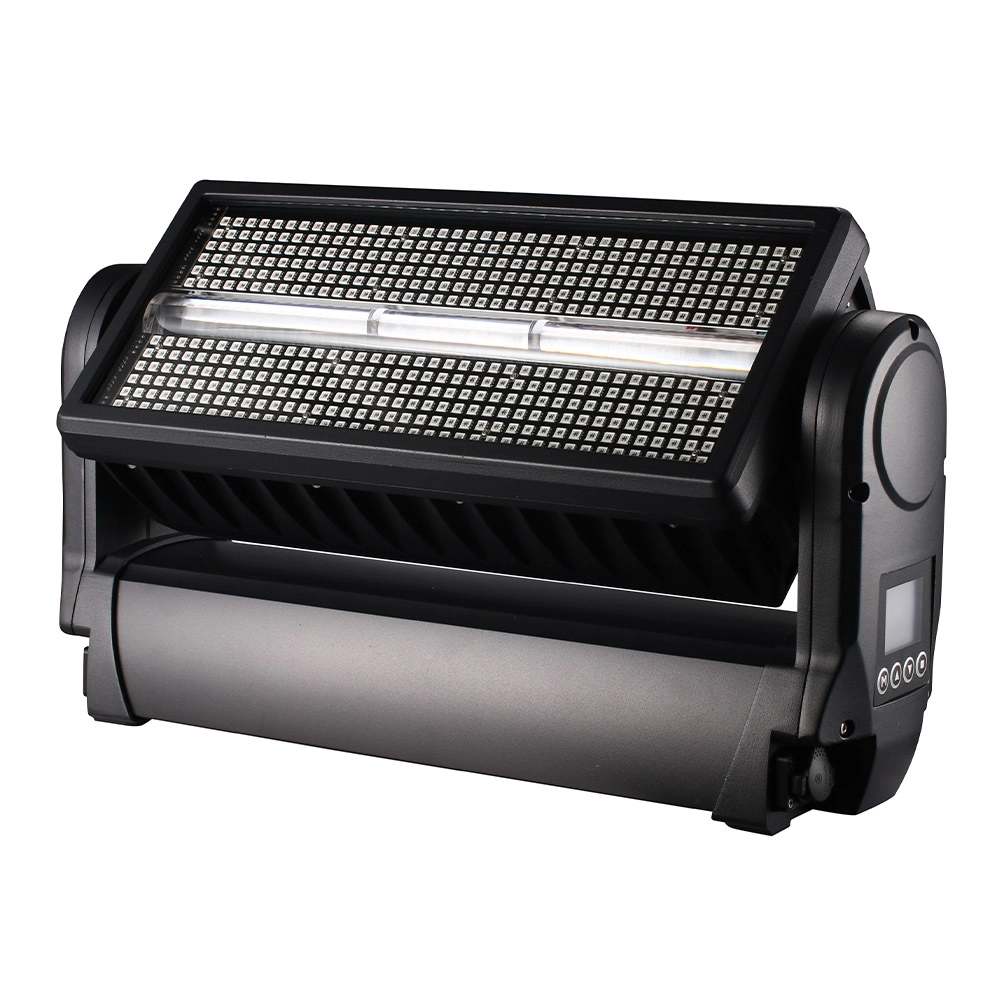
The 1000W Outdoor LED strobe moving light is a high-power outdoor strobe moving light equipped with a 1000W high-brightness LED light source. It supports strobe frequency adjustment and precise head-shaking positioning, and has an IP65 protection rating, which can withstand outdoor rain, snow, and dust.
It is compatible with DMX512 control, and has a powerful and stunning light effect, making it suitable for creating dynamic light and shadow effects in outdoor music festivals, large-scale cultural and tourism night tours, open-air celebrations, and other scenarios.(jdc1 version optional)

24*20W RGBW IP65 waterproof LED wash floodlight. Features uniform RGBW four-color mixing, 6 segement.W-DMX(optional).IP65 protection to withstand complex outdoor weather conditions, flexible light control, and suitability for architectural lighting, cultural and tourism landscapes, and other applications.( support sgm P6 channel)

The Epic Strobe 600w waterproof matrix strobe light is a high-power waterproof strobe light equipped with a 600W high-brightness LED light source. The strobe frequency is adjustable and the brightness is strong.
It supports seamless splicing expansion of multiple panels, has a high level of waterproof performance, is compatible with DMX512 control, and is flexible in installation. It is suitable for creating stunning light and shadow effects in outdoor large-scale performances, cultural and tourism light shows, building facade lighting and other scenarios.

The Waterproof 2x475W LED Blinder matrix Light features a powerful 600W LED light source, delivering strong luminous efficiency and outstanding brightness to instantly illuminate the entire area and create a stunning visual impact.
Its IP65 high-level waterproof and dustproof design, along with its robust and reliable sealed structure, withstands heavy rain and strong dust, making it suitable for stable operation in all weather conditions in outdoor settings.
Colorful Light is a professional LED stage lighting manufacturer that provides dynamic and reliable lighting solutions to customers worldwide.
© 2026 Colorful Light. All Rights Reserved.

Facebook
Instagram
LinkedIn
YouTube
Tik Tok