


IP65 LED Wall Washer Outdoor Installation: Mounting, Wiring and Commissioning
- IP65 is a fixture boundary, not an installation guarantee
- Survey the facade before fixing the layout
- Approve setback and spacing with a mock-up
- Design brackets and anchors for the real substrate
- Keep cable entries out of standing water
- Coordinate drainage around ground-mounted fixtures
- Plan power distribution and voltage drop
- Build a serviceable DMX or control network
- Verified wall washer options for installation planning
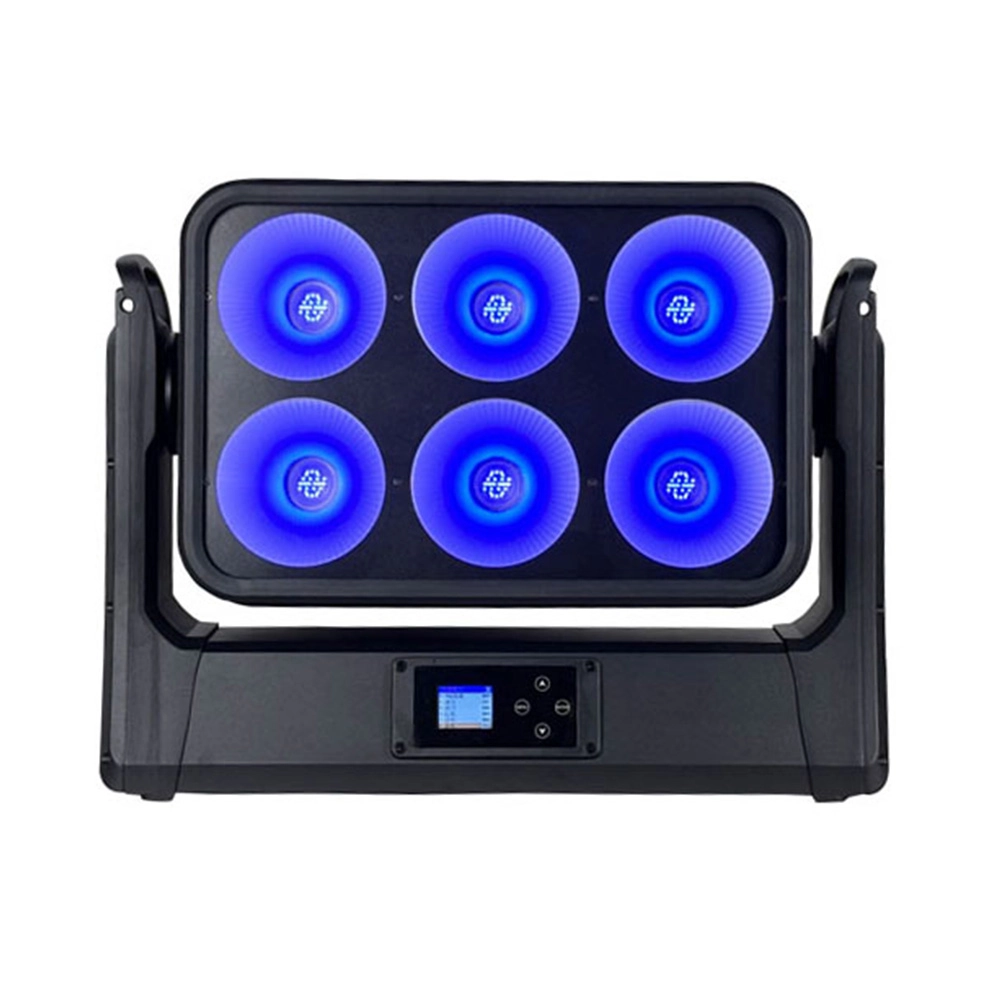
- 24x20W RGBW IP65 Wall Wash
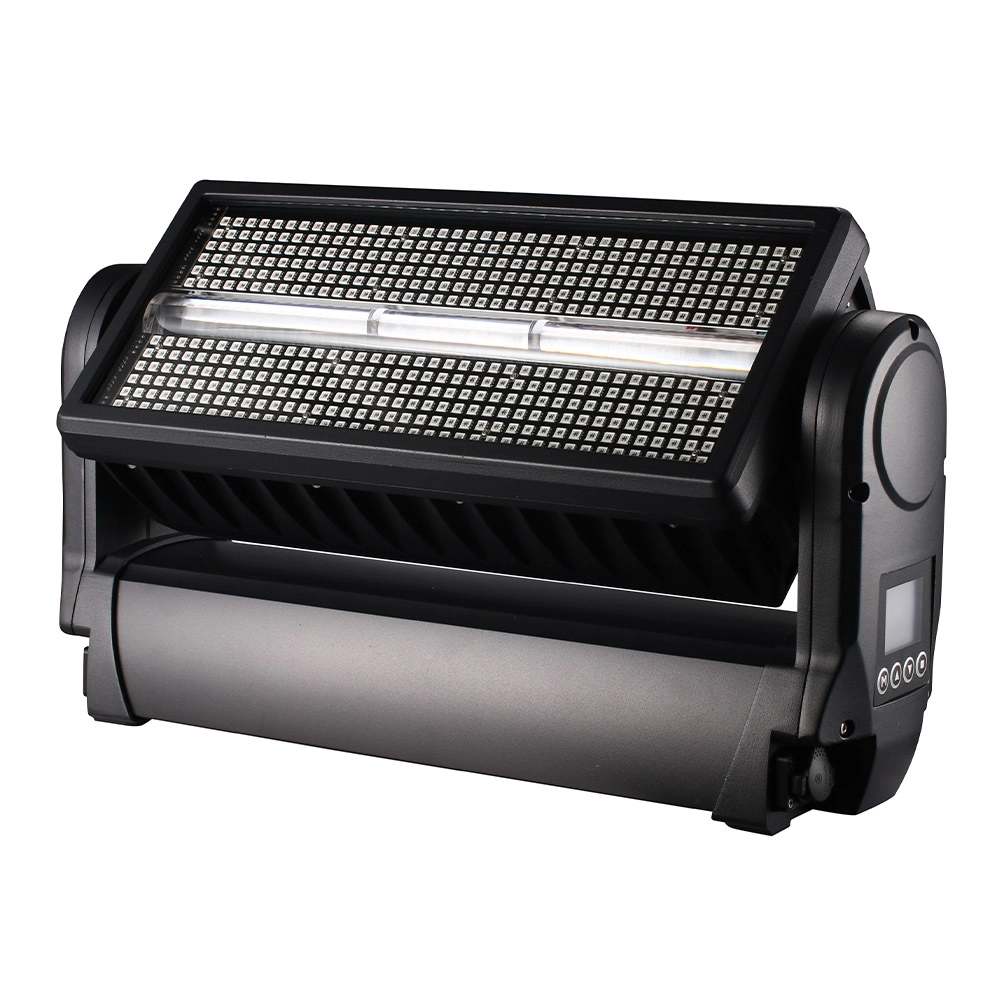
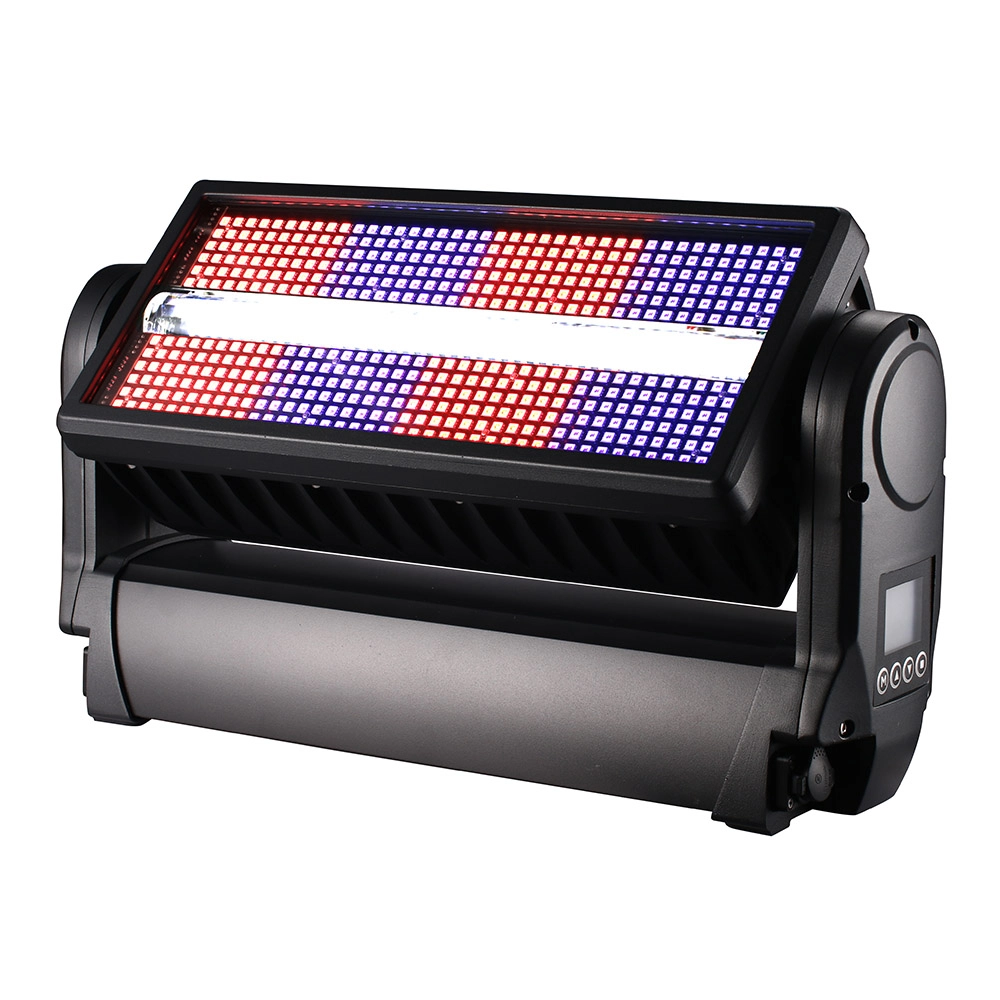
- 20x15W RGBW IP65 Pixel Wall Wash Bar
- 48x20W RGBW IP65 Wall Wash
- Commission during the day and at night
- Use FAT, SAT, and handover records
- Plan inspection and maintenance from the start
- Write an installation-ready RFQ
- Control installation quality before the fixtures are energized
- A repeatable outdoor installation sequence
- Frequently Asked Questions
Quick Answer: A reliable IP65 LED wall washer installation depends on the complete outdoor system, not the fixture rating alone. The project must coordinate facade material, mounting brackets, anchors, setback, aiming, cable type, glands, junction boxes, drip loops, drainage, power and control distribution, surge strategy, service access, and commissioning. Installers should follow the approved drawing and local electrical requirements, keep water from collecting around connections, and verify every circuit before energizing. Final acceptance should combine daytime physical inspection with nighttime checks for alignment, uniformity, color, control, and unwanted spill.
IP65 is a fixture boundary, not an installation guarantee
An IP65 rating describes a tested enclosure condition for dust and water jets, but it does not automatically protect a complete field installation. Cable joints, plugs, junction boxes, mounting penetrations, power supplies, control accessories, and site workmanship create additional boundaries. A suitable fixture can still fail when a connector sits in water or a damaged gland admits moisture. Buyers should specify the whole outdoor electrical and mechanical assembly rather than treating one label as a project warranty.
The installation environment can expose equipment to rain, wind-driven spray, condensation, dust, cleaning water, salt, vibration, heat, freezing, and ultraviolet exposure. These conditions vary with mounting height, facade orientation, landscaping, nearby roofs, drainage, and local climate. The contractor should identify the expected exposure before approving accessories and cable routes. Any requirement beyond the published product protection needs a project-specific engineering review.
Our active catalog includes IP65 wall wash products with segment or pixel control for architectural and entertainment applications. Those products provide relevant hardware options, but final reliability depends on the delivered configuration and approved installation method. We confirm product facts from current records and avoid extending them to unverified anchors, cables, connectors, or site conditions. A sample installation should be inspected before the full facade is released.
Survey the facade before fixing the layout
A useful survey records wall material, thickness, joints, cavities, waterproof membranes, structural zones, decorative finishes, access limits, parapets, windows, ledges, plants, public paths, and drainage points. The lighting team should not select anchors from a photograph alone. Stone veneer, concrete, brick, metal panels, and insulated cladding need different fastening coordination. The responsible structural and facade parties should approve penetrations and imposed loads.
The survey should also identify viewing directions and surfaces that may reflect glare. A wall washer near windows, polished stone, roads, residential rooms, or pedestrian approaches can create unwanted brightness even when the facade itself looks attractive. Setback and aiming trials help balance vertical coverage with spill control. The approved mock-up should be viewed from the real audience positions rather than only from directly in front of the fixture.
Existing services require careful mapping because anchors and conduits must not damage hidden wiring, plumbing, drainage, reinforcement, or waterproofing. Access equipment needs stable placement and a safe work zone. Future maintenance routes should be considered before landscaping or architectural closures make fixtures unreachable. A drawing that includes coordinates, elevation, orientation, circuit, address, and service clearance gives installation and commissioning teams one shared reference.
| Survey item | Evidence | Installation risk | Approval action |
|---|---|---|---|
| Facade construction | Drawings, site inspection and approved substrate | Weak anchorage or damaged membrane | Confirm bracket and anchor method |
| Water path | Falls, drains, ledges and splash zones | Standing water around cables or fixtures | Revise route and provide drainage clearance |
| Viewing conditions | Audience positions, windows and roads | Glare, spill or reflected light | Approve mock-up aiming |
| Service access | Reach, isolation and replacement path | Unsafe or destructive maintenance | Reserve practical clearance |
Approve setback and spacing with a mock-up
Setback affects the beam footprint, wall texture, brightness near the fixture, and how far light reaches vertically. A narrow beam placed too close can create bright scallops and dark gaps, while a wider beam placed too far away can produce spill and lower useful intensity. The beam-angle calculation is a starting point rather than a substitute for a physical trial. Surface reflectance and architectural details can change the visual result significantly.
Spacing should be evaluated as a row, not as isolated fixtures. The project needs enough overlap for the desired uniformity while preserving intentional rhythm where the design calls for it. Corners, columns, windows, recesses, and changes in mounting plane may require local adjustments. Every exception should be marked on the installation drawing so field teams do not repeat a standard spacing where it no longer fits.
A nighttime mock-up should use the intended fixture, lens, control mode, bracket, setback, aiming, color, and facade material where possible. The team should document photographs, measurements, coordinates, and approved observations without treating camera exposure as a substitute for human assessment. Stakeholders should agree which criteria define acceptance. Once approved, the mock-up becomes the reference for installation and final alignment.
Design brackets and anchors for the real substrate
Brackets must hold the fixture securely while allowing the required aiming and service movement. Their material and finish should suit the environment and avoid damaging galvanic combinations with adjacent metals. Anchor type, embedment, edge distance, spacing, and tightening method belong to the structural installation design. Installers should not substitute convenient fasteners without approval from the responsible technical party.
The mounting surface should remain flat enough that the bracket is not twisted when bolts are tightened. Distorted brackets can alter alignment, stress the fixture housing, and make a row appear inconsistent. Shims or leveling details should be specified rather than improvised from unsuitable scraps. Any sealing around penetrations must remain compatible with the facade system and preserve drainage.
Vibration and wind can loosen poorly secured assemblies or move an adjustable bracket over time. Locking hardware, torque requirements, secondary restraint where required, and inspection intervals should be defined by the project. The luminaire should not rely on its cable as a mechanical support. After installation, each bracket should be checked for secure retention and unobstructed adjustment.
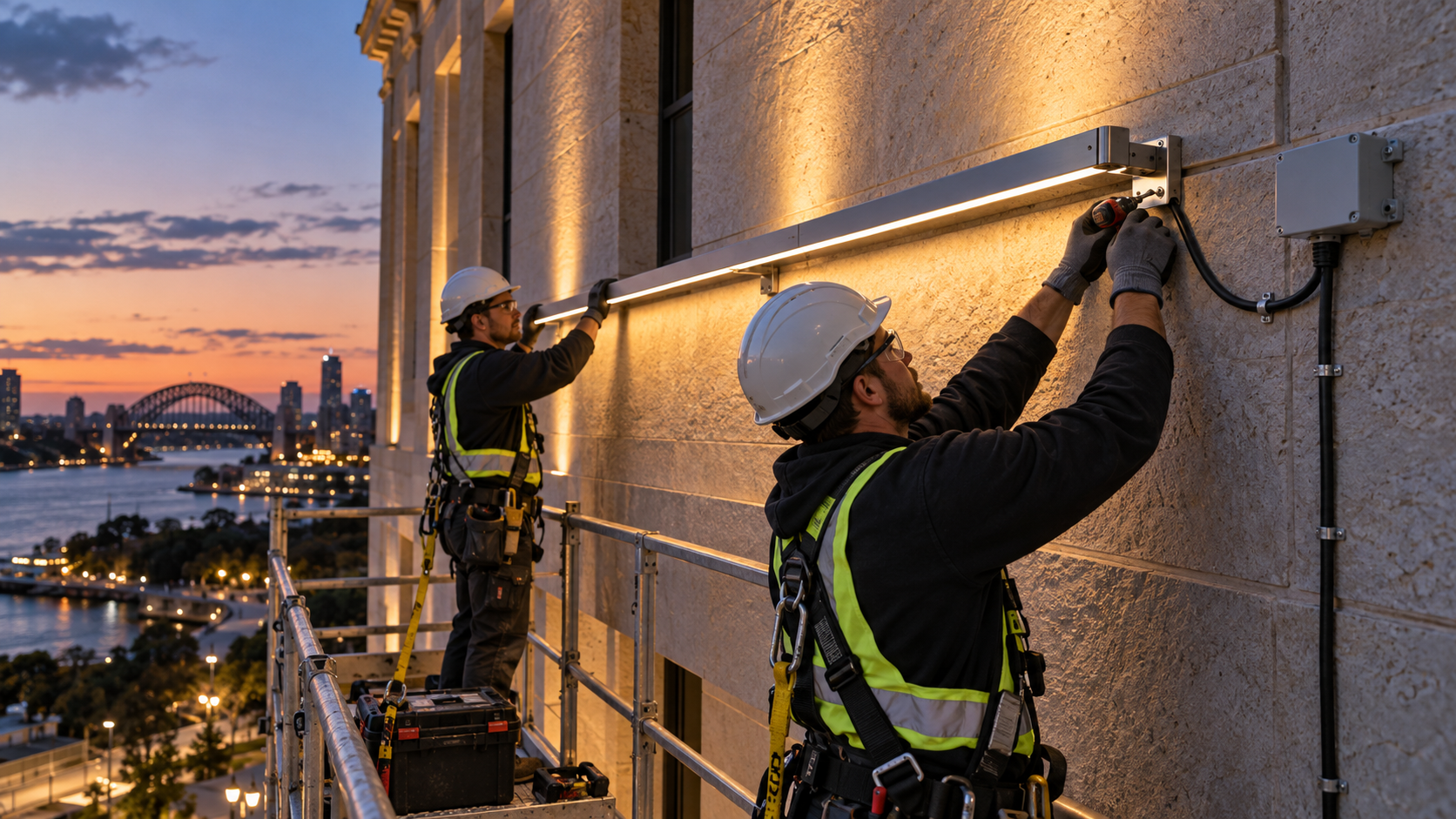
Keep cable entries out of standing water
Outdoor cabling should follow a route that sheds water and avoids collection points. A downward drip loop before an enclosure or fixture entry helps prevent water from following the cable into the gland. Cable entries should normally approach from a direction consistent with the approved enclosure design. A top entry, upward loop, or low pocket can direct water toward seals and should be reviewed before energizing.
Cable glands must match the cable diameter, sheath material, environment, and enclosure entry. A gland cannot seal correctly when the cable is too small, out of round, damaged, or tightened on an unsuitable section. Unused entries need approved closures. Field-applied tape or sealant should not be treated as a permanent substitute for a correctly selected mechanical sealing system.
Junction boxes should be positioned above predictable water accumulation and remain accessible for inspection. Covers, gaskets, screws, and mating surfaces must be clean and assembled according to the approved method. Condensation risk should be considered separately from direct rain because temperature cycles can move moisture inside enclosures. Drain or ventilation provisions, when used, must be designed components rather than unverified holes.
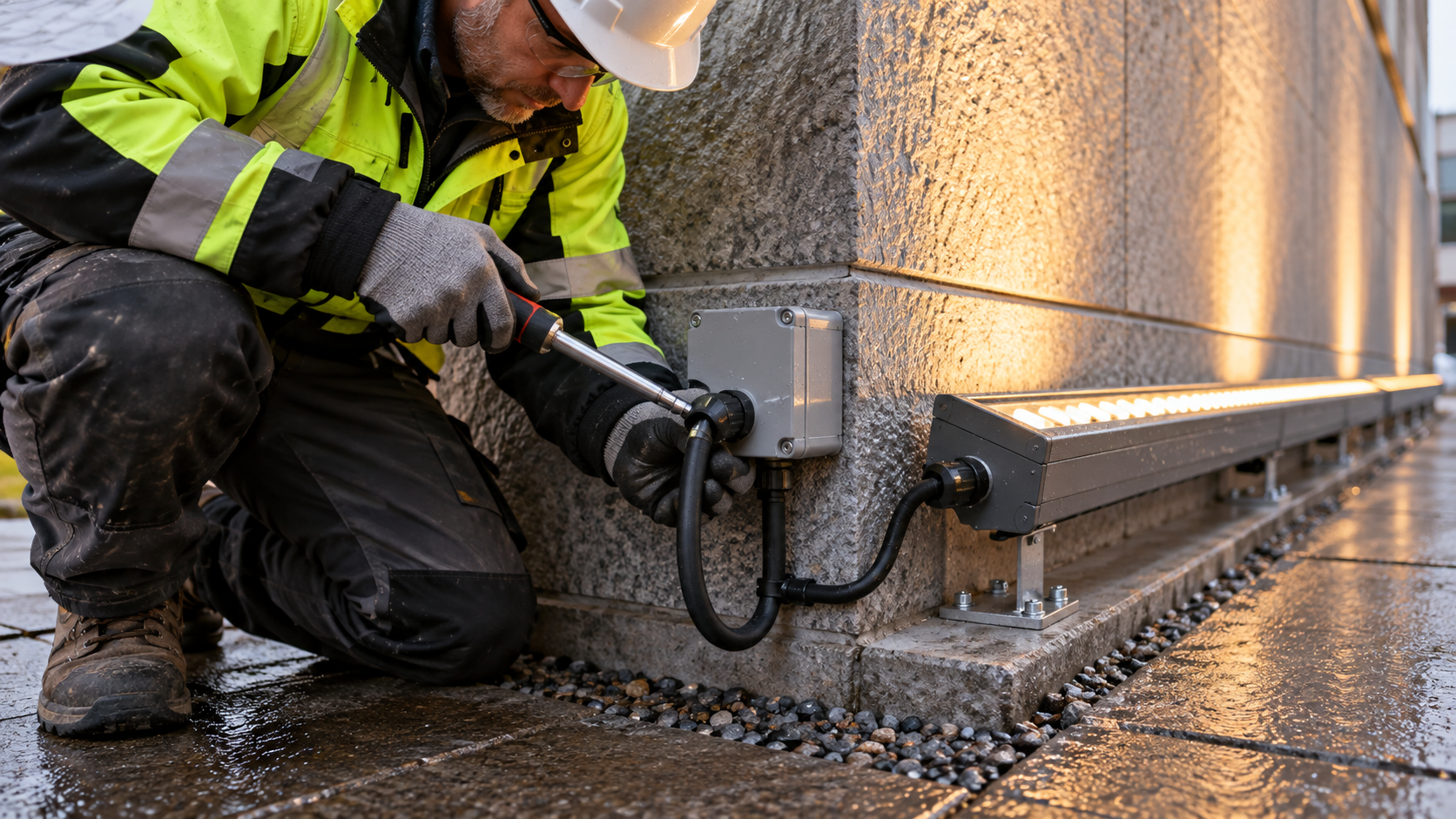
Coordinate drainage around ground-mounted fixtures
Wall washers mounted near grade are exposed to runoff, irrigation, soil, mulch, leaves, cleaning water, and landscaping changes. The base should not sit in a depression where water collects after rain. Gravel or drainage space may help where the landscape design supports it, but it does not replace a complete civil drainage solution. The project should confirm finished levels rather than relying on construction-stage ground height.
Plant growth can block the beam, trap moisture, restrict cooling, or hide a fixture from maintenance staff. The landscape plan should reserve clearance around the luminaire and cable route. Irrigation heads should not spray directly at connectors or create persistent wetting beyond the approved exposure. Maintenance responsibilities should include vegetation control and debris removal.
Snow, ice, sand, or accumulated litter can place additional load on a low fixture and change its thermal environment. Local conditions should be included in placement and seasonal inspection planning. Cleaning methods must suit the housing, lens, seals, and finish. Pressure washing or aggressive chemicals should not be assumed acceptable merely because the fixture is rated for outdoor use.
Plan power distribution and voltage drop
The electrical design should use the verified input requirements and maximum demand of the selected product. Circuit loading, cable size, route length, protective devices, switching, isolation, earth arrangements, and allowable voltage drop need qualified calculation. A long row can produce different conditions at the first and last fixture. Commissioning should measure representative points under the intended operating load rather than assuming the supply is identical throughout.
Inrush and switching behavior can affect protective-device selection and the number of fixtures permitted on a circuit. The responsible designer should obtain current product data and coordinate it with the distribution system. Dividing a long facade into logical zones can improve isolation and fault finding. Circuit labels should match the drawings and control records so technicians can work on one section without disabling unrelated areas.
Outdoor projects may require surge protection and bonding strategies based on the site, distribution, lightning exposure, and local requirements. A generic accessory should not be added without coordination because protection depends on installation location and conductor routing. Power and control cables should maintain suitable separation where required. The completed system should receive the electrical tests mandated by the responsible authority before operation.
Build a serviceable DMX or control network
Control planning begins with the exact product mode and footprint. Segment-controlled and pixel-controlled wall washers can require very different address capacity, network distribution, and commissioning time. The project should freeze modes before assigning addresses and producing labels. A change after installation can shift downstream addresses and make a previously correct patch unusable.
Data topology should follow the protocol and equipment design rather than an uncontrolled series of split connections. Suitable cable, distribution, termination, isolation, and connector protection help maintain reliable communication across an outdoor facade. Wireless options, when published for a product, still need coverage and interference validation at the site. A product capability should not be confused with a complete network design.
Every fixture should receive a durable identity that links its physical position, circuit, universe, address, mode, model, and service record. The label should remain readable without harming the architectural appearance or weather protection. Patch files and drawings need the same identifier. This traceability shortens commissioning and prevents technicians from adjusting the wrong unit during maintenance.
Verified wall washer options for installation planning
Our active catalog includes the 24x20W RGBW IP65 six-segment wall wash, the 20x15W RGBW IP65 pixel wall wash bar, and the 48x20W RGBW IP65 eight-segment wall wash. Their published control structures make them relevant to different facade and entertainment designs. Final mode, power, optics, connectors, and installation accessories must be confirmed for the quoted configuration. Product selection should follow the approved visual mock-up and control-capacity plan.
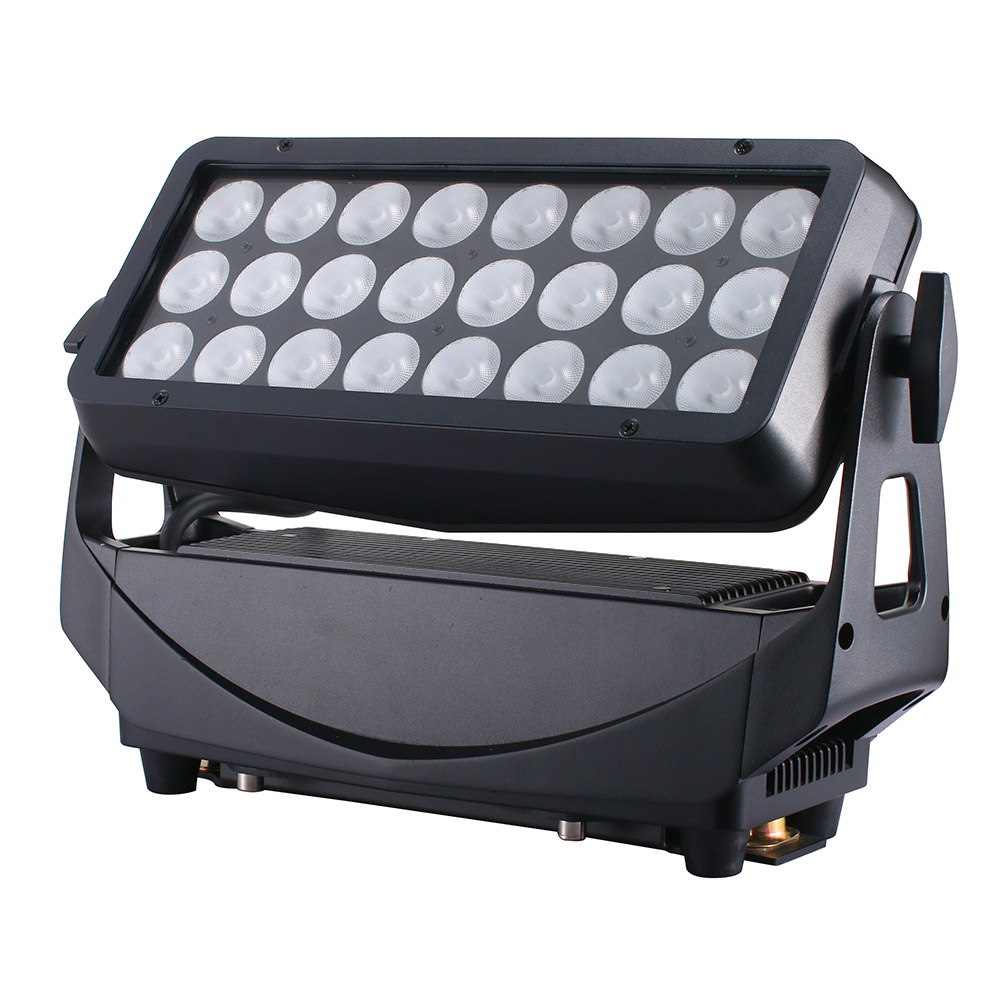
24x20W RGBW IP65 Wall Wash
A published six-segment product for architectural layout, circuit, control, and installation validation.
View Product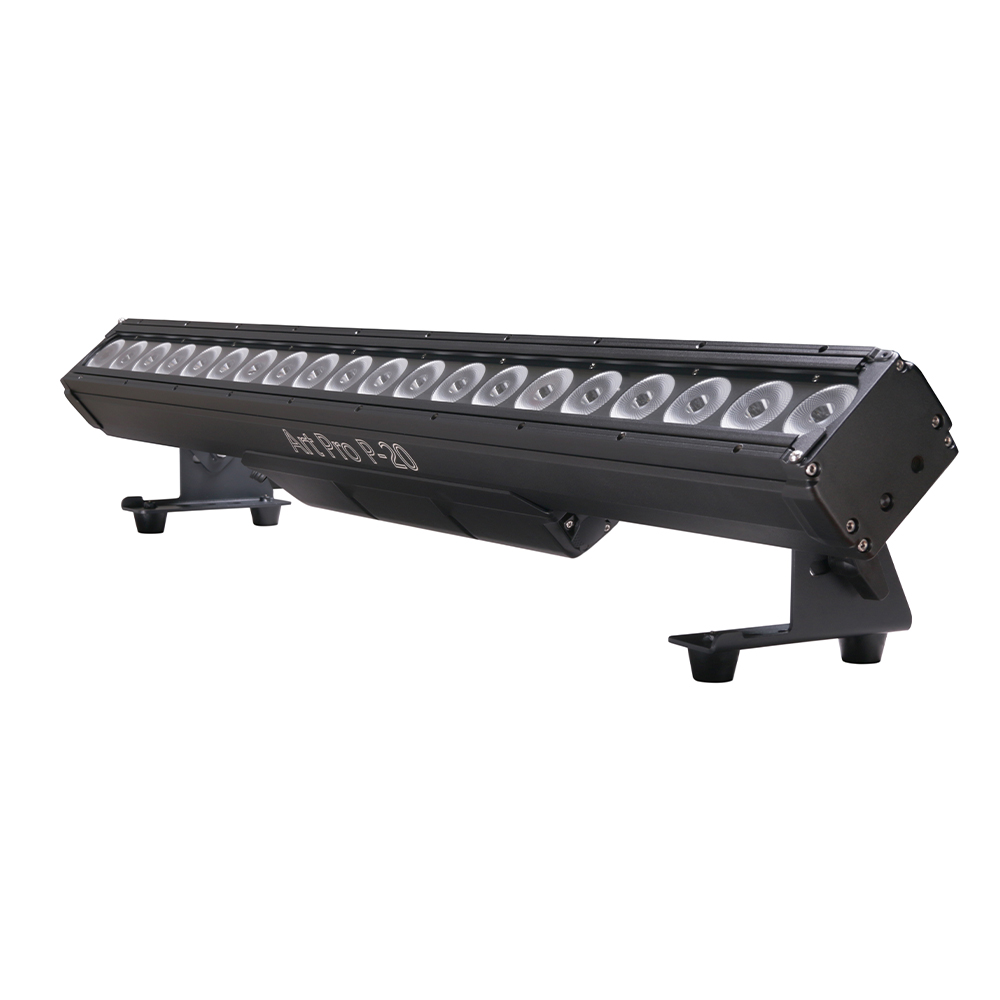
20x15W RGBW IP65 Pixel Wall Wash Bar
A pixel-level option for controlled facade effects subject to network and address-capacity verification.
View Product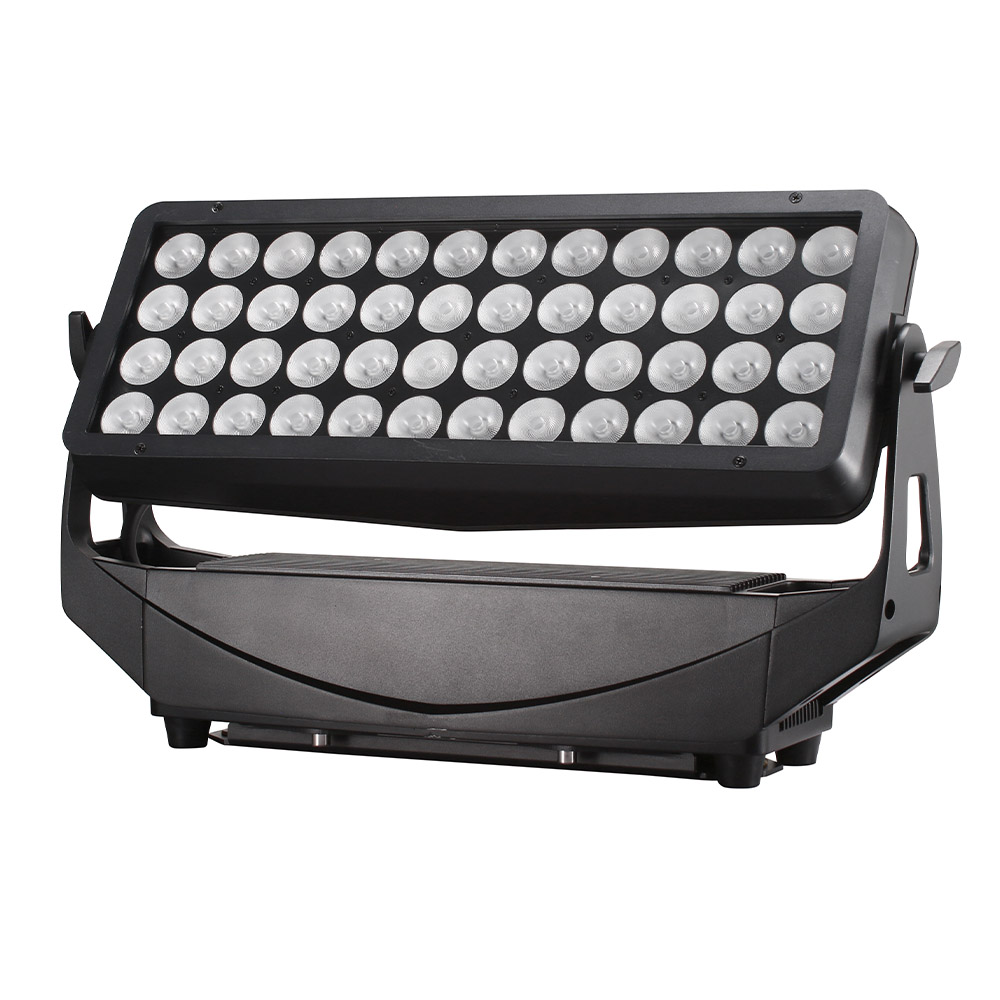
48x20W RGBW IP65 Wall Wash
A published eight-segment wall washer for larger-scale layout and control evaluation.
View ProductCommission during the day and at night
Daytime commissioning checks physical installation, bracket security, aim marks, lens condition, cable support, glands, boxes, drainage, labels, circuits, addresses, and access. The team should inspect every fixture rather than relying only on a sample after repetitive installation. Photographs can document the approved condition and highlight exceptions. Defects should be corrected before nighttime alignment because darkness can hide unsafe workmanship.
Nighttime commissioning checks output, uniformity, cutoff, color, dimming, segment or pixel order, synchronization, flicker, spill, and the visual relationship between adjacent fixtures. Alignment should use the approved mock-up as a reference. Adjustments need controlled limits so one local correction does not create a different problem from another viewpoint. Final settings should be recorded after stakeholders approve the scene.
The system should be observed after a meaningful warm-up period and through relevant control transitions. A fixture that starts correctly may reveal a connection, thermal, or alignment issue later. Repeated power and control cycles can expose intermittent faults. Acceptance should distinguish installation quality, electrical function, control function, and visual performance so responsibility remains clear.

Use FAT, SAT, and handover records
Factory acceptance can confirm model, quantity, housing and lens condition, published function, mode availability, accessories, packing, and selected operational checks. It does not replace site tests for anchors, cable routes, drainage, supply, network, or facade appearance. The FAT record should identify the exact production configuration. Any substitution discovered at delivery needs review before installation.
Site acceptance should link every installed identifier to its model, circuit, address, location, and test result. The checklist can include insulation or electrical tests by qualified personnel, control response, physical inspection, alignment, visual approval, and unresolved items. A clear punch list prevents temporary workarounds from becoming the final system. Retesting should be recorded after corrective work.
Handover should include approved drawings, product records, circuit schedules, address and mode data, profile or patch files, aiming notes, spare parts, warranties, cleaning guidance, inspection intervals, and isolation procedures. Operators need a practical fault-reporting path. Sensitive service information should remain controlled. A complete handover allows future teams to preserve the installation rather than reverse-engineering it.
| Acceptance stage | Core checks | Record | Hold condition |
|---|---|---|---|
| Factory | Identity, configuration, accessories and operation | FAT and packing list | Unapproved substitution |
| Day site test | Mounting, seals, drainage, wiring and labels | Position checklist and photos | Unsafe or incomplete installation |
| Night site test | Aim, overlap, color, control and spill | Scene approval and settings | Visual result differs from mock-up |
| Handover | Documents, spares, training and maintenance | Signed asset register | Missing traceability |
Plan inspection and maintenance from the start
Outdoor wall washers should be inspected on a schedule suited to the environment and duty. Checks can cover bracket security, aiming, lens cleanliness, housing damage, corrosion, cable support, glands, box seals, drainage, vegetation, control response, and unusual color or output. Severe weather or construction activity may justify an additional inspection. The schedule should identify who is qualified to open or service electrical enclosures.
Cleaning should use methods compatible with the lens, seals, finish, and installation. Abrasive tools, aggressive chemicals, uncontrolled pressure washing, or moving the fixture without recording its aim can damage performance. A before-and-after functional check helps confirm that maintenance did not introduce a fault. Any opened seal or replaced cable entry should receive the same inspection discipline as initial installation.
Spare strategy should preserve model, optics, control mode, connectors, color behavior, and profile compatibility. A visually similar substitute can create a noticeable patch or address problem in a continuous row. Replacement records should link the new unit to the original position and commissioning settings. If the product revision changes, the team should repeat affected tests before closing the work order.
Write an installation-ready RFQ
The RFQ should identify facade material, drawings, mounting plane, setback, spacing, aiming, exposure, climate, circuits, control topology, modes, viewing conditions, access, drainage, delivery quantity, spares, and acceptance stages. It should separate fixture supply from brackets, anchors, cables, junctions, distribution, installation, and commissioning. Each interface needs an owner. Vague outdoor installation language makes responsibility difficult to manage after water or alignment problems appear.
Suppliers should receive the application details needed to confirm the current product configuration. The response should identify product model, published protection, optics, control structure, input requirements, connector or cable arrangement, accessories, packing, and documents relevant to the offered version. Unsupported claims about weather, lifespan, certification, or universal compatibility should not enter the contract. Project-specific engineering remains with the responsible design parties.
Commercial comparison should include mock-up work, access equipment, facade protection, installation labor, electrical distribution, control hardware, testing, aiming, documentation, training, spares, and maintenance. Lowest fixture price does not show the cost of poor drainage, repeated alignment, or inaccessible service. A complete scope makes quotations comparable and reduces field improvisation. It also lets the buyer evaluate hardware and execution as one operating system.
Control installation quality before the fixtures are energized
A controlled installation package gives the site team a common reference before drilling, cabling, or addressing begins. The approved package should combine the coordinated layout, mounting details, circuit schedule, control topology, fixture schedule, product instructions, mock-up decisions, and a location-specific inspection plan. It should also identify which party owns anchors, brackets, junction boxes, power supplies, data distribution, waterproof penetrations, programming, access equipment, and final aiming, because unclear scope boundaries often produce gaps that are discovered only during commissioning. A short pre-installation meeting can confirm approved materials, substrate conditions, cable-entry orientation, drainage provisions, label format, inspection hold points, and the method for reporting a field condition that differs from the drawings. Sample installations at the first typical location are especially valuable because the supervisor can approve anchor seating, bracket alignment, cable support, gland assembly, drip-loop geometry, enclosure placement, clearances, and finish protection before the same detail is repeated across a facade.
Inspection records should follow the physical identity of each fixture rather than relying on a general statement that the row was checked. A location record can capture the asset label, model, optics, control mode, circuit, universe, address, bracket position, anchor condition, connector condition, gland size, cable support, aim reference, and the names or dates associated with inspection and testing. Photographs can document concealed or difficult-to-reach work before covers, cladding, landscaping, or access equipment are removed, although images should supplement rather than replace measured and signed checks. Nonconforming work should be isolated with a clear disposition such as repair, replacement, engineering review, or acceptance under an approved deviation, and the record should remain linked to the same physical location after correction. This traceability reduces fault-finding time, helps the commissioning team distinguish installation errors from control or product issues, and gives the owner a usable baseline for future maintenance.
Weather protection must remain intact through every construction stage, including periods when the lighting system is not yet ready for operation. Open cable ends, loose covers, incomplete glands, unsealed wall penetrations, exposed connectors, and temporarily placed fixtures can admit moisture or dirt long before final testing, so temporary caps and protected storage need explicit supervision. Other trades should not use brackets, conduits, junction boxes, or fixture housings as supports, steps, tie points, or convenient locations for wet work, paint, sealant, or debris. The lighting contractor should re-inspect the installation after facade cleaning, landscaping, scaffolding removal, roof work, or any activity that could move aim, damage cabling, obstruct drainage, or contaminate optical surfaces. Energization should occur only after the responsible parties confirm mechanical completion, enclosure closure, electrical safety checks, control readiness, and the absence of visible water or construction damage. Treating preservation as part of installation quality prevents a correctly specified IP65 fixture from entering service with a compromised field assembly.
A repeatable outdoor installation sequence
The sequence should include decision gates that stop unsuitable work before it becomes difficult to reverse. The layout should not be released until the substrate, access, water paths, viewing conditions, fixture configuration, and mock-up outcome are understood, while bulk mounting should wait until the first installed detail has been inspected. Cable termination and enclosure closure should follow verified routing and support, and addressing should follow a location schedule that has been reconciled with the actual control capacity. Commissioning should not conceal incomplete mechanical or waterproofing work by focusing only on whether light is produced, because a fixture can operate during a test while still carrying a long-term installation defect. The final acceptance record should therefore connect design approval, installation inspection, electrical verification, control testing, nighttime visual review, correction of defects, and owner handover into one traceable chain.
First, survey the facade, water paths, viewing positions, services, access, and maintenance clearance. Select the fixture and optics through calculation and a representative nighttime mock-up. Obtain structural, facade, electrical, and control approvals for brackets, anchors, penetrations, circuits, data topology, and drainage. Freeze coordinates, identifiers, modes, and responsibilities before repetitive installation begins.
Second, install with approved hardware, cable routes, glands, boxes, drip loops, clearances, labels, and workmanship controls. Inspect every position during daylight and correct unsafe or unsealed work before energizing. Complete qualified electrical and control tests, then align the row at night against the mock-up. Record final aim, addresses, modes, circuits, and exceptions after visual approval.
Finally, hand over the verified system with drawings, asset records, settings, spares, inspection intervals, cleaning guidance, and fault escalation. Review the installation after severe weather and during the first maintenance cycle. Buyers can provide facade drawings, exposure, mounting concept, control needs, and selected Colorful Light wall washer models for application review. This process protects the complete outdoor system without treating an IP65 label as a substitute for design and workmanship.
Frequently Asked Questions
Does an IP65 wall washer guarantee a waterproof outdoor installation?
No. IP65 describes the tested fixture enclosure, while field joints, glands, junction boxes, penetrations, cable routes, drainage, mounting and maintenance must also be designed and installed correctly.
Why are drip loops used near outdoor wall washers?
A properly arranged drip loop encourages water to fall away before it reaches a cable entry or enclosure. It supports, but does not replace, the correct gland, cable diameter, sealing and enclosure orientation.
How should wall washer spacing be approved?
Use lighting calculations as a starting point and approve the actual setback, spacing, optics, aiming and facade response through a representative nighttime mock-up with the intended product configuration.
Can an IP65 wall washer be installed where water pools?
The fixture and its connections should not be placed in predictable standing water unless the complete equipment and installation are specifically rated and designed for that condition. Coordinate drainage and mounting height with the site environment.
What should daytime and nighttime commissioning verify?
Daytime checks cover mounting, anchors, brackets, lenses, cable support, glands, boxes, drainage, labels, circuits, addresses and workmanship. Nighttime checks cover output, alignment, overlap, glare, color, dimming, control order, synchronization and spill.
What records should be handed over for an outdoor wall washer system?
Provide approved drawings, fixture and circuit schedules, asset labels, control modes and addresses, test results, aiming references, product records, spare strategy, cleaning instructions, inspection intervals and resolved defect records.



◼
Product Recommendations
You May Also Like


◼
Get in Touch
Get Started with Stage Lighting Project
Want to transform your stage or venue with Colorful Light?
Explore our solutions and let us create a memorable lighting experience for your event.
Colorful Light is a professional LED stage lighting manufacturer that provides dynamic and reliable lighting solutions to customers worldwide.
© 2026 Colorful Light. All Rights Reserved.

Facebook
Instagram
LinkedIn
YouTube
Tik Tok