


How to Choose the Best 1000W Moving Head Strobe Fixture?
Quick Answer
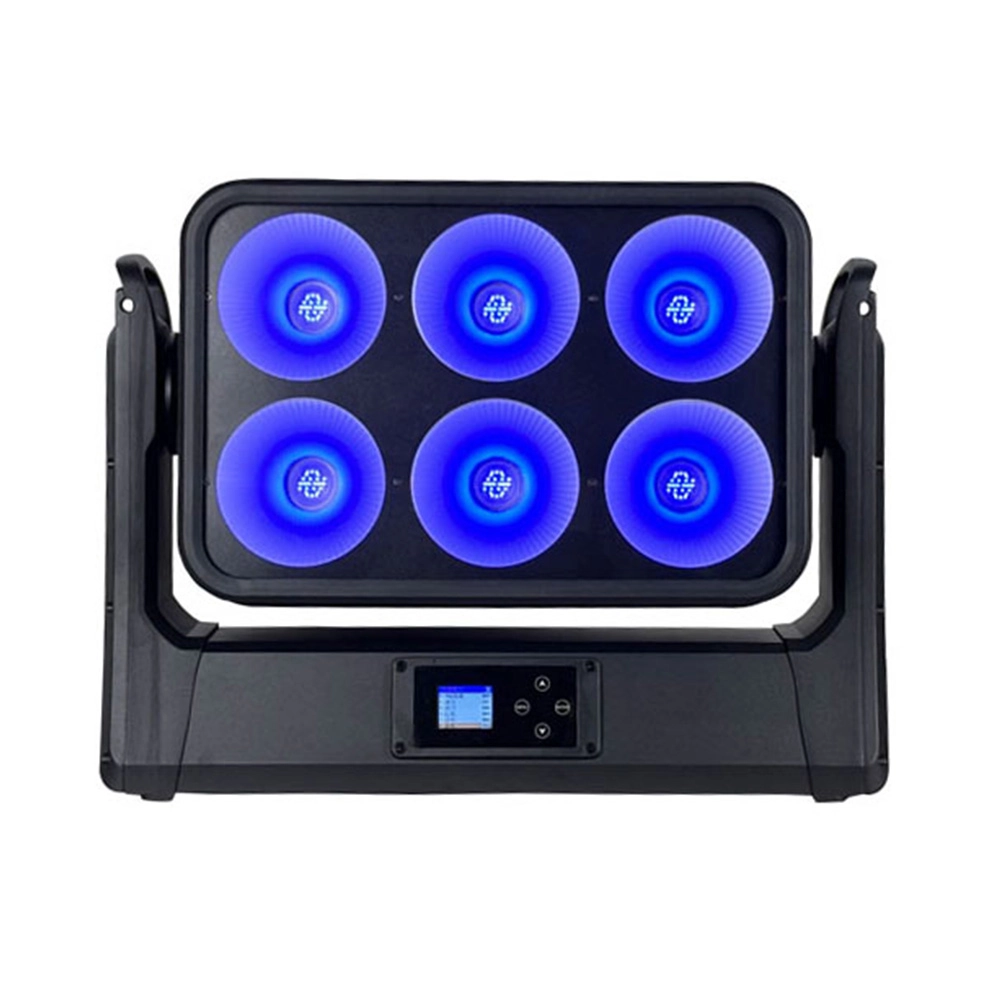
Selecting the optimal 1000w moving head strobe DMX512 fixture requires balancing luminous flux with thermal stability. A high-tier fixture must provide consistent color temperature and flicker-free dimming for broadcast environments. Key selection factors include the cooling system efficiency, DMX channel flexibility (Pixel control vs. Global), LED chip binning quality, and motor torque for precise positioning. Final specifications depend on venue dimensions and ambient light levels.
How Colorful Light Supports Professional Stage Lighting Equipment Projects
Colorful Light operates as a dedicated manufacturer specializing in LED stage lighting R&D and production. Located in the Taoyuan Valley Science And Technology Innovation Park, our facility integrates strict quality control, assigning two to three QC members per production line. We ensure every 1000w moving head strobe DMX512 fixture meets CE and RoHS standards before shipment. Our technical team facilitates OEM and ODM requests to align fixture parameters with specific touring or installation requirements.
We provide a one-year warranty and welcome third-party inspections to verify stable performance. Prospective buyers must confirm project-specific details such as MOQ, lead times, and specific DMX profile requirements during the quotation phase. Our focus remains on delivering low-consumption LED products that maintain high intensity without compromising the lifespan of the internal components.
Discuss Your Moving Head Strobe Technical Requirements
To receive a tailored technical proposal, please provide your target market, installation height, required IP rating, DMX control preferences, and total quantity. Our engineering team will review these parameters to ensure the fixture meets your local regulatory and performance standards. Contact us at sales@colorfullight.net or visit www.colorfullight.net to start your consultation.
Deep-Dive FAQs
Why does thermal management affect 1000W LED strobe output consistency?
In high-wattage LED fixtures, heat buildup causes 'thermal droop,' where light output decreases as the junction temperature rises. A 1000W moving head strobe requires advanced heat pipe technology or high-CFM active cooling to maintain color stability. Without efficient dissipation, the LED chips may shift in color temperature or suffer premature lumen depreciation, compromising the visual integrity of the lighting design.
How do DMX channel modes impact pixel mapping capabilities?
The complexity of a 1000w moving head strobe DMX512 fixture is often defined by its channel modes. Basic modes offer global control over intensity and rate, while advanced modes allow for individual segment or pixel control. For designers seeking dynamic 'eye-candy' effects, fixtures with high channel counts are necessary to interface with media servers, though they require more robust DMX universes and data management.
What role does PWM frequency play in strobe fixture selection?
Pulse Width Modulation (PWM) frequency is critical for fixtures used in televised events or recorded performances. Low PWM frequencies result in 'banding' or flickering on camera. When choosing a professional strobe, verify that the fixture offers adjustable PWM or a high default frequency (above 1200Hz) to ensure flicker-free operation across all shutter speeds and frame rates.
Is the 1000W rating indicative of actual light output?
Not necessarily. The 1000W figure typically refers to the maximum power consumption of the LED engine. The 'Effective Lumens' or 'Lux at X meters' provides a more accurate measure of performance. Buyers should evaluate the luminous efficacy (lumens per watt) and the quality of the optics, as a well-engineered 800W fixture with superior reflectors can sometimes outperform a poorly optimized 1000W unit.
How does motor torque influence moving head strobe performance?
Unlike static strobes, a moving head version relies on stepper or brushless motors for pan and tilt. High-torque motors are essential for the rapid, jerky movements often required in high-energy strobe sequences. If the motors are underpowered for the weight of the 1000W head, the fixture will suffer from sluggish response times and loss of calibration during long shows.
Why is LED binning critical for multi-fixture stage setups?
LED binning ensures that every fixture in a batch produces the exact same shade of white or color. When purchasing multiple 1000W units for a single stage, inconsistent binning results in visible variations between fixtures. Professional manufacturers like Colorful Light prioritize tight binning tolerances to ensure uniformity across large-scale deployments, preventing the 'patchwork' look that plagues lower-quality equipment.
◼
Product Recommendations
You May Also Like




◼
Get in Touch
Get Started with Stage Lighting Project
Want to transform your stage or venue with Colorful Light?
Explore our solutions and let us create a memorable lighting experience for your event.
Colorful Light is a professional LED stage lighting manufacturer that provides dynamic and reliable lighting solutions to customers worldwide.
© 2026 Colorful Light. All Rights Reserved.

Facebook
Instagram
LinkedIn
YouTube
Tik Tok