


How Blinder Lights Shape Concert and Theater Lighting Design
- Quick Answer: How Do Blinder Lights Change a Concert or Theater Scene?
- What Makes an Audience Blinder Different from a Wash or Strobe?
- Designing a Concert Cue: From Verse to Chorus
- Blinder Lighting for Theaters and Spoken-Word Stages
- Where Should Blinders Be Placed in a Lighting Rig?
- Sightlines, Glare and Audience Comfort
- Lens Angle, Distance and the Size of the Effect
- Static Blinders and Moving Head Blinders: Different Scene Options
- How DMX512 Channel Modes Affect Blinder Cue Design
- Color, White Light and the Camera's View
- Programming Layers: Blinders with Washes, Beams and Backlights
- Example Plans for a Club, Theater and Outdoor Concert
- Comparing Two Real Colorful Light Blinder Fixtures
- Power Distribution, Cooling and Rigging
- How to Build a Practical Blinder Cue and Procurement Brief
- Conclusion: Use Blinder Effects Deliberately
- Blinder Lighting Design FAQs
Quick Answer: How Do Blinder Lights Change a Concert or Theater Scene?
Blinder lights add a brief, deliberate change in what the audience sees, turning a musical accent or a dramatic transition into a visible lighting cue. On a concert stage, they may reveal the crowd at a carefully chosen moment or add a strong background accent behind the performers. In a theater, the same fixture family can be used much more sparingly to support a scene change, a visual punctuation or a controlled warm-looking effect. Successful blinder lighting design depends on cue timing, fixture placement, dimming behavior and audience comfort rather than on brightness alone.
A designer should begin with the purpose of the scene instead of the number of fixtures available in a rental package. A short arena accent, a quiet theatrical transition and a camera-facing music performance ask for different responses from the lighting system. The most useful questions are where the light should be visible, for how long the cue should exist and what the audience is supposed to notice. Those decisions establish whether the design needs a fixed blinder, a moving unit, a color-capable fixture or a different lighting tool entirely.
What Makes an Audience Blinder Different from a Wash or Strobe?
A blinder is often selected for a strong visual accent rather than for uninterrupted front lighting. A wash light is normally responsible for covering performers or scenic surfaces with an even field, while a strobe emphasizes rapid changes in output. A modern LED unit may offer all or part of these functions, but that does not mean its optical distribution will work equally well for every role. The lighting plot should identify the job of each fixture before any assumptions are made about which categories can substitute for one another.
For example, a colored backdrop wash can remain on throughout a verse while blinder lights stay inactive until a transition calls for a brighter accent. A strobe effect may be used for another artistic purpose, but it needs separate review for comfort, accessibility and recording requirements. Mixing these roles without a clear purpose can make the stage look flat or excessively busy. Distinct cue functions help keep the performers visible and give the intended accent more meaning.
Designing a Concert Cue: From Verse to Chorus
Consider a hypothetical concert cue sequence in which the verse is intimate and the chorus opens into a much larger visual picture. During the verse, the design could rely on controlled performer lighting and restrained background color while the audience blinder remains out of the cue. As the arrangement changes, a brief, carefully positioned blinder accent can help mark the transition without replacing the main stage lighting. After the accent, returning to a stable wash allows the audience and camera exposure to recover to the intended scene.
The exact timing should be worked out with the music director, lighting programmer and venue production team rather than borrowed from a fixed recipe. If the same bright gesture appears at every transition, it can lose its dramatic value and become distracting. Alternative cues may use a moving fixture's directional change or a gradual color movement instead of a flash. Rehearsal should include views from audience positions as well as the lighting desk, because the perceived effect changes across the room.
Blinder Lighting for Theaters and Spoken-Word Stages
Theater productions often need much more restraint than high-energy concerts because dialogue, facial expression and changes in mood carry much of the scene. A blinder may still be useful for a deliberate reveal, a stylized memory sequence or an abrupt change in the visual world, but it should not compete with the performers unintentionally. Low-level fades and transition behavior can matter more here than a fixture's maximum output or the largest available channel mode. Testing should be done with actors on stage and the actual scenic materials rather than with an empty room alone.
A tungsten-looking glow can contribute to a historical or intimate mood, yet not every LED fixture reproduces the color change of an incandescent lamp. The designer should inspect the chosen model's white and color behavior at the actual levels used in the cue. Some productions may prefer a different fixture class when a soft, sustained theatrical wash is required. Equipment selection should follow the dramatic intention rather than forcing a blinder to take the place of a conventional key light.
Where Should Blinders Be Placed in a Lighting Rig?
Typical planning questions include whether the intended effect should appear from an upstage truss, a side position, a scenic element or another structurally approved mounting location. Each position changes audience sightlines, camera angles and the apparent scale of the effect. A unit visible behind the performers may create a very different scene from a unit directed toward seated viewers. The designer should study the entire audience area instead of approving a placement from the front-of-house console position only.
Placement also affects maintenance, cabling and overhead safety. A moving head blinder needs space for its full programmed tilt movement and should not bring the head or its cables into contact with scenery, people or neighboring fixtures. A fixed blinder may be simpler to keep aligned when the production needs repeated accents from the same position. Final hanging positions should be approved by qualified rigging and electrical personnel using the manufacturer's current instructions and the venue's safety requirements.
Sightlines, Glare and Audience Comfort
Audience-facing light deserves careful consideration because viewers can have very different sensitivities to bright flashes and rapidly changing visual effects. The label blinder does not remove the designer's responsibility to manage light direction, intensity, duration and access for sensitive audience members. Show safety planning should account for the actual venue, performer movement, audience distances and applicable accessibility or event guidelines. Avoiding unnecessary direct glare can make an effect more effective as well as more comfortable.
Flash and strobe behavior should be discussed with the relevant production and safety teams before the show file is finalized. There is no single safe setting that can be promised for every fixture, person or environment simply from its frequency range. Where a production includes high-impact effects, clear operational procedures and any appropriate audience information should form part of the event plan. A lighting sample should be reviewed from multiple seats and camera positions before cues are accepted.
Lens Angle, Distance and the Size of the Effect
The lens angle influences how widely the light spreads, but it does not directly state the brightness experienced by a viewer at a particular distance. Optical falloff, output level, fixture position and the number of units can all change the perceived result. A wide distribution may create a broad visual field, while a narrower distribution can produce more concentrated accents. A specification sheet should be supported by photometric information or a realistic demonstration when coverage and intensity are critical.
The Colorful Light 6×200W RGBW IP65 Moving Head Blinder is listed with a 55-degree lens angle and 200-degree tilt movement. Those numbers are useful for an early lighting plot but do not establish measured illuminance or guarantee a uniform audience field. A designer should confirm the final throw distance and intended cue before choosing the fixture position. If a show requires a specific intensity at an audience boundary, that requirement belongs in a qualified photometric and safety review.
Static Blinders and Moving Head Blinders: Different Scene Options
A static blinder provides a relatively predictable beam direction after it has been mounted and focused. That can suit a concert setup with recurring accents from an upstage row or a fixed scenic location. A moving head blinder adds a directional dimension and may address more than one visual area during different parts of a show. The extra flexibility is useful only when the design has real cues that require it and the rig has sufficient movement clearance.
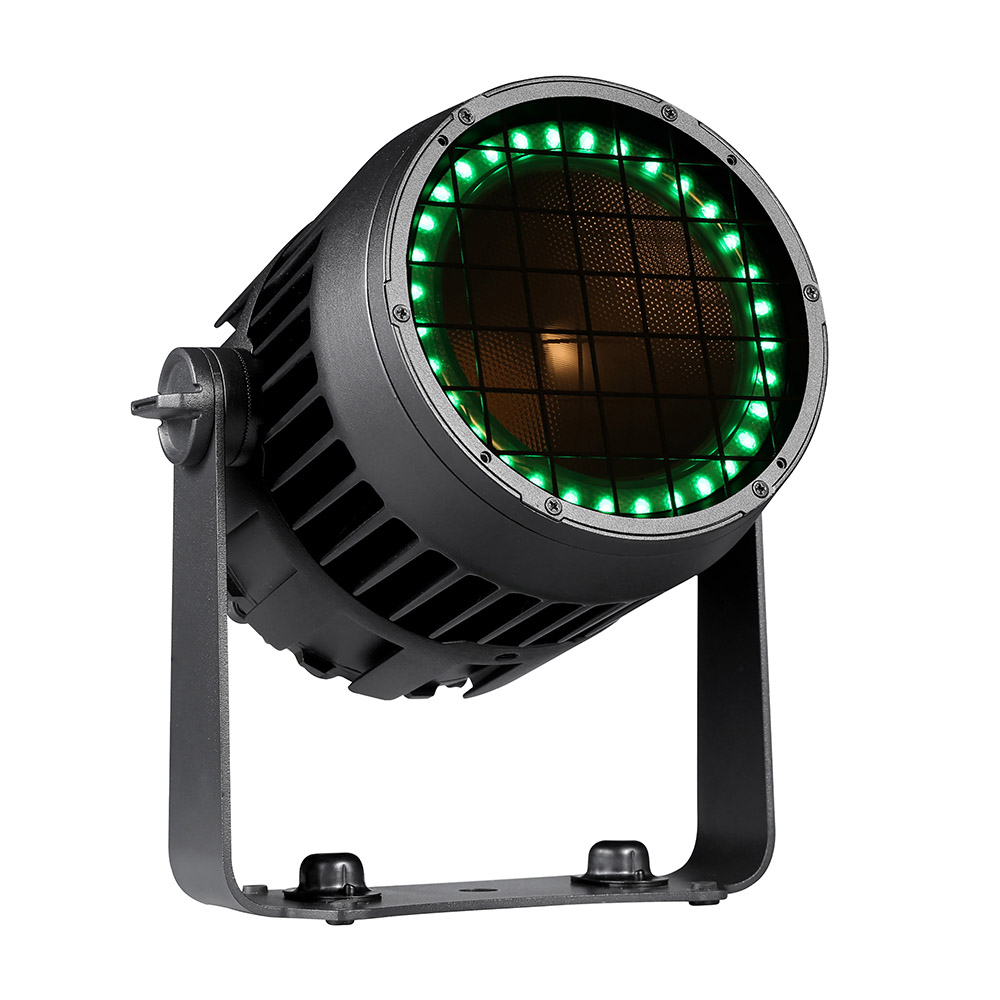
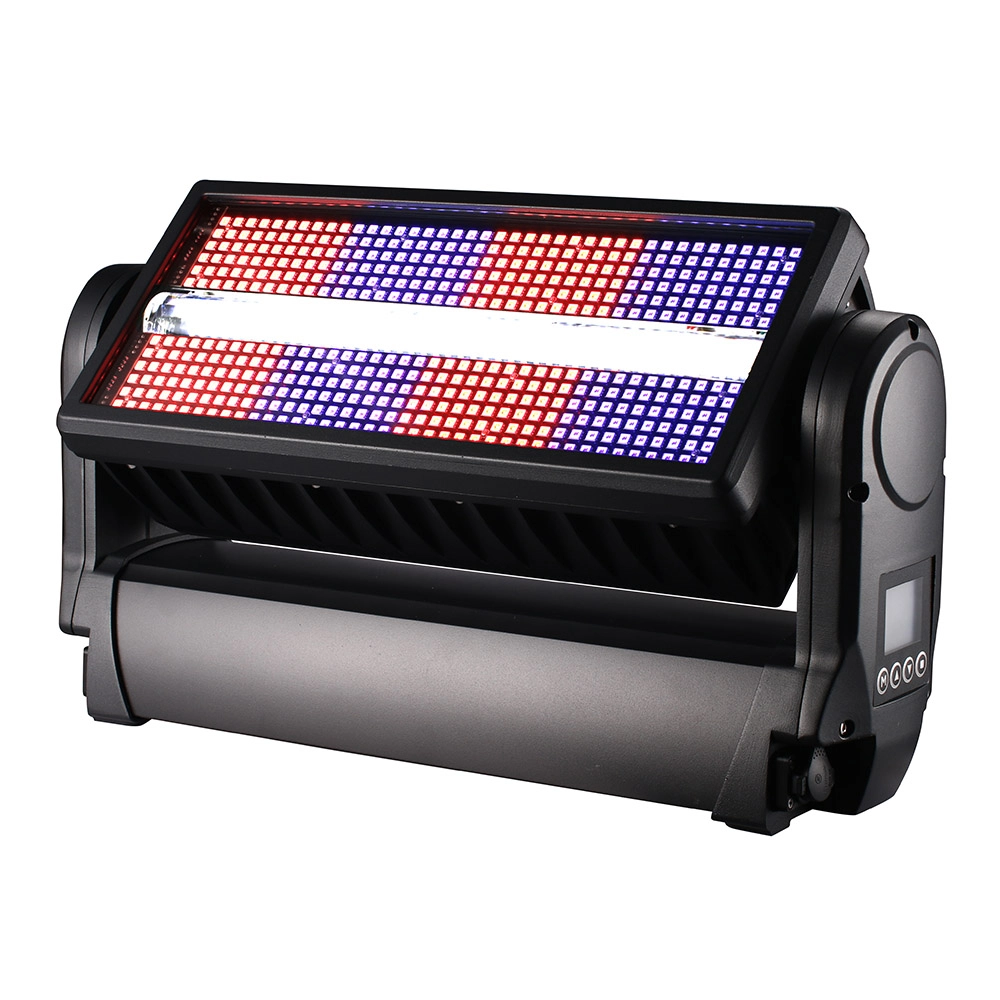
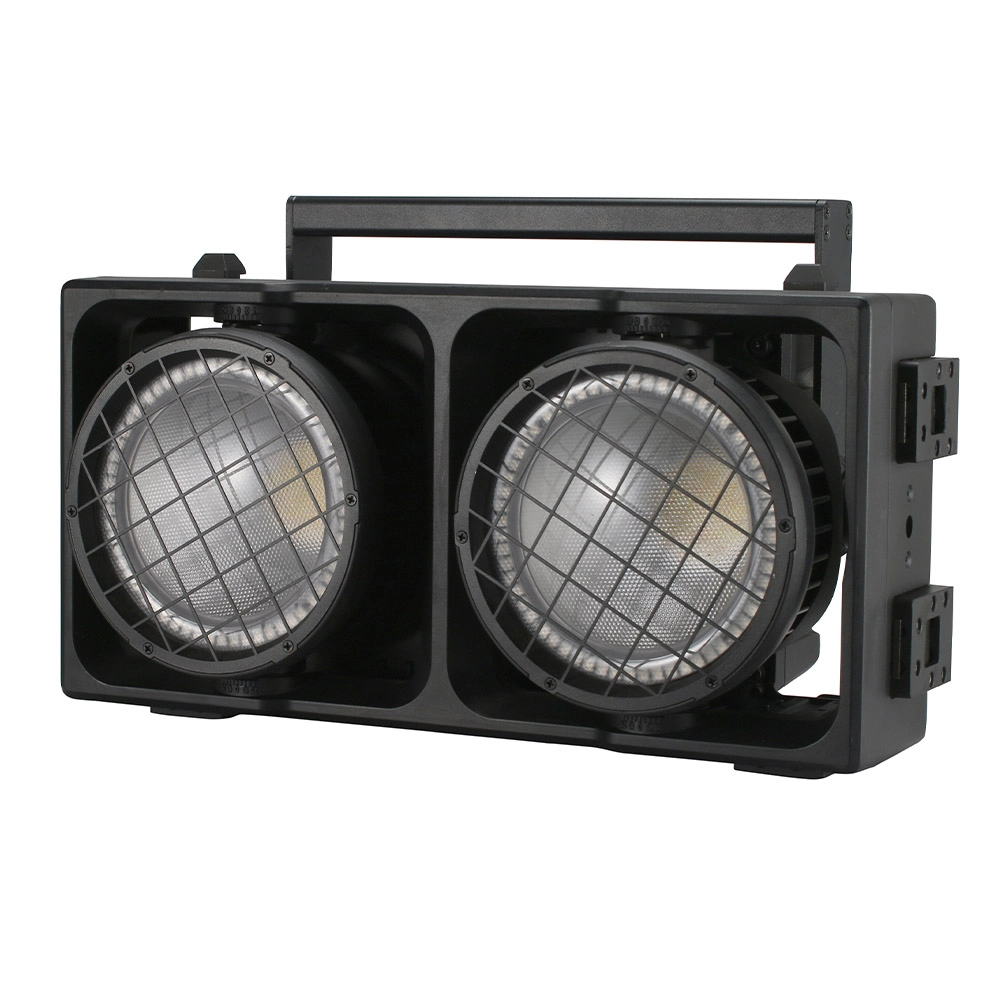
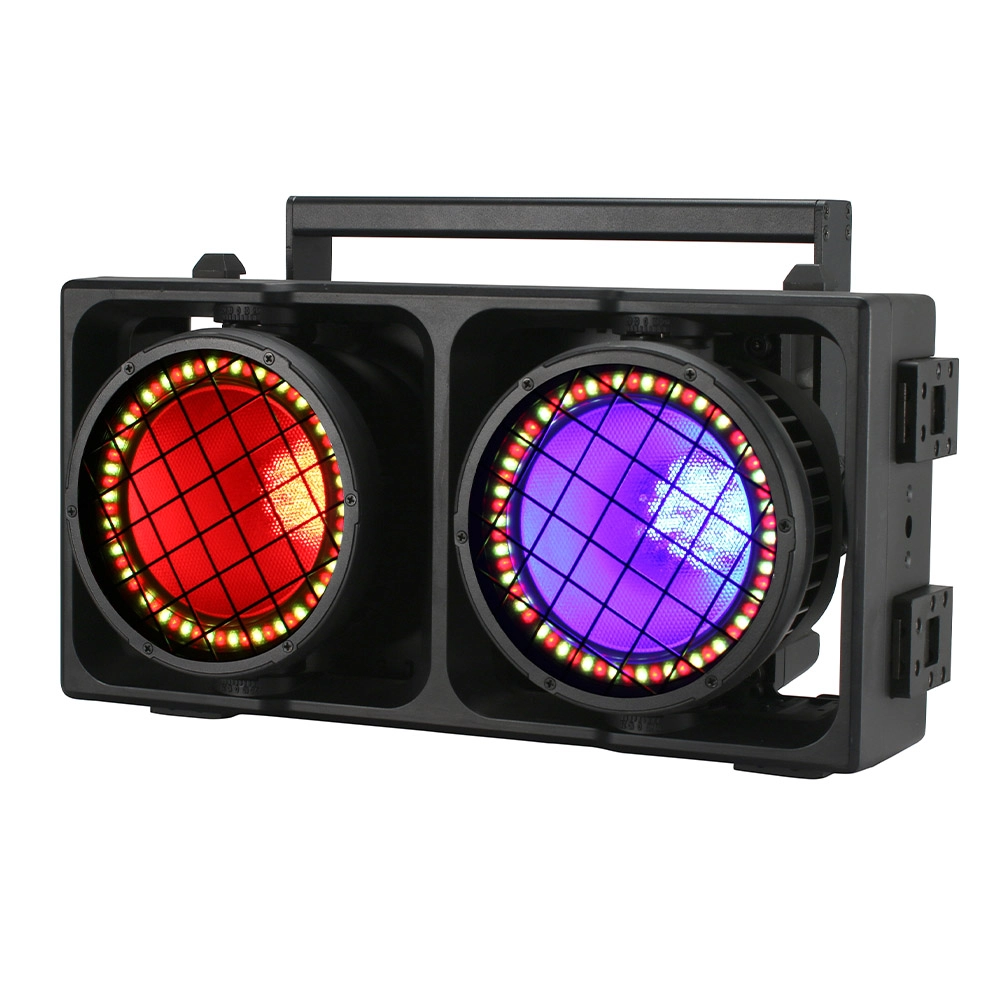
One current Colorful Light example is the 600W RGBALC IP65 Blinder Par Can, a static-format product with DMX512/RDM control and selectable channel personalities. Another is the 6×200W RGBW IP65 Moving Head Blinder, which includes tilt movement and 21, 25 and 49 DMX channel modes in its present backend technical table. They are not equivalent merely because both can create blinder-style effects. The show file, mounting plan, weight, cable routing and intended color behavior should determine which model format is more appropriate.
How DMX512 Channel Modes Affect Blinder Cue Design
The available DMX personality determines whether a programmer can control a simple overall dimmer, colors, individual cells, movement or more specialized effects. A smaller mode may help a production patch a large number of straightforward fixtures efficiently. A more detailed mode can be worthwhile when the designer intends to use individual zones or moving patterns. The lighting console and fixture must use matching modes, and the production should keep the approved channel chart with the show documentation.
For example, the 6×200W moving head model currently lists 21CH, 25CH and 49CH options, while the 600W RGBALC Blinder Par Can has a different set of modes. Choosing the largest channel count without a programming reason can create unnecessary patch complexity. Conversely, a very compact mode may not expose the functions required by a detailed design. Test a representative cue with the actual console and delivered fixture revision before ordering a full rig.
Color, White Light and the Camera's View
RGBW and other multi-emitter LED systems can add colored blinder accents that are difficult to reproduce with a single-color legacy source. The existence of extra color channels does not automatically establish a specific color-rendering index or accurate skin-tone performance. If cameras are important, the chosen white and color looks should be reviewed on footage from the actual production system. A color that looks convincing in person may appear quite different after exposure adjustments and camera processing.
High-output light can also change the camera's view of performers and the audience at the moment of a cue. The broadcast director and lighting programmer should agree whether the intended effect is to reveal the crowd, create a silhouette or hold attention on the stage. Camera shutter settings and LED driver behavior may interact, so a published refresh-rate value alone cannot guarantee a flicker-free result. Rehearsal footage at the intended dimming levels is the appropriate basis for technical approval.
Programming Layers: Blinders with Washes, Beams and Backlights
A controlled concert picture usually combines several lighting layers rather than asking the blinder to carry the whole visual scene. Performer key light maintains visibility, backlights and washes define the space, and beams or other effects add motion and structure. The blinder can then be introduced as a deliberate cue with a clear beginning and end. Separating these layers also makes it easier to revise the blinder without changing the overall balance of the stage.
A transition may work better with a color change or change in fixture direction than with another bright audience-facing accent. In a theater, the blinder might be kept as a special effect while the main scenic wash supports the continuity of the scene. During a filmed concert, the camera team may require adjustments to avoid excessive exposure changes. Building these alternatives into the cue list gives the operator options without relying on uncontrolled flash output.
Example Plans for a Club, Theater and Outdoor Concert
In a small club, available rig positions and close audience distances can limit how aggressive a blinder effect should be. A small number of well-positioned fixtures may produce the desired visual accent without filling every truss position with high-output lights. The programmer can then keep color and timing consistent across songs while preserving performer visibility. The final scheme should still be checked from the audience floor and any camera positions used for recording.
A theater production may place greater value on a restrained special cue, smooth dimming and a consistent warm-looking result during transitions. An outdoor concert may require stronger consideration of enclosure protection, power distribution, weather procedures and large audience sightlines. These are illustrative design scenarios, not records of particular Colorful Light installations or fixed equipment quantities. Each venue requires its own lighting plan and appropriate technical approval.
Comparing Two Real Colorful Light Blinder Fixtures
The Colorful Light 6×200W RGBW IP65 Moving Head Blinder is relevant when the design calls for directional movement, RGBW color and multiple DMX modes. Its current specification lists six COB sources, 55-degree lens angle, 200-degree tilt and DMX512/RDM support. The backend separately lists 1200W consumption and a 1500W power rating, which should not be treated as identical electrical values. These details help a production team discuss functionality, while a real output test remains necessary for final visual approval.
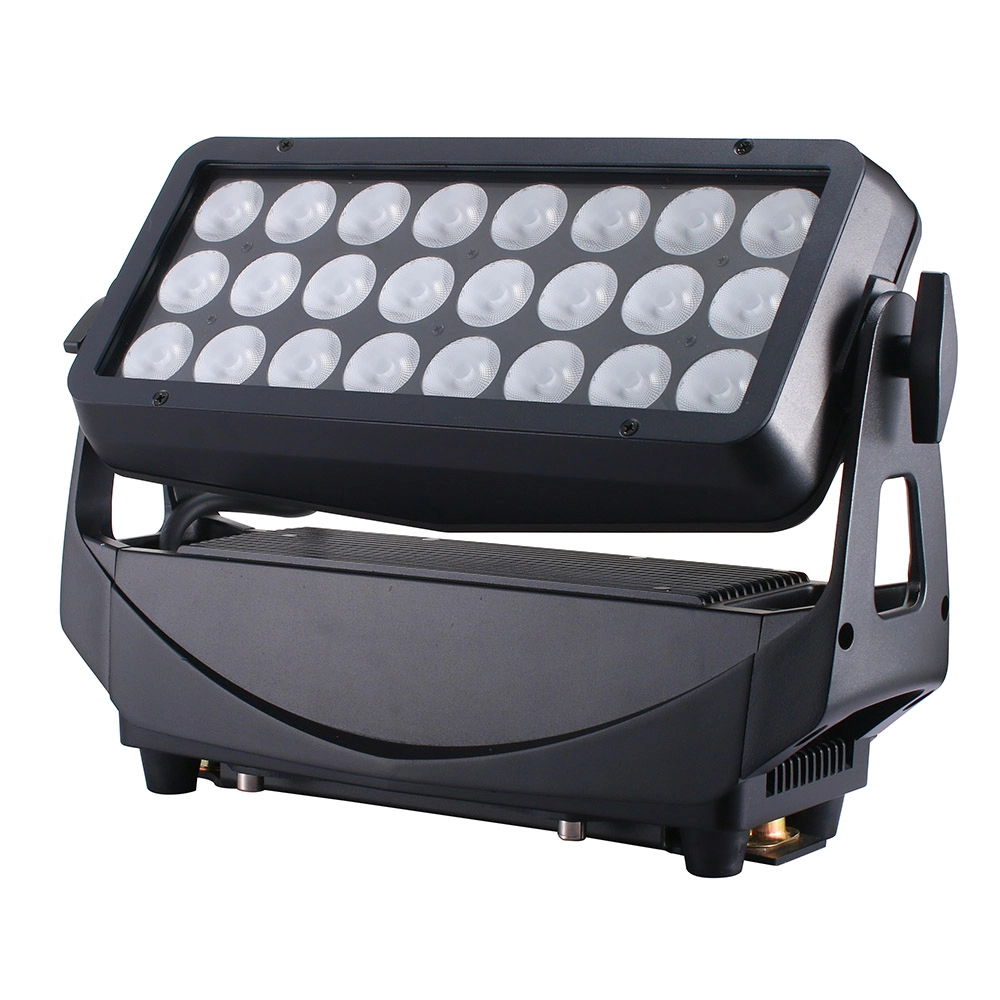
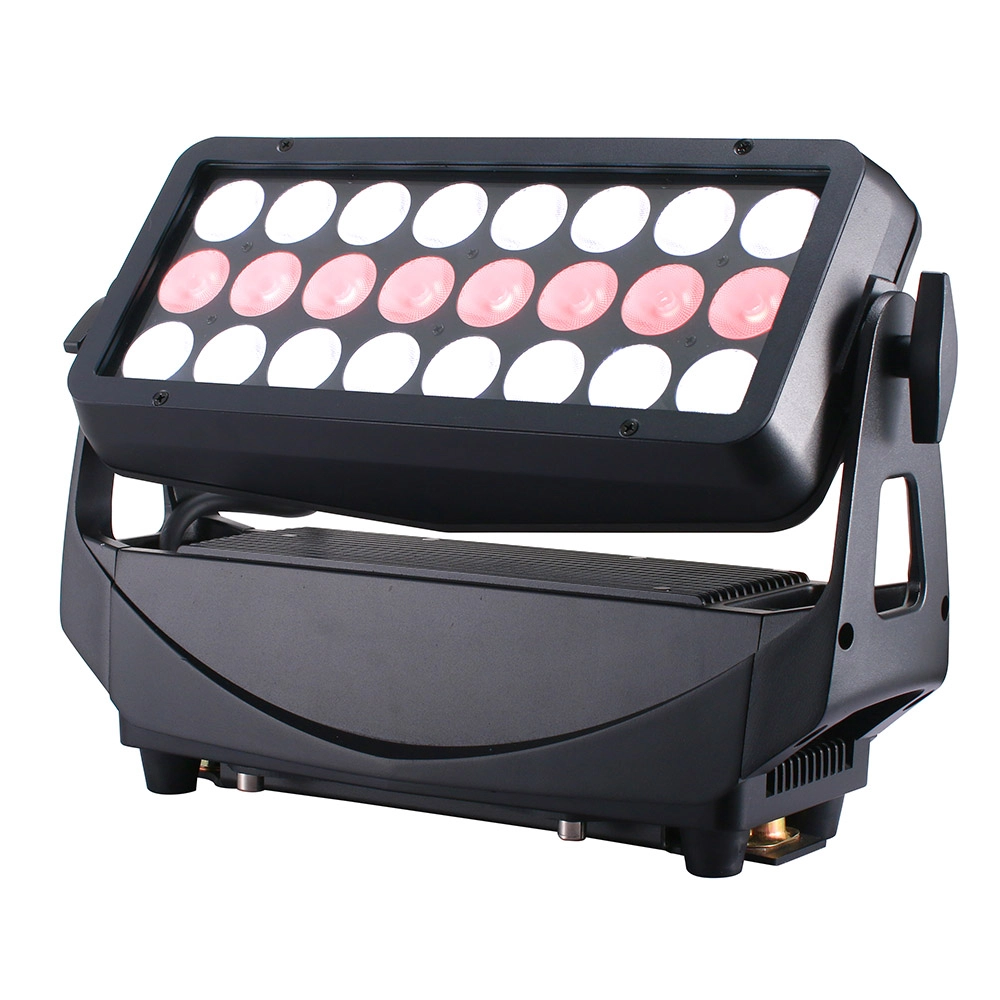
The 600W RGBALC IP65 Blinder Par Can illustrates a more compact static-format option with DMX512/RDM control and a different set of color and channel options. Its current technical table lists a 400W maximum input-power value even though the marketed LED arrangement is described under a 600W model name. This distinction matters when specifying power distribution and comparing equipment quotations. Neither product should be described as an exact substitute for another without optical, control and placement testing.
Power Distribution, Cooling and Rigging
Audience blinders can involve significant electrical load, and a power plan should be based on the correct whole-fixture data rather than headline LED source wattage. The number of fixtures and approved wiring arrangement affect distribution, connectors and protective equipment. Qualified technicians should verify the appropriate circuits, supply requirements and any limits on power linking. A detailed design should also leave adequate access for inspection and maintenance during the production.
LED units may use cooling fans, heat sinks and temperature monitoring, but those features vary by actual model. Even an IP65 fixture requires correct cable and connector installation and operation within its documented environmental limits. Moving head designs add clearance checks for the full movement range, along with the necessary secondary safety attachments. These installation questions belong in the final equipment and rigging approval, not as an afterthought after the visual effect has been selected.
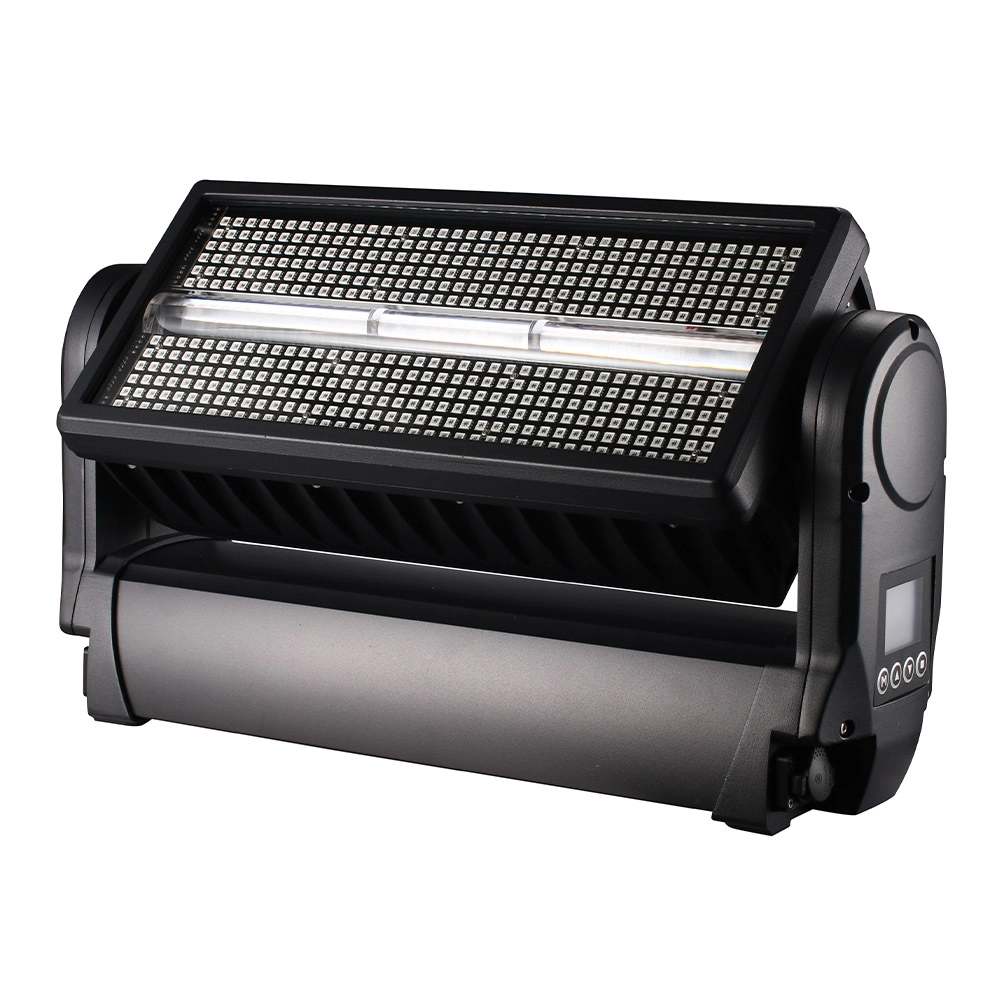
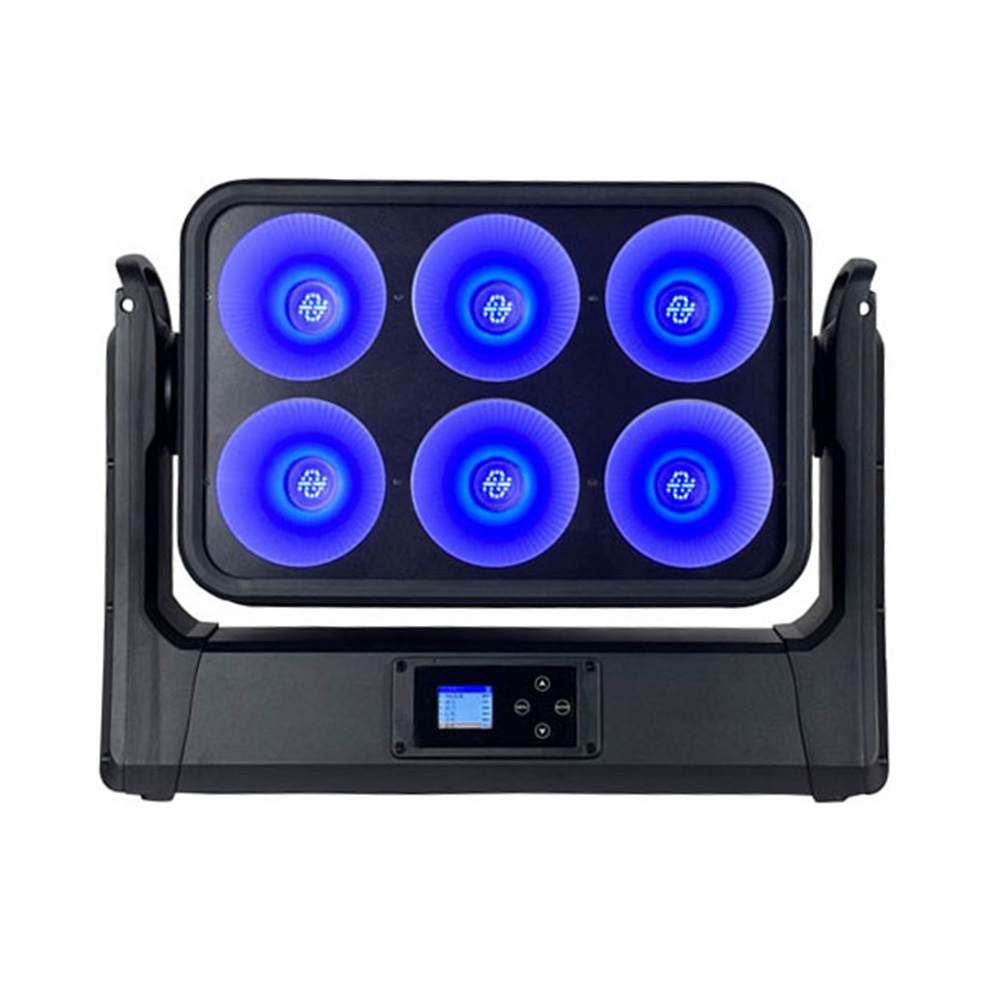 6×200W RGBW IP65 Moving Head Blinder
This fixture adds programmed directional movement to the blinder effect. Its listed 200-degree tilt requires movement clearance. DMX512 and RDM support its control setup. Ask for model-specific output measurements before approving audience placement.
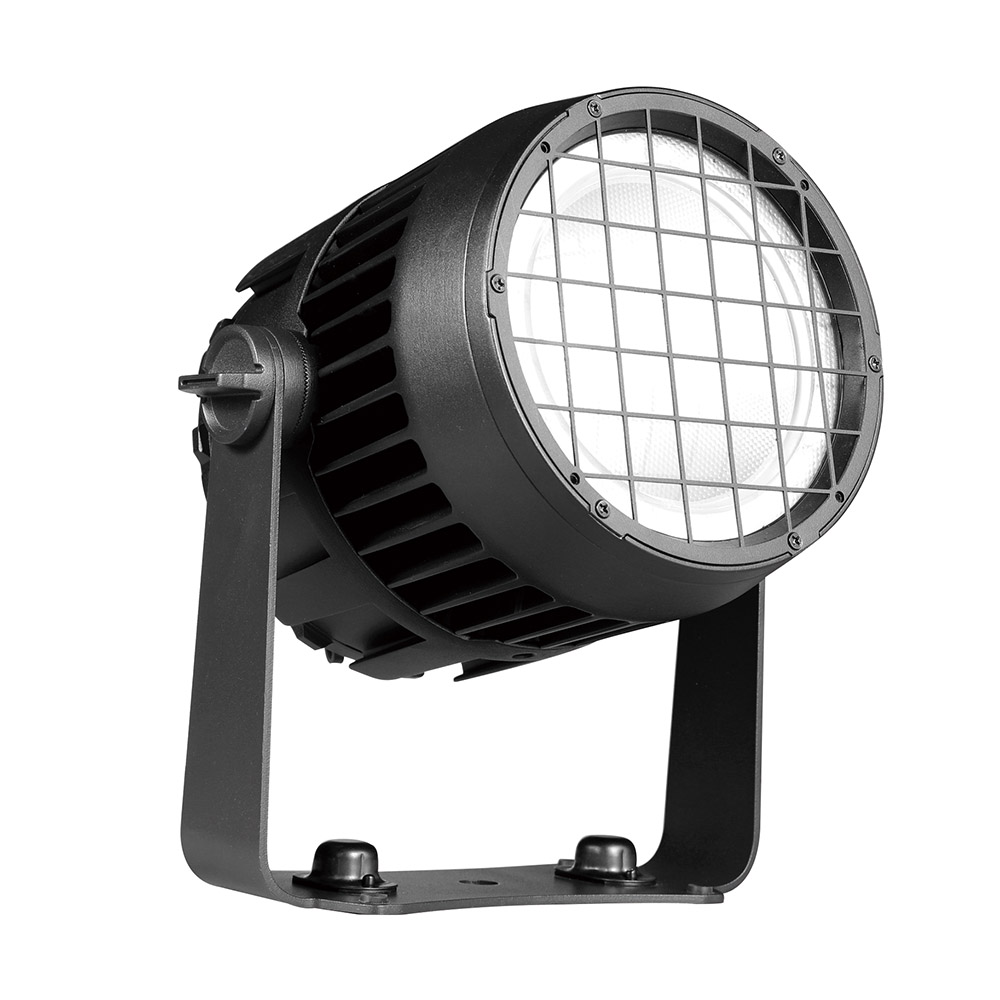 600W RGBALC IP65 Blinder Par Can
A static blinder format can suit fixed stage accent positions. Its current specification includes DMX512 and RDM control. The listed maximum input power is 400W, distinct from its marketed source configuration. Verify lens choice and fixture settings against the show design.
How to Build a Practical Blinder Cue and Procurement Brief
Before asking suppliers for equipment, describe the intended audience effect and the scenes in which it should appear. Include stage dimensions, audience sightlines, probable fixture positions, expected camera use, operating environment and control-system details. Explain whether the design needs fixed units, moving fixtures, color mixing or individual cell control. This makes it possible to compare technical solutions by the actual cue rather than relying on a generic blinder-light category.
Request the current fixture manual, DMX chart, power data, optical information when available, approved mounting instructions and applicable IP evidence for outdoor projects. If the system is to be filmed, arrange an appropriate sample test with the production cameras. Document any required accessories, service arrangements and exact supplied model revisions before the order is finalized. A common technical brief gives purchasing, lighting design and venue operations the same basis for approval.
Conclusion: Use Blinder Effects Deliberately
Blinder lights can strengthen a concert transition or create a carefully controlled theatrical moment when the cue serves the performance. The most successful design is not necessarily the brightest one, but the one that balances timing, sightlines, performer visibility and audience comfort. Real fixture parameters such as movement, control modes, optics and electrical input should inform the lighting plot without replacing rehearsal and safety review. For general technical selection, consult the Audience Blinder Technical Guide; for source and cost differences, see the LED vs Halogen Blinder Guide.
For model-specific technical documents and project requirements, use the Colorful Light contact page. Share the intended cue sequence, venue layout and required equipment quantity. Confirm the latest product documentation for any proposed fixture. Project details and conditions determine which arrangement can be approved.
Blinder Lighting Design FAQs
How are blinder lights used in concert lighting design?
A blinder is typically programmed as a short visual accent for a transition, chorus or other deliberate moment rather than as continuous general stage light. Its use depends on the fixture position, output distribution and audience sightlines. Rehearse the cue from the crowd and camera positions and apply the production's safety procedures.
Can blinder lights be used in theaters without overwhelming the scene?
Yes, when a specific dramatic effect calls for them and the designer controls intensity, timing and direction. Theater productions often need more restrained transitions and careful low-level dimming. Verify the selected fixture's appearance with actors, scenery and the actual show-control system.
What is the difference between a static blinder and a moving head blinder?
A static blinder maintains a fixed direction after focusing, while a moving head adds programmed movement and additional clearance requirements. The Colorful Light 6x200W RGBW Moving Head Blinder lists 200-degree tilt and several DMX channel modes. Choose based on the actual cue, mounting and control needs.
Do LED blinder lights cause camera flicker?
Some LED output and dimming configurations can interact with camera shutter timing and create banding or flicker. Test the actual fixture with the intended frame rate, shutter, dimming and color settings. A single PWM number does not guarantee flicker-free video across all configurations.
Where should audience blinders be mounted?
Placement depends on venue geometry, audience sightlines, structural approval, production objectives and safe cable routing. Aiming decisions should avoid unnecessary direct glare and follow venue and event safety requirements. Qualified riggers should approve overhead positions and secondary safety attachments.
What power specifications matter when planning a blinder rig?
Use current whole-fixture electrical data rather than LED source names alone. For example, the Colorful Light 6x200W RGBW Moving Head Blinder lists 1200W consumption and a separate 1500W rating in its technical table. Qualified personnel should confirm circuits, input voltage and connection requirements for the supplied units.
Are IP65 blinder lights suitable for every outdoor concert?
No. IP65 describes defined dust and water-jet ingress protection when it applies to the complete tested fixture. Venue weather conditions, rigging, connections, operational limits and other safety procedures still matter. Review the model-specific documentation for the actual installation.
Which Colorful Light blinder products can be compared for stage design?
The current product catalog includes a 6x200W RGBW IP65 Moving Head Blinder and a 600W RGBALC IP65 Blinder Par Can. The first offers movement and different DMX personalities, while the second provides a more static-format option. Compare real control, optical and electrical information and test the intended visual result before buying.
◼
Product Recommendations
You May Also Like

◼
Get in Touch
Get Started with Stage Lighting Project
Want to transform your stage or venue with Colorful Light?
Explore our solutions and let us create a memorable lighting experience for your event.
Colorful Light is a professional LED stage lighting manufacturer that provides dynamic and reliable lighting solutions to customers worldwide.
© 2026 Colorful Light. All Rights Reserved.

Facebook
Instagram
LinkedIn
YouTube
Tik Tok