


How to Choose the Best Concert Lighting Equipment?
Quick Answer
Selecting the best Concert Lighting Equipment requires balancing photometrics, structural load, and venue logistics. Key technical parameters include luminous output (lux at throw distance), beam angle adjustability, power consumption per circuit, and control protocol compatibility (DMX512/Art-Net/sACN). Rigging weight limits, optical IP ratings, and thermal noise profiles further govern final procurement based on venue architecture and production rider requirements.
How Colorfullight Supports Concert Lighting Equipment Projects
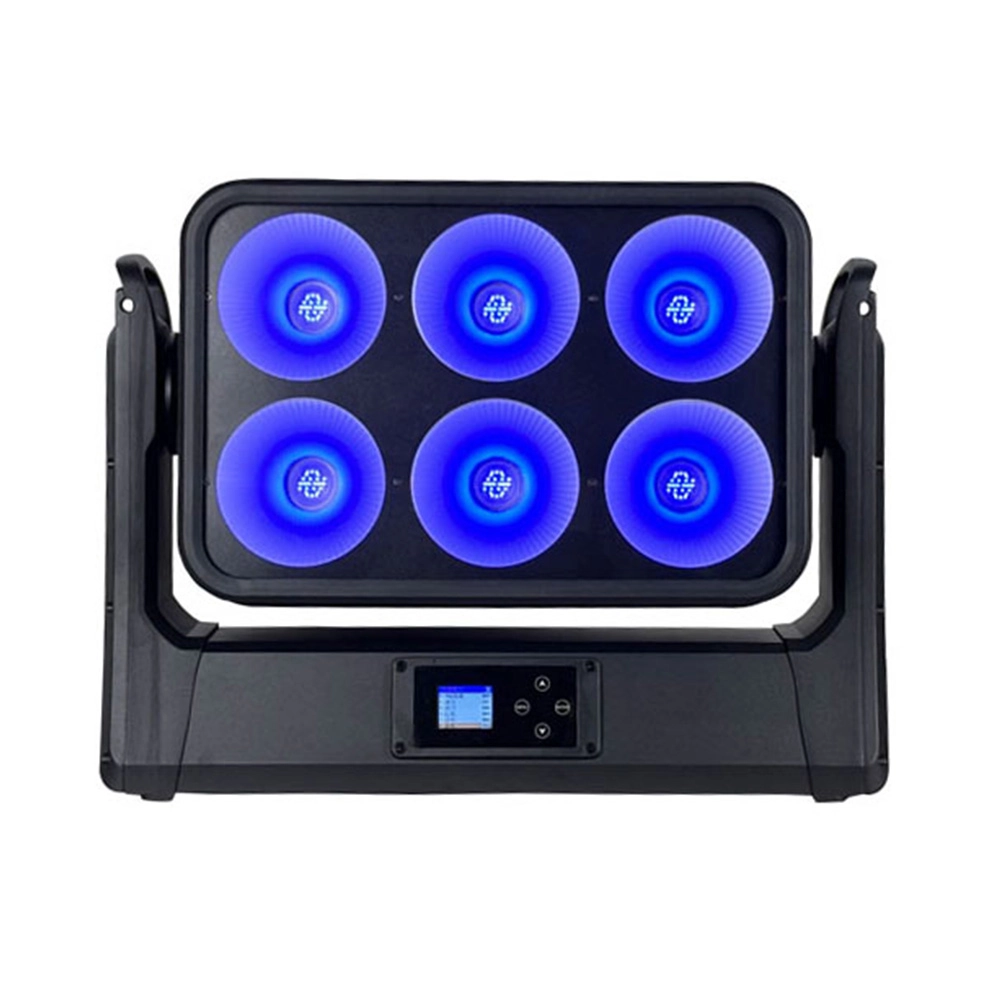
Colorfullight supports commercial production companies and system integrators through tailored OEM and ODM stage luminaire development. Our manufacturing processes incorporate automated optical calibration, goniophotometer spectral analysis, and high-temp endurance testing for moving heads, blinders, and static wash fixtures.
Before project kick-off, buyers confirm operating voltage, channel mapping profiles, rigging bracket tolerances, and target delivery windows. Colorfullight evaluates structural schematics to optimize thermal management and fixture durability. Minimum order quantities (MOQ), production lead times, and unit pricing are determined per project specification and logistics roadmap.
Specify Your Concert Lighting Rig Parameters
To accelerate engineering evaluation, share your venue dimensions, required throw distances, electrical distribution limits, total rigging weight capacity, control universe architecture, and environment rating needs. Technical engineers will analyze lux calculations and power distribution mapping for your production. Submit your staging specifications to sales@colorfullight.net or consult product engineers directly at www.colorfullight.net to plan your upcoming production cycle.
FAQ
How do beam angle and throw distance affect fixture selection?
Beam angle determines the coverage spread across the stage, while throw distance governs the required luminous intensity (lux) at the target plane according to the inverse-square law. A narrow beam fixture (1.5° to 5°) produces high-intensity aerial beams suitable for long throws in arenas. Conversely, wide-angle profiles (25° to 50°) or motorized zoom fixtures (such as 5° to 55°) provide uniform wash coverage over shorter distances without producing hot spots or excessive spill light onto projection surfaces.
Why does power consumption dictate touring concert lighting rig design?
Touring rigs must interface with fluctuating venue power supplies, typically standard three-phase power drops (e.g., 63A or 125A CEE-form distribution). High-output discharge lamps introduce substantial inductive loads and inrush currents, complicating generator sizing. Modern LED fixtures reduce continuous wattage and thermal load, lowering HVAC and generator demands. Calculating total wattage, apparent power (kVA), and power factor correction prevents circuit tripping during peak strobe bursts and synchronized full-rig blackouts.
How do IP ratings influence outdoor concert moving head choices?
Outdoor festivals expose luminaires to windborne dust, heavy rain, and relative humidity changes. Standard IP20 fixtures require bulky, acoustically reflective rain domes that alter beam optics and increase wind drag on trussing. An IP65-rated fixture provides complete dust ingress protection and low-pressure water jet resistance directly within the chassis. This eliminates inflatable covers, reduces labor setup times, and prevents internal lens condensation caused by thermal cycling between operational and standby states.
What makes DMX512 and Art-Net protocols critical for live concert control?
Standard DMX512 transmits 512 channels per universe over RS-485 cabling, which quickly bottlenecks when controlling multi-parameter pixel-mapped LED fixtures and complex moving heads. Ethernet-based protocols like Art-Net and sACN encapsulate hundreds of universes over standard Cat6 network infrastructure. This high-bandwidth transport enables low-latency communication, bidirectional remote device management (RDM) for remote addressing and error reporting, and redundant network topologies vital for fail-safe live concert execution.
How does color rendering index impact live broadcast concert lighting?
Concerts increasingly feature IMAG (image magnification) screens and 4K broadcast feeds, where camera sensors respond differently to spectral peaks than human eyes. Fixtures with a low Color Rendering Index (CRI < 70) cause unnatural skin tones and muddy color reproduction on camera sensors. High CRI (90+) and high Television Lighting Consistency Index (TLCI 90+) luminaires emit a balanced, continuous spectrum, minimizing camera sensor artifacting and reducing post-production color grading adjustments.
Why are noise levels critical when selecting indoor venue lighting?
Theatrical concert halls and intimate indoor auditoriums have strict acoustic criteria, often evaluated against Noise Criterion (NC) curves between NC-25 and NC-30. Moving heads utilize internal cooling fans and stepper motors for pan, tilt, zoom, and gobo wheels that generate acoustic noise. Selecting fixtures with intelligent fan control profiles, passive convection cooling, or ultra-quiet low-decibel operational modes ensures mechanical operation does not bleed into vocal microphones during quiet musical interludes.
◼
Product Recommendations
You May Also Like

◼
Get in Touch
Get Started with Stage Lighting Project
Want to transform your stage or venue with Colorful Light?
Explore our solutions and let us create a memorable lighting experience for your event.
Colorful Light is a professional LED stage lighting manufacturer that provides dynamic and reliable lighting solutions to customers worldwide.
© 2026 Colorful Light. All Rights Reserved.

Facebook
Instagram
LinkedIn
YouTube
Tik Tok