


How to Design a Professional Stage Lighting Setup
- Quick Answer: How Do You Design a Professional Stage Lighting Setup?
- Start with the Venue Drawing and the Production Brief
- Build the Lighting Picture in Layers
- Choose Beam Angles from the Stage Geometry
- Plan Key Light and Camera Coverage Together
- Moving Head Wash Lights for Flexible Coverage
- Beam and Special-Effect Fixtures in the Rig
- A Practical Comparison of Three Current Colorful Light Models
- Electrical Load, Power Distribution and Cable Planning
- DMX512, RDM and Control Network Layout
- Rigging Safety, Weight and Movement Clearance
- Indoor, Outdoor and IP-Rated Equipment Decisions
- Programming and Rehearsal: From Static Looks to Cues
- What Should a Professional Stage Lighting Design Deliver?
- Conclusion: Design the System Before Ordering Fixtures
- Professional Stage Lighting Setup FAQs
Quick Answer: How Do You Design a Professional Stage Lighting Setup?
A professional stage lighting setup begins with the production's visual goals and the physical limits of the venue. Before selecting fixtures, document the stage dimensions, trim height, performer positions, audience sightlines, control system and available electrical distribution. Then assign lighting roles such as front light, side light, backlight, color wash and special effects to the appropriate positions. This sequence helps prevent a rig from becoming an expensive collection of fixtures that cannot create the desired stage picture.
Good design also establishes what must be seen clearly and what may change during a performance. A theater production may prioritize faces, controlled color and quiet transitions, while a concert may require visible movement, multiple looks and impact cues. A corporate presentation adds camera coverage and presenter visibility to the brief. These different requirements should influence the lighting plan before a supplier quotes equipment or assigns model numbers.
Start with the Venue Drawing and the Production Brief
Collect accurate dimensions for the performing area, rigging points, front-of-house positions and any scenic structures that can block light. Record where performers, speakers or exhibits will actually stand, rather than using the stage footprint as one undifferentiated target. Identify audience seating levels, potential camera positions and surfaces that may reflect bright light into viewers' eyes. A basic plan view and elevation are often more useful than a list of desired fixture wattages.
The production brief should describe scenes and transitions in ordinary language so that the technical team understands what the lighting must accomplish. List whether the show needs natural-looking presenter light, a concert atmosphere, saturated backdrop color, narrow aerial beams or a single follow spot. State which effects are essential and which can be reduced if power or rigging limits become restrictive. Keep assumptions visible so they can be corrected before fixtures are purchased or installed.
Build the Lighting Picture in Layers
Front or key light supports visibility of performers and speakers, while side and backlight can help separate people from the scenic background. Wash lights create broader color fields, and effect fixtures add accents that are not meant to replace everyday stage coverage. A follow spot may be appropriate when an operator needs to track one performer through changing positions. Each layer should have a specific purpose so that changing a concert cue does not accidentally eliminate the light needed for basic visibility.
These roles can be achieved using different fixture families depending on the venue. Static washes may work for a fixed backdrop, while moving head washes are useful where one fixture must serve multiple stage zones. Beam Spot fixtures create patterns and concentrated effects, whereas blinder or strobe fixtures provide another type of visual punctuation. Do not assume that a high-power fixture can replace all of these functions just because its product name includes the words beam, spot or wash.
Choose Beam Angles from the Stage Geometry
Throw distance, fixture position and optical distribution influence the pool of light that reaches a performer or scenic surface. As a first geometric estimate for a symmetrical beam, approximate diameter is two times throw distance multiplied by the tangent of half the beam angle. This relationship does not model real edge falloff, fixture lens design or uneven intensity, so it is not a replacement for photometric data. Ask the supplier for measured beam and field information when the stage requires specified uniformity or light levels.
A wider angle generally covers a larger area at the same distance, while a narrower optical setting creates a more concentrated field. The correct overlap between wash fixtures depends on their individual distribution and the surfaces being lit. For a performance area, test important positions where actors or presenters move between pools of light. An equipment list should reflect the coverage calculation, not an arbitrary rule such as buying the same number of lights for every stage size.
Plan Key Light and Camera Coverage Together
The audience must be able to see faces, but a camera may respond to the same scene differently from the human eye. Check how front, side and backlight contribute to the final image before introducing strongly colored effects. Where a production uses multiple cameras, assess each camera angle for unwanted glare, excessive contrast and changes in exposure during cues. Accurate skin tone and costume rendering may require measured color-quality data and sample footage rather than reliance on the letters RGBW in a product description.
For a theater or presentation, consistent facial visibility may matter more than creating the brightest possible look. A concert design can use periods of stronger contrast, but the camera director and lighting programmer still need an agreed exposure strategy. Test both bright and low-level cues at the intended frame rates and shutter settings. A published LED refresh figure does not guarantee that every dimmer level and camera combination will be free of visible banding.
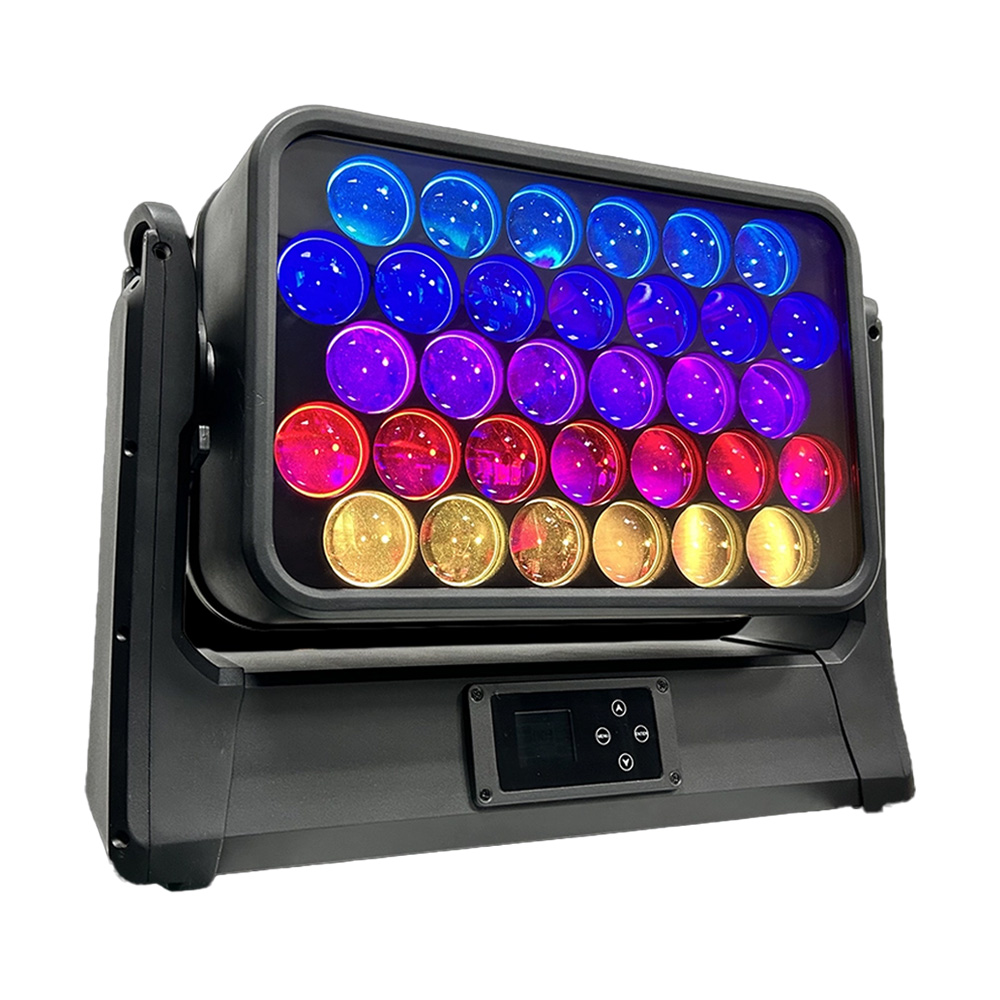
Moving Head Wash Lights for Flexible Coverage
A moving head wash is useful where fixtures need to address different performers, scenic areas or stage zones during the same show. Zoom range, pan and tilt, color mixing, dimming behavior and control personalities all matter to the final programming result. The current Colorful Light catalog lists a 32×25W RGBW IP65 Moving Head Wash with a 4°–60° zoom range and five independently controllable segments. These features can support different looks, but measured optical distribution remains necessary before specifying coverage.
Segment control increases programming possibilities but may also require a larger DMX personality and more time during patching. A simpler wash mode may be preferable when the fixture's job is to maintain one broad color. Check the planned console and the supplied manual before selecting channel modes across a rig. If the stage will be outdoors, verify the complete fixture's documented ingress protection and connector installation rather than assuming a model's IP label covers every exposure.
Beam and Special-Effect Fixtures in the Rig
Narrow-beam lights help create visible aerial structure and concentrated accents, especially in a production where haze is part of the visual design. A Beam Spot may also provide color or gobo effects, depending on its optical system and control configuration. The Colorful Light 300W IP65 Mini LED Moving Head Beam Spot is currently listed with a 1.6° beam, a 200W white LED light source and 300W whole-fixture consumption. It illustrates an effects-oriented optical task, not a substitute for the wide and even coverage expected from a wash.
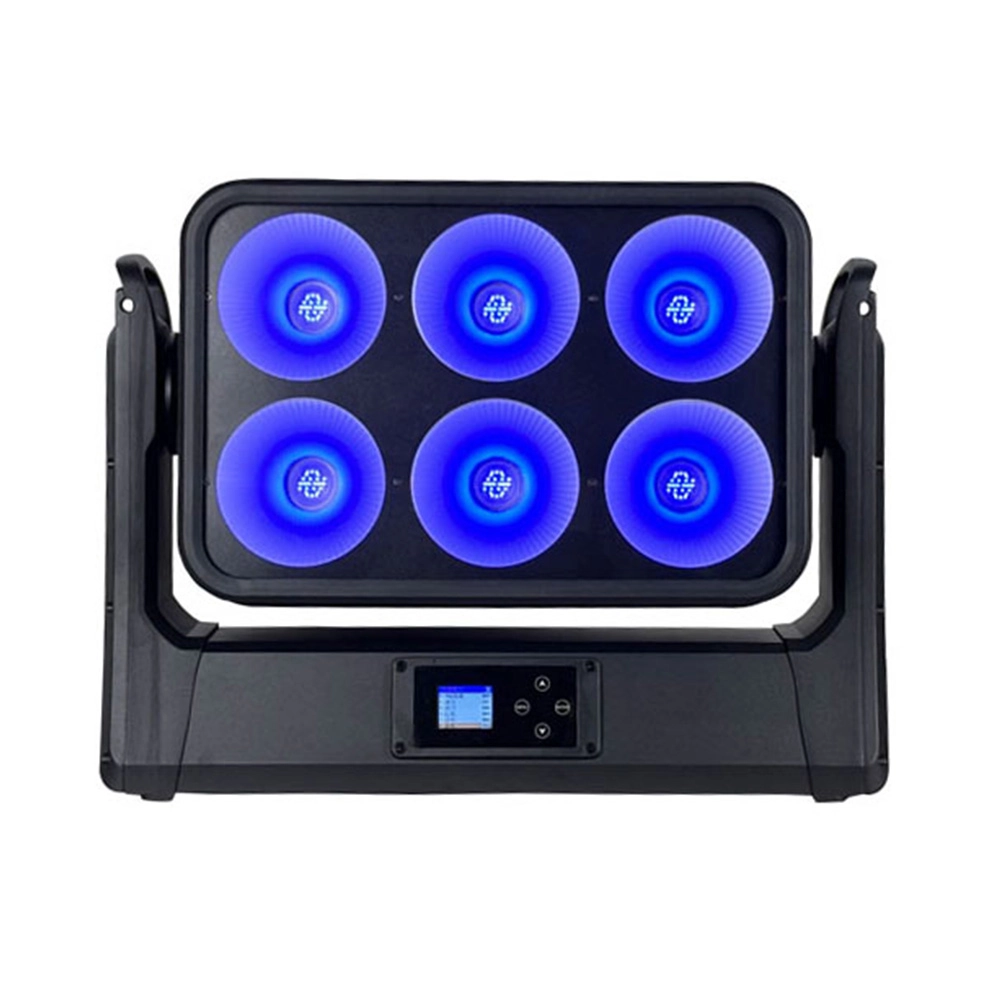
Blinders and strobes can create high-impact musical accents but should not become the default illumination layer. The 6×200W RGBW IP65 Moving Head Blinder is listed with a 55° lens angle, 200° tilt and DMX512/RDM modes of 21, 25 and 49 channels. Its output should be evaluated with audience sightlines, glare and show safety in mind before a cue is approved. Use such fixtures deliberately, and avoid programming excessive direct flashes merely because the hardware can produce them.
A Practical Comparison of Three Current Colorful Light Models
Three current product formats show how separate tasks influence a stage equipment list. The 32×25W RGBW moving wash offers broad color coverage and zoom, the 300W Mini Beam Spot offers a concentrated beam with pattern effects, and the 6×200W moving blinder provides high-impact colored accents with directional movement. Their source arrangements, fixture consumption and DMX personalities are different. Comparing these models by their production role is more meaningful than placing all three in one wattage-ranked list.
The examples below use real product records and images from the Colorful Light backend rather than photographs of a hypothetical completed installation. They are intended to demonstrate product categories and engineering questions, not to promise a particular lux value or audience effect. Verify the current channel charts, optical data and mounting instructions for any selected SKU. Procurement approval should be based on the actual quantity and conditions of the project.
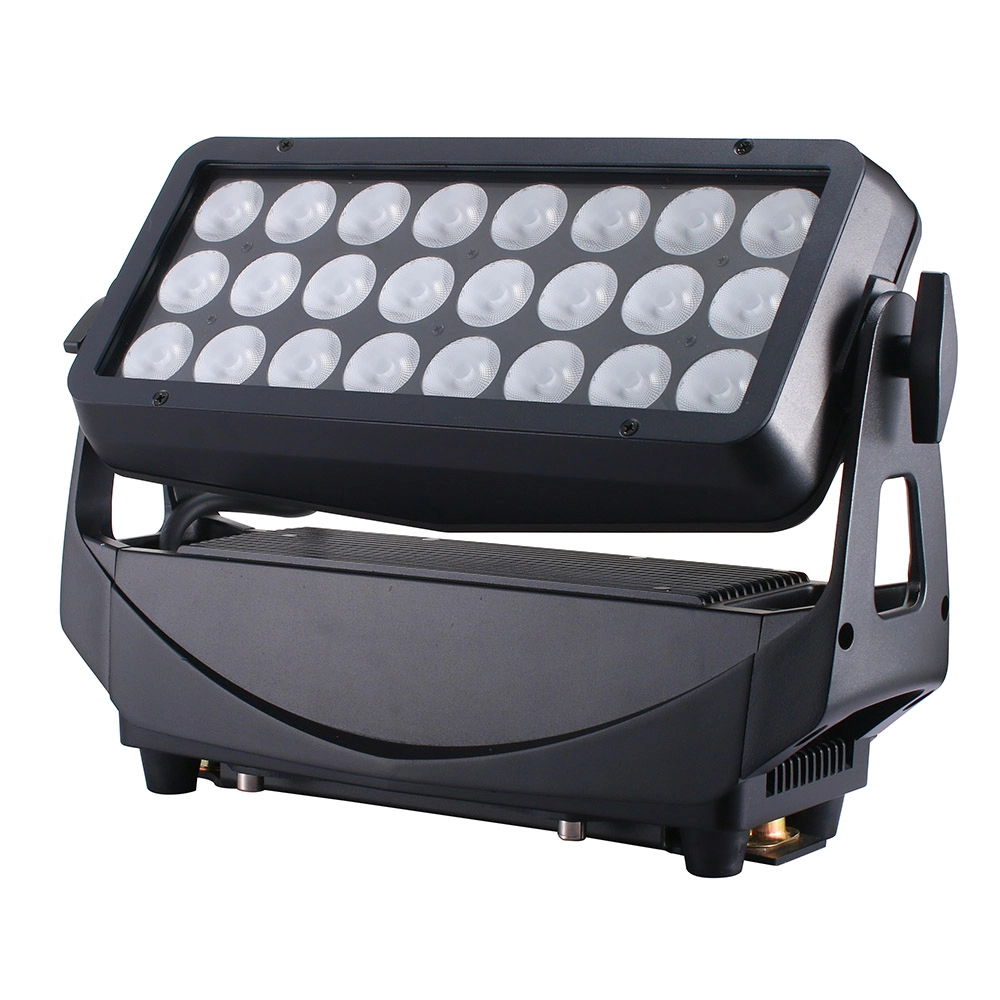
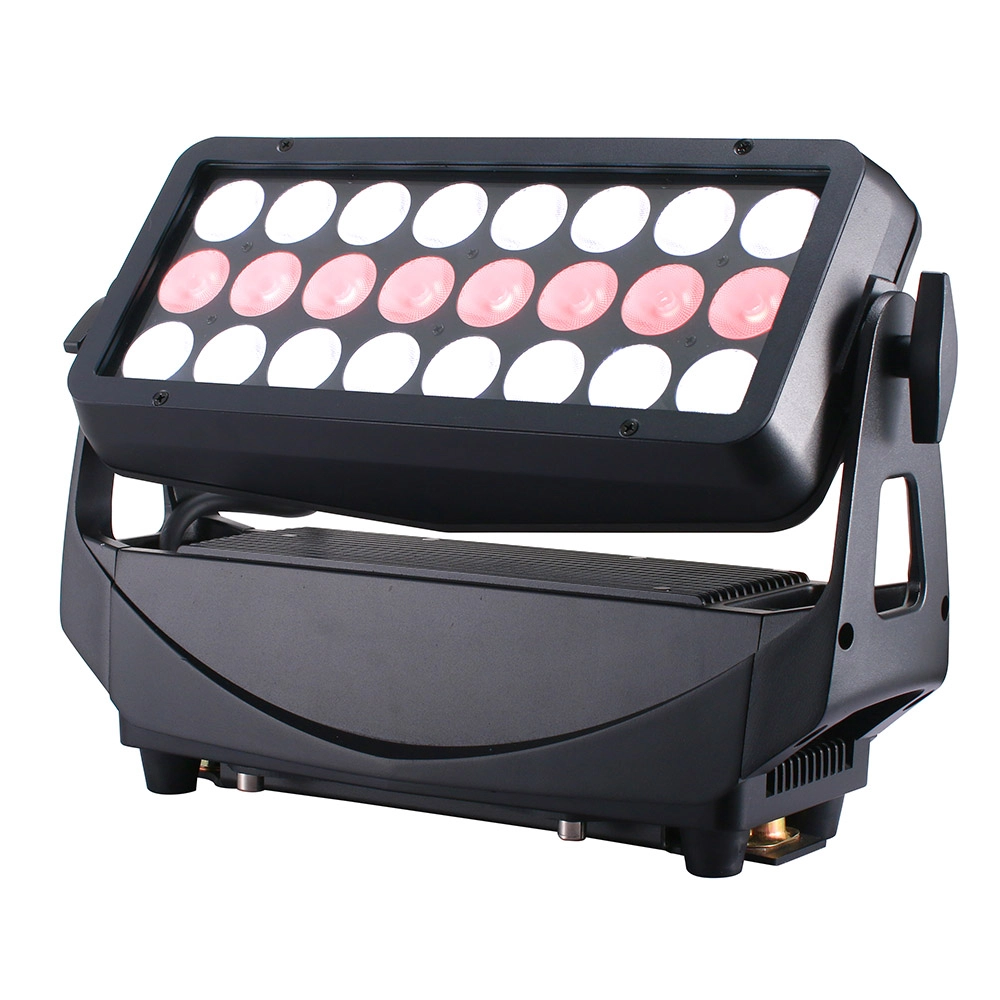
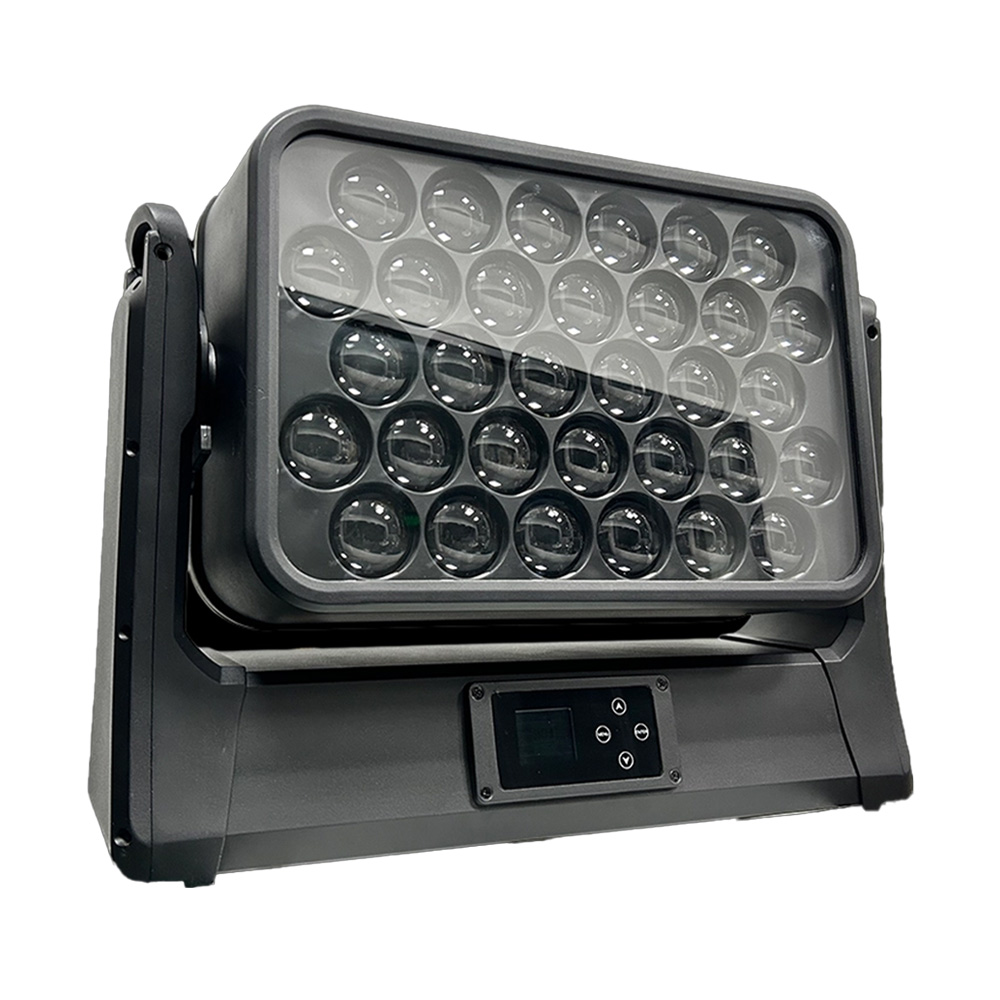 32×25W RGBW IP65 Moving Wash
This moving wash supports a documented 4–60 degree zoom range. Its RGBW sources offer color effects across five segments. It can address changing stage zones through movement and console control. Confirm measured coverage before final placement.
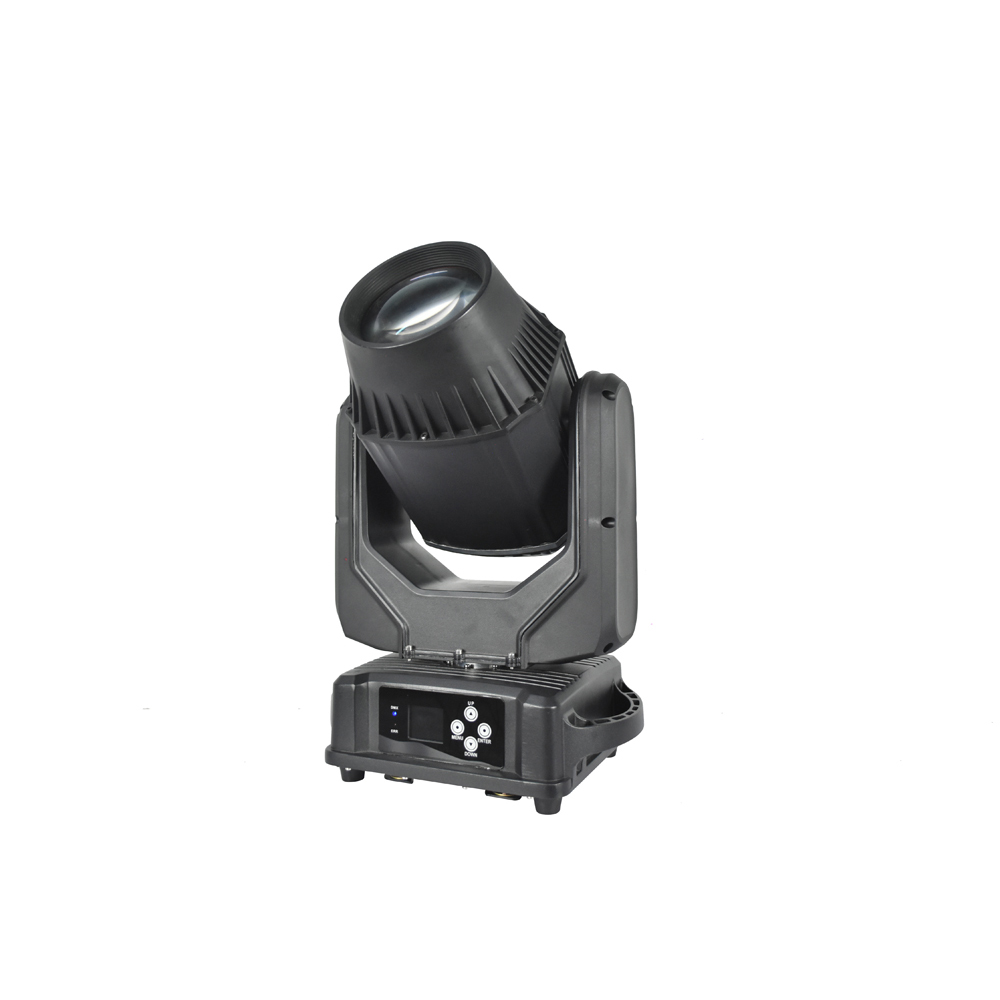 300W IP65 Mini Beam Spot
This model lists a narrow 1.6-degree beam. It is designed for beam and pattern effects rather than wide area illumination. Its LED module is rated separately from whole-fixture consumption. Verify optics and the DMX chart for the intended cue.
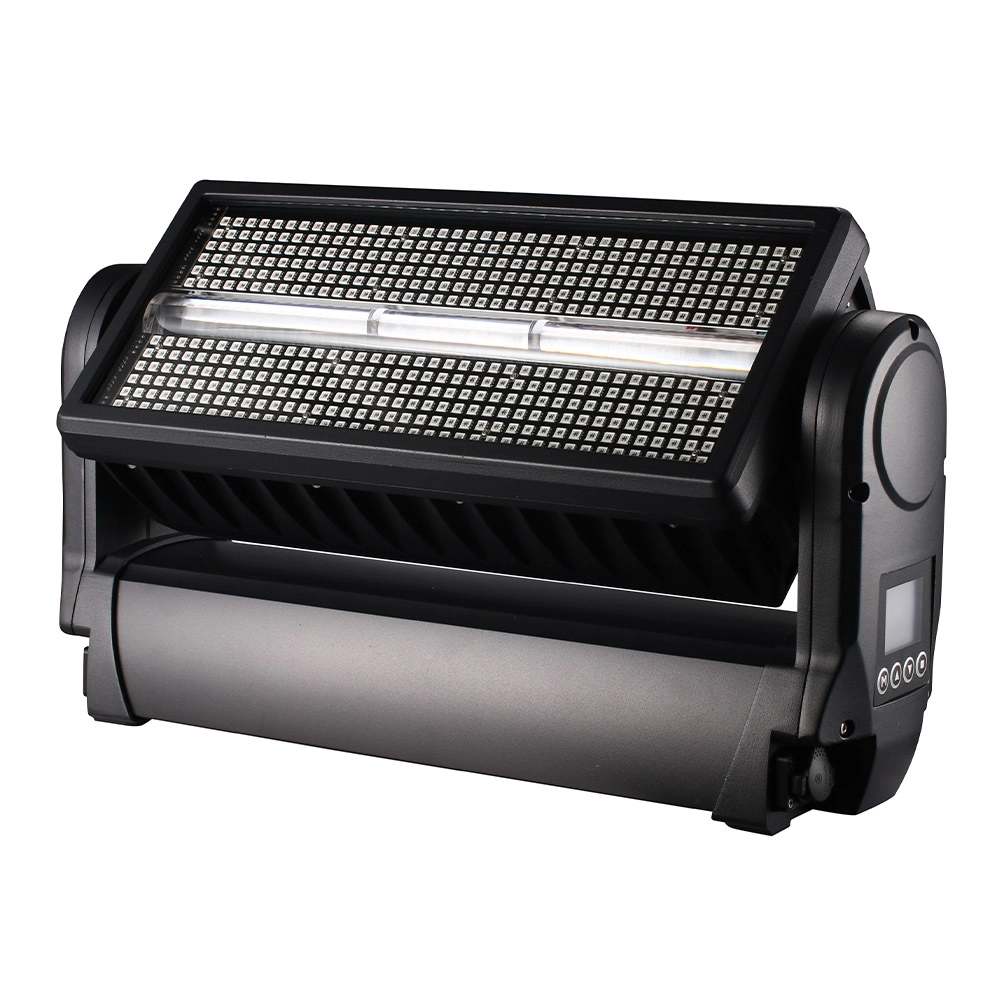
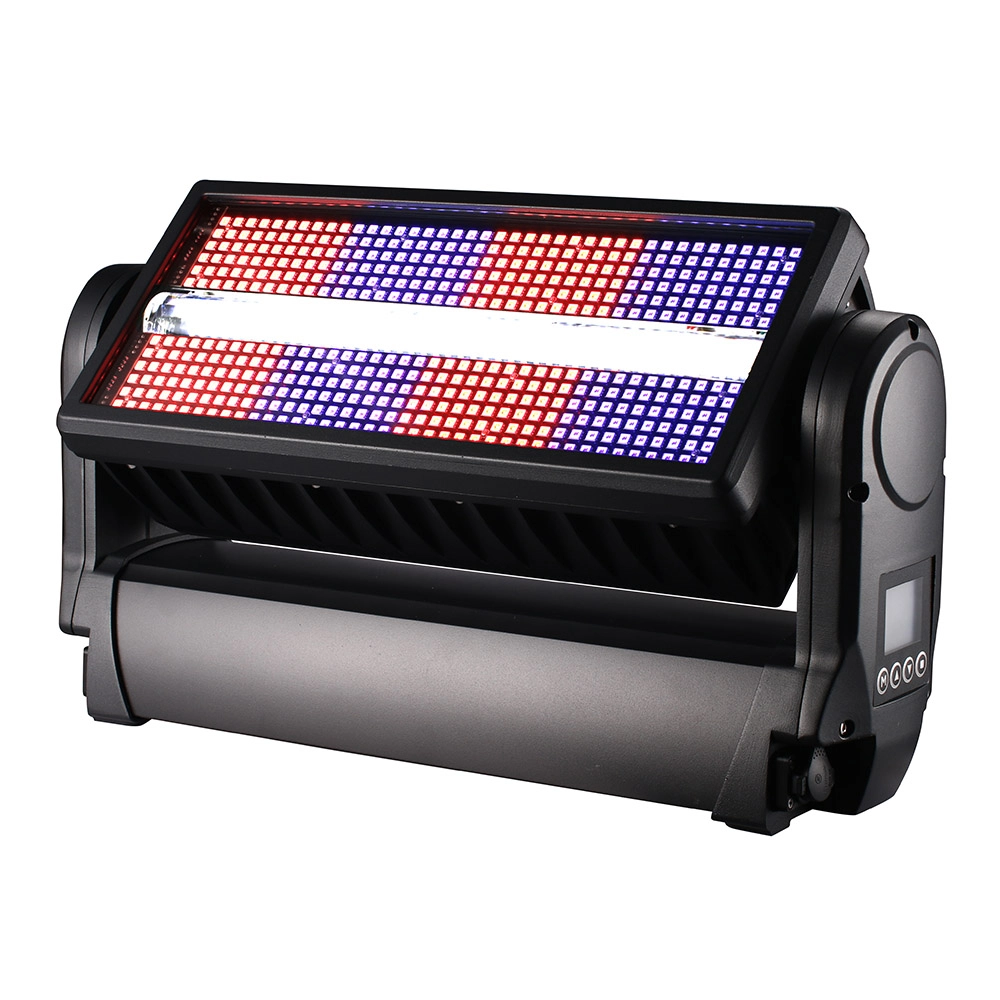
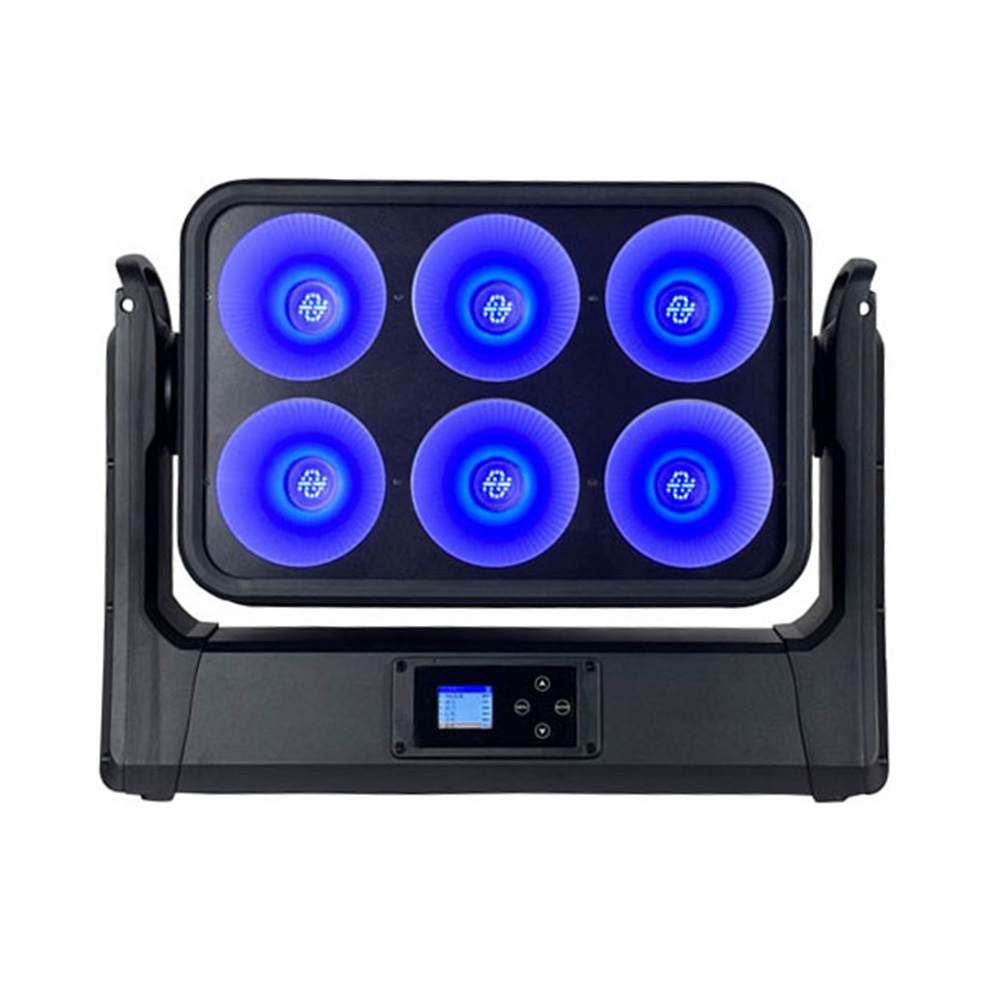 6×200W RGBW Moving Blinder
This fixture brings colored accents and 200-degree tilt movement. It has its own channel modes and electrical ratings. Audience positioning and glare require deliberate review. Use it for suitable effects, not as a universal key light.
Electrical Load, Power Distribution and Cable Planning
An electrical plan must account for the whole-fixture load rather than only the LED module wattage or the product name. Drivers, fans, motors and other internal components contribute to input power. For example, the 300W Mini Beam Spot lists a 200W LED source and 300W consumption, while the 6×200W blinder lists 1200W consumption and a separate 1500W power rating. These distinctions should be preserved when the qualified electrical team checks circuits, connectors and protective equipment.
Compile a schedule of fixtures, electrical input ranges, confirmed demand and power connection types before approving the rig. The system design should consider practical installation limits and any manufacturer restrictions on linking or cabling. Do not estimate circuit capacity simply by dividing a nominal LED label by the supply voltage. Qualified personnel should verify the final distribution design, especially for temporary event power or mixed legacy and LED inventories.
DMX512, RDM and Control Network Layout
Stage lighting equipment needs a predictable control path from the console to each installed fixture. Record the DMX universe, starting address and selected channel personality for every unit in the approved plot. RDM may simplify compatible configuration or identification tasks, but its exact command support varies by model and controller. Where network protocols are required, document the relevant nodes, routing and service access rather than assuming that all fixtures support the same features.
A rig with many moving lights can require substantial channel capacity, so control planning should happen before purchasing. Patch one sample fixture using the exact channel chart and verify movement, zoom, colors, shutters and effects against the show file. Identify optional functions separately from standard ones, such as wireless control or extra network interfaces. Save the validated configuration with the equipment record so that touring crews and maintenance teams can reproduce it.
Rigging Safety, Weight and Movement Clearance
Every suspended fixture adds loads and movement considerations to the support system. Check the approved mounting interface, manufacturer-provided weight, permitted orientation and secondary safety attachment for the actual model. A moving head needs adequate clearance through its full pan and tilt range, not only when parked. Cable routing should prevent snagging, connector strain or contact with scenery and other fixtures during the show.
Moving a lighting plot from one venue to another requires a new review of the available structure and sightlines. A configuration that fits a large festival truss may not suit a low-ceiling theater or a temporary exhibition stand. Wind and environmental conditions must be evaluated at the level of the complete outdoor rig rather than inferred from a fixture's IP marking. Qualified riggers and electricians must apply current venue rules and the relevant manufacturer instructions.
Indoor, Outdoor and IP-Rated Equipment Decisions
Environmental requirements influence equipment selection alongside optics and visual design. An indoor dry venue may use protected fixtures without the same water-ingress rating expected in exposed outdoor production. An IP65 fixture describes defined dust-tight and water-jet protection when the rating applies to the complete product as tested. It does not mean the equipment can be submerged, operated in every storm or installed without attention to connectors and cables.
Treat temperature, condensation, rain exposure and corrosion as separate questions in the project brief. Where the show includes water effects, describe their distance and direction rather than simply asking for waterproof lighting. Verify the model-specific IP evidence and approved operating limits before using exposed positions. A high protection rating does not replace appropriate venue safety procedures, weather monitoring or electrical protection.
Programming and Rehearsal: From Static Looks to Cues
The fixture plan becomes useful only when it can reproduce the show's intended looks with the available control system. Begin with a stable performer-visible state, then add wash colors, movement and effects as separate layers. Test transitions rather than just isolated looks because an abrupt cue can produce unwanted gaps in visibility or camera exposure. Include the relevant performers and the actual scenic surfaces in rehearsal whenever possible.
Document which fixtures are essential for safe or continuous visibility and which are optional accents. That distinction helps the operator recover when an effect fixture is removed from service or an outdoor cue is canceled because of the weather. It also clarifies the bill of materials for rental and replacement decisions. Store the approved patch, focus information, firmware notes and main cue versions with the production documentation.
What Should a Professional Stage Lighting Design Deliver?
A finished design package should identify venue geometry, performance zones, fixture roles, rig positions and the expected coverage of the important stage areas. It should include the selected models, documented optical requirements, electrical distribution plan, control addressing and mounting constraints. Provide relevant current technical manuals and the commissioning checks needed before the first performance. The package should be detailed enough that procurement, rigging and programming teams are working from the same assumptions.
Do not mistake a supplier quote for a complete engineering design if essential placement, circuit and control decisions remain undefined. Where several models could serve one role, keep alternatives visible with their known technical differences and testing requirements. A sample test or lighting visualization can reduce the risk of ordering unsuitable equipment at scale. The final approval should identify any project-specific uncertainties rather than concealing them behind generic performance claims.
Conclusion: Design the System Before Ordering Fixtures
A reliable professional stage lighting setup is built from the required stage picture, venue geometry and practical installation conditions. Front light, wash, beams and special effects should have distinct jobs even when a modern fixture can perform several roles. The technical plan must connect optics, electrical load, control mapping, safe rigging and the real production cues. For supplier-level specifications, see the related LED Moving Head Specification Guide and the Event Lighting Equipment Checklist.
For a model-specific discussion, share the stage drawing, control requirements and intended use via Colorful Light's contact page. The request should include fixture quantities and relevant environmental conditions. Ask for current technical and safety documentation for any shortlisted model. Final specification and installation must be checked against actual project requirements.
Professional Stage Lighting Setup FAQs
How do I start a professional stage lighting setup plan?
Start with stage dimensions, performer positions, sightlines, trim height, control requirements and available electrical distribution. Assign roles to front light, washes, backlights and effects before selecting fixtures. Confirm optical coverage and mounting conditions with a lighting plan, not a generic fixture count.
Should I choose beam lights or moving head wash lights for stage coverage?
Wash lights are usually better suited to broad color or performer coverage, while narrow beams provide concentrated effect looks. The current Colorful Light 32x25W moving wash lists 4–60 degree zoom, whereas the 300W Mini Beam Spot lists a 1.6-degree beam. Test the proposed optics at actual throw distances.
How many DMX channels are needed for a stage lighting system?
The answer depends on each model's channel personality and the quantity of fixtures, not simply the number of lights. Build an address and universe schedule from the current manufacturer DMX charts. Verify the configuration with the actual console or node before production.
Can an IP65 moving head be used for any outdoor concert?
Not automatically. IP65 represents defined ingress protection for a correctly tested complete fixture, but wind, connection integrity, site weather and electrical and rigging requirements remain important. Use model-specific documentation and the venue's safety procedures.
How should lighting designers plan electrical power?
Use whole-fixture input and consumption data rather than just LED source wattages. Keep source rating, consumption and power rating as separate technical fields when the backend identifies them separately. Qualified electrical personnel should verify circuits, connectors, protections and any linking restrictions.
What should I check for camera-friendly stage lighting?
Test real cameras using the intended shutter, frame rates, dimming levels and colors. Assess facial visibility, white-light quality and flicker or banding in recorded footage. A quoted PWM value or RGBW color configuration does not by itself guarantee a desired camera result.
Which documents belong in a professional stage lighting design package?
Keep the lighting plot, fixture list, photometric assumptions, electrical plan, DMX addressing, rigging instructions, site environmental requirements and current model-specific manuals. Document test results and show configuration. Ask the supplier to verify any claimed certification or ingress protection against the exact model.
◼
Product Recommendations
You May Also Like

◼
Get in Touch
Get Started with Stage Lighting Project
Want to transform your stage or venue with Colorful Light?
Explore our solutions and let us create a memorable lighting experience for your event.
Colorful Light is a professional LED stage lighting manufacturer that provides dynamic and reliable lighting solutions to customers worldwide.
© 2026 Colorful Light. All Rights Reserved.

Facebook
Instagram
LinkedIn
YouTube
Tik Tok