


Moving Head Wash Lights: Zoom, RGBW, DMX & Selection
- Moving Head Wash Light vs. Static Wall Washer vs. Hybrid Fixture
- How Beam Angle, Zoom and Throw Distance Affect Coverage
- Color Mixing: What RGBW Helps — and What It Does Not Prove
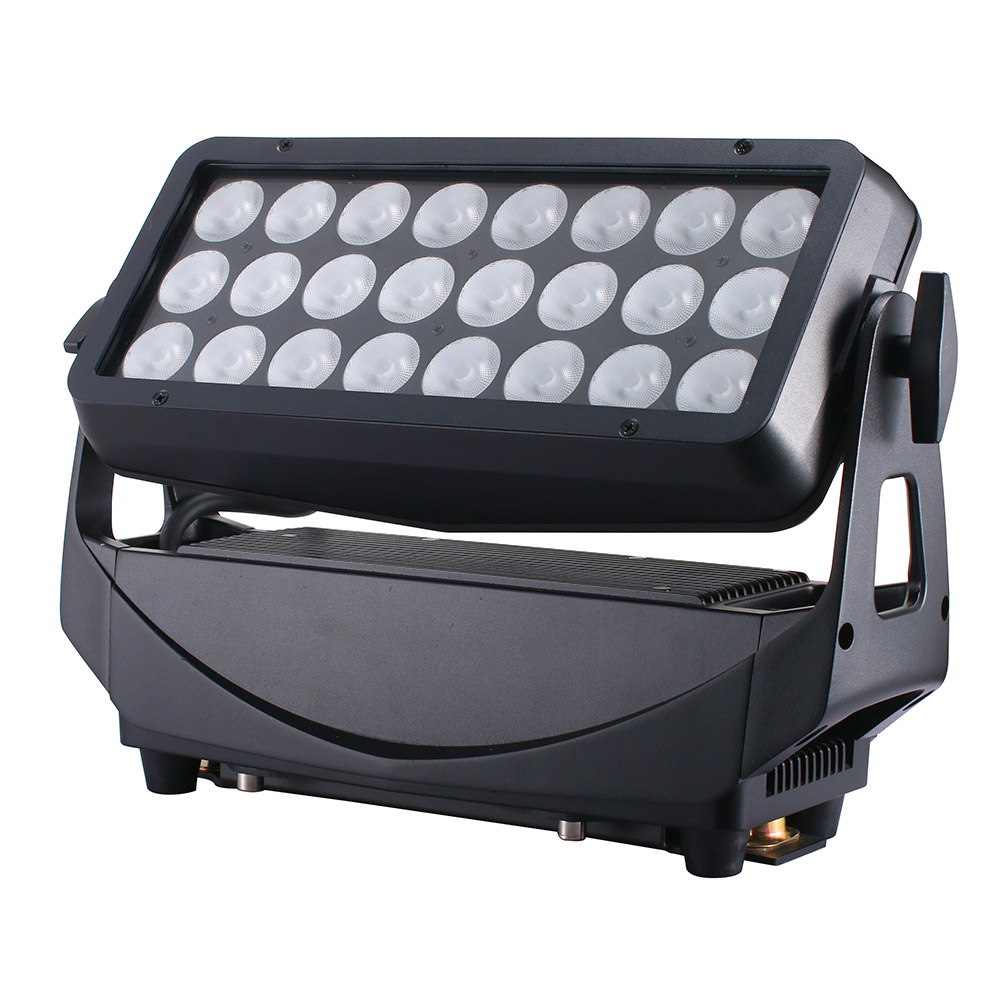
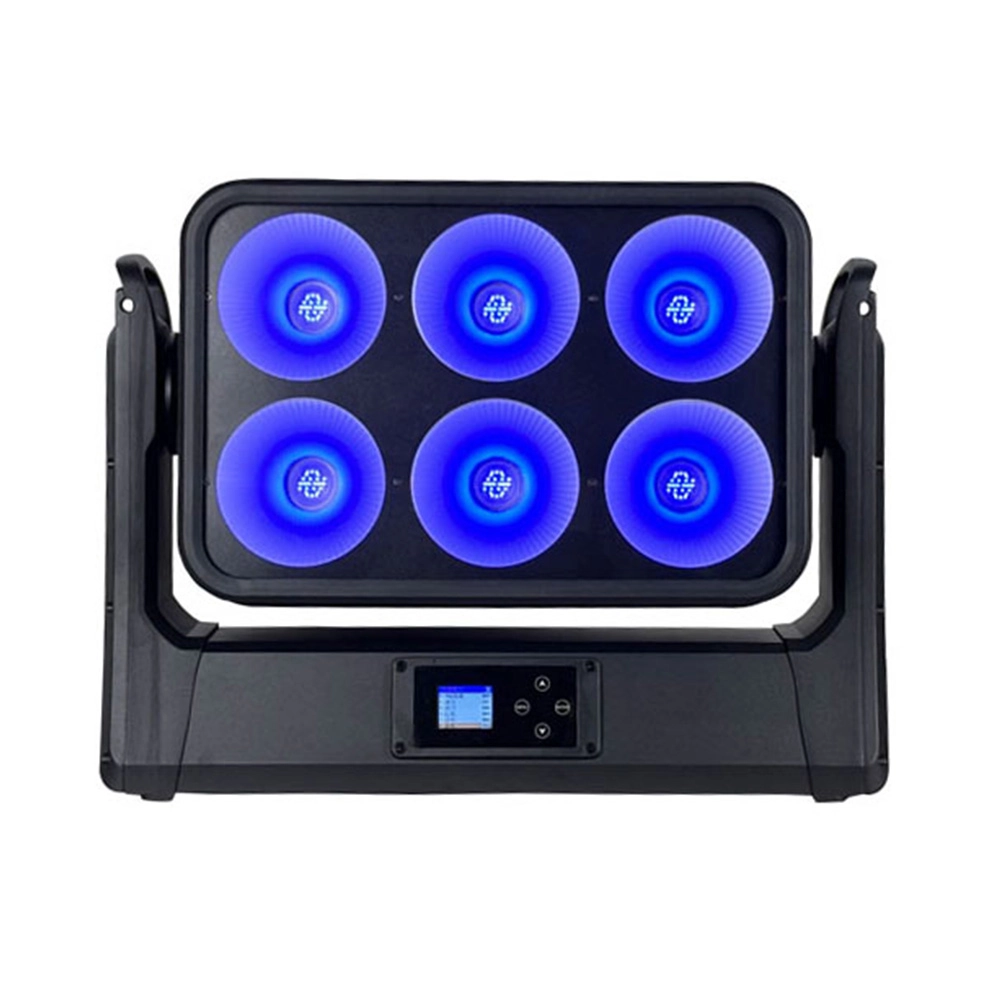
- Two Outdoor-Rated Moving Wash Product Examples
- DMX512, RDM, Segments and Show Programming
- IP65 vs. IP20: Choosing Indoor or Outdoor Moving Head Wash Lights
- Cooling, Rigging and Camera Compatibility
- B2B Moving Head Wash Light Buying Checklist
- Frequently Asked Questions About Moving Head Wash Lights
- What is the difference between a moving head wash light and a static wall washer?
- What beam angle should I select for moving head wash lighting?
- Does an RGBW moving head wash light guarantee natural white light?
- Can moving head wash fixtures be used outdoors?
- Do moving head wash lights work with DMX512 consoles?
- How can I prevent flicker when recording LED moving wash effects?
- What information should a rental company request before ordering?
- Related Stage Wash and Effect Fixtures
- Discuss Your Stage Wash Lighting Requirements
- Frequently Asked Questions
QUICK ANSWER
What is a moving head wash light? It is a motorized stage fixture designed to spread colored light over performers, scenic elements or stage areas. Unlike a static wall washer, it can redirect the beam during cues; models with zoom can also change coverage. Buyers should compare the published beam or zoom range, RGBW output, DMX modes, protection rating and actual stage geometry rather than relying on LED wattage alone.
A moving head wash light is most useful when a production needs repeatable color changes and dynamic coverage from the same rigging position. A narrow beam can emphasize a smaller part of the stage; a wider wash can fill backgrounds or connect multiple fixtures into an even look. There is no universally correct beam angle or fixture power rating because the outcome also depends on throw distance, optical efficiency, target area and how fixtures overlap. For available product options, compare the outdoor wash lighting range with the wider moving head lighting category.
Key Takeaways
Coverage: Evaluate beam angle, field angle, throw distance and zoom together, not independently.
Control: Check DMX channel modes, RDM support and any available segment effects by model.
Environment: Distinguish IP65 fixtures from IP20 indoor models; protection is not interchangeable.
Procurement: Use exact product specifications and an installation plan before ordering a rental fleet or project quantity.
Moving Head Wash Light vs. Static Wall Washer vs. Hybrid Fixture
Wash lighting is a function, not a guarantee that every fixture has the same movement, optics or control behavior. Motorized wash lights change direction through their movement system and sometimes alter coverage with zoom. Static wall washers hold a fixed aiming direction and suit facades or scenic surfaces where movement is unnecessary. Hybrid moving heads add other functions, such as strobe or beam effects, but those features can also make programming and maintenance more complex.
| Fixture type | Typical lighting role | Selection consideration |
|---|---|---|
| Moving head wash | Dynamic stage color coverage; repeatable positions and transitions | Check movement, zoom range, beam shape, DMX modes and rigging |
| Static wall washer | Lighting a fixed wall, backdrop or scenic feature | Check lens distribution, fixture spacing and mounting geometry |
| Hybrid wash/strobe or Aura effect | Color washes combined with patterns, strobe or visual effects | Check which modes are available at the same time and their control requirements |
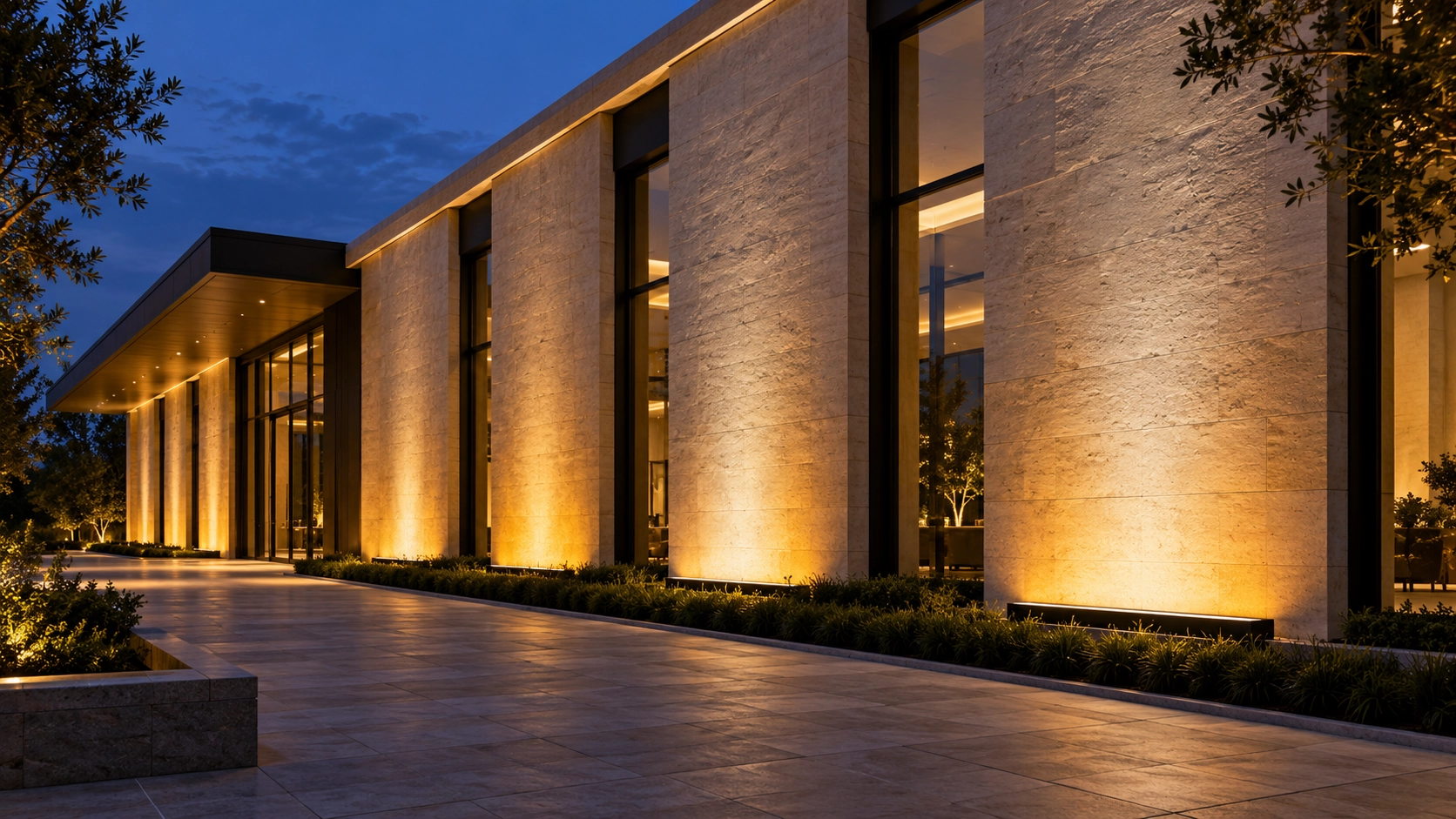
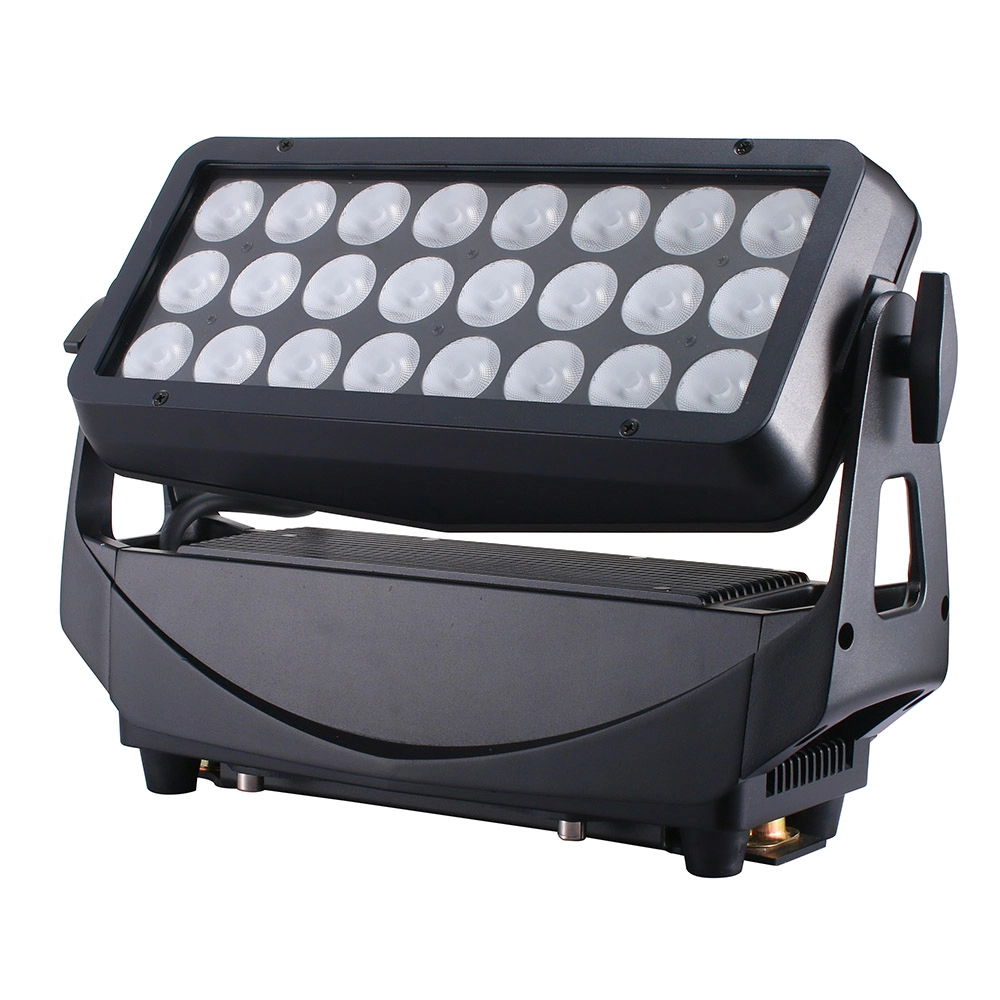
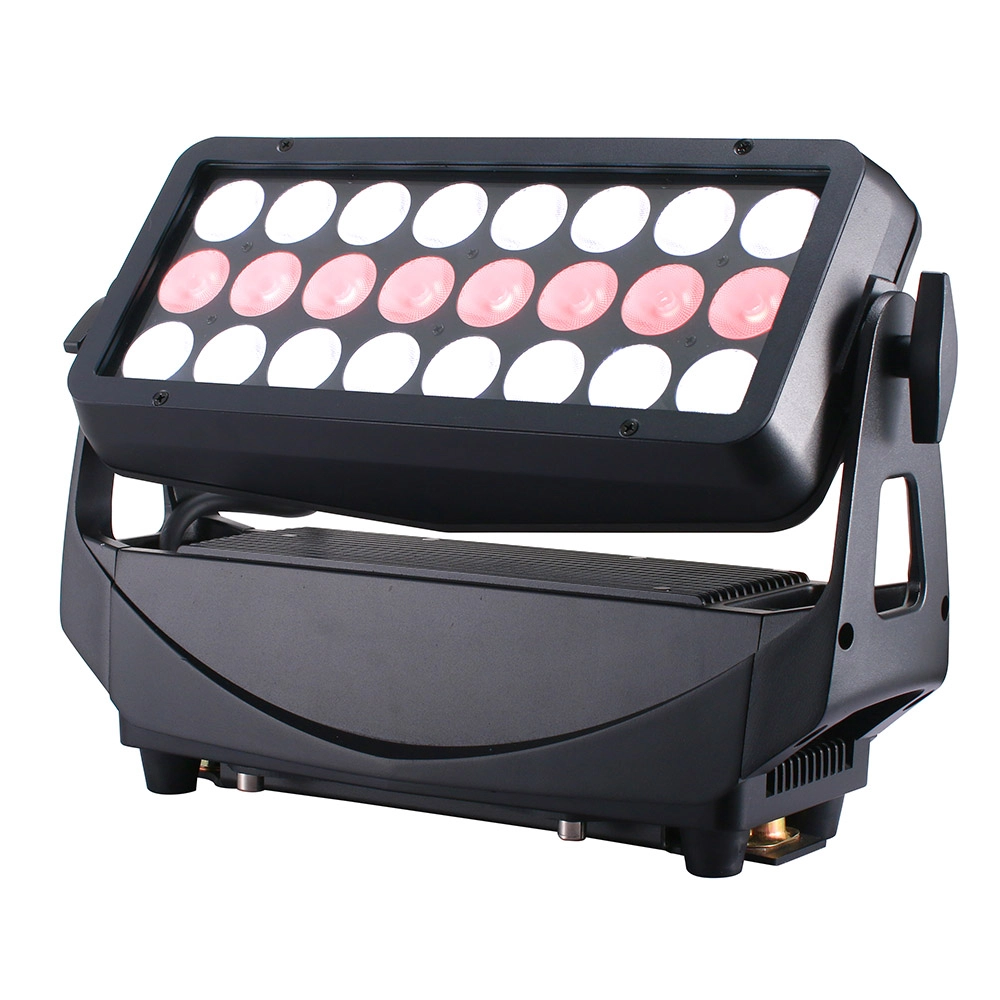
This distinction also helps avoid keyword confusion between product categories. The wall washer range is relevant for fixed-surface coverage, whereas the moving wash selection should be based on motorized fixtures. For example, the published 24x20W RGBW six-segment IP65 wall washer is a static model, not a moving head wash.
How Beam Angle, Zoom and Throw Distance Affect Coverage
A moving head wash fixture may provide a narrow, concentrated look and a broader wash from the same position. The relationship between throw distance and the beam angle is important: as the distance grows, the illuminated area generally gets larger. A wider angle usually distributes light over more area, potentially reducing illuminance at the target, but the change depends on optics and output. This makes bare wattage comparisons unreliable when two fixtures use different lenses.
It is also worth distinguishing beam angle from field angle. Manufacturers may define the beam at one percentage of peak intensity and the field at another, so two products with identical headline angles can still create visibly different edges. A zoom range is helpful only if both its narrow and wide settings provide useful output for the chosen throw distance. For accurate layout planning, ask for beam diagrams or photometric data and test fixture overlap at several positions.
| Use case | Optical priority | Installation check |
|---|---|---|
| Performer highlight or focused stage zone | Relatively narrow distribution or narrow zoom setting | Confirm target size, hotspot and useful intensity at actual throw |
| Stage-wide color wash | Wider distribution with soft overlap | Test wash uniformity, spacing and visual spill |
| Touring shows with changing venue size | Motorized zoom and repeatable control | Verify usable zoom range and console control profile |
| Outdoor scenic lighting | Suitable angle plus environmental protection | Review IP rating, fixture aiming and protected power/data connections |
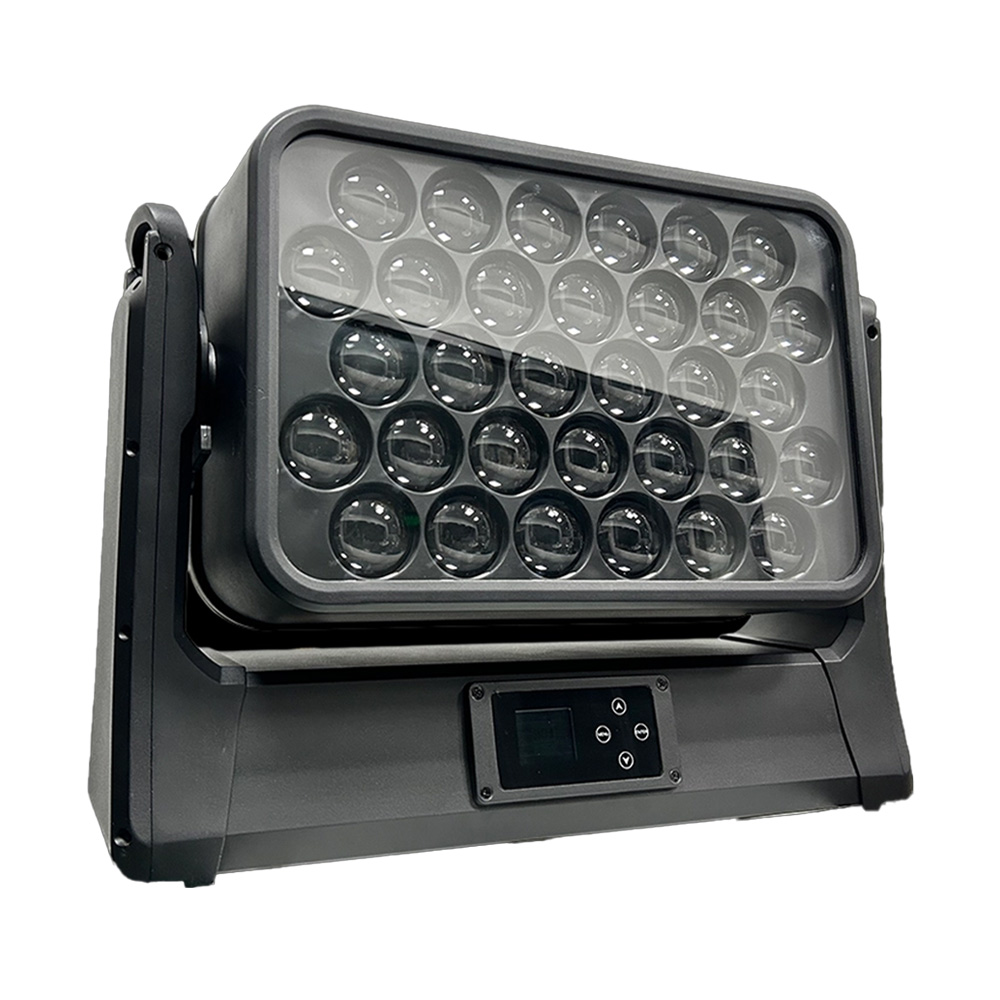
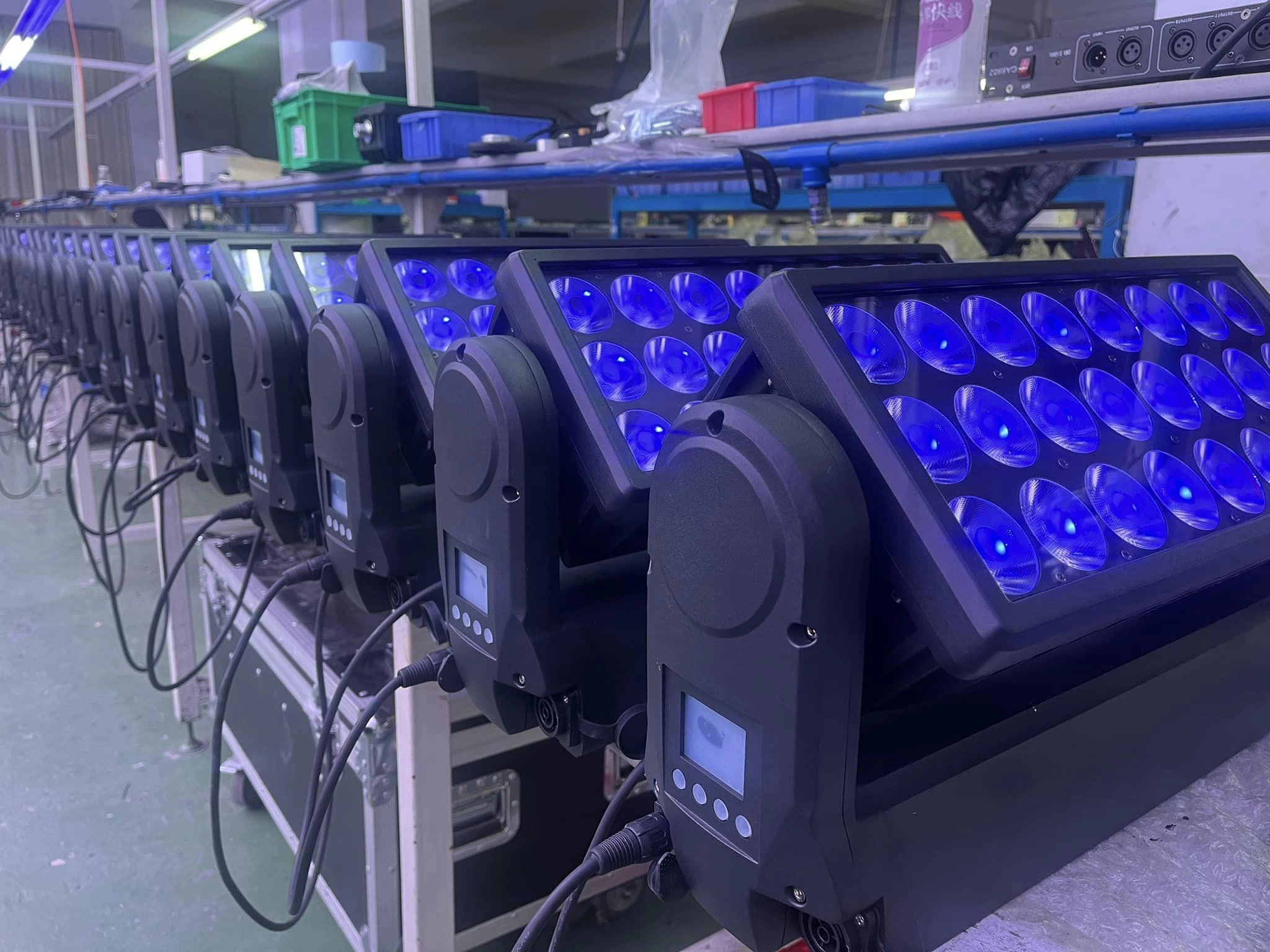
An actual model example is the 32x25W RGBW 4-in-1 IP65 Moving Head Wash, whose current product record lists 4°–60° zoom, five-segment control and DMX512/RDM. Those are model-specific values and should not be treated as universal figures for all moving wash lights.
Color Mixing: What RGBW Helps — and What It Does Not Prove
RGBW combines red, green and blue channels with a dedicated white LED channel. It can expand the palette of mixes available to a lighting designer, including certain pale or neutral-looking colors. However, a white diode does not by itself guarantee accurate skin tones, a specific color-rendering index or a consistent camera result. These outcomes depend on the LED spectrum, optics, calibration and the fixture's real dimming behavior.
For concert stages, designers may favor saturated color and quick cue transitions. Theater and broadcast work can demand tighter control of white-point consistency, fades and camera response. When matching multiple batches or models, a visual test is often more informative than comparing the words RGBW printed in specification sheets. Buyers should request current product information for color-mixing modes and any measured color-quality data before treating performance claims as purchasing requirements.
Two Outdoor-Rated Moving Wash Product Examples
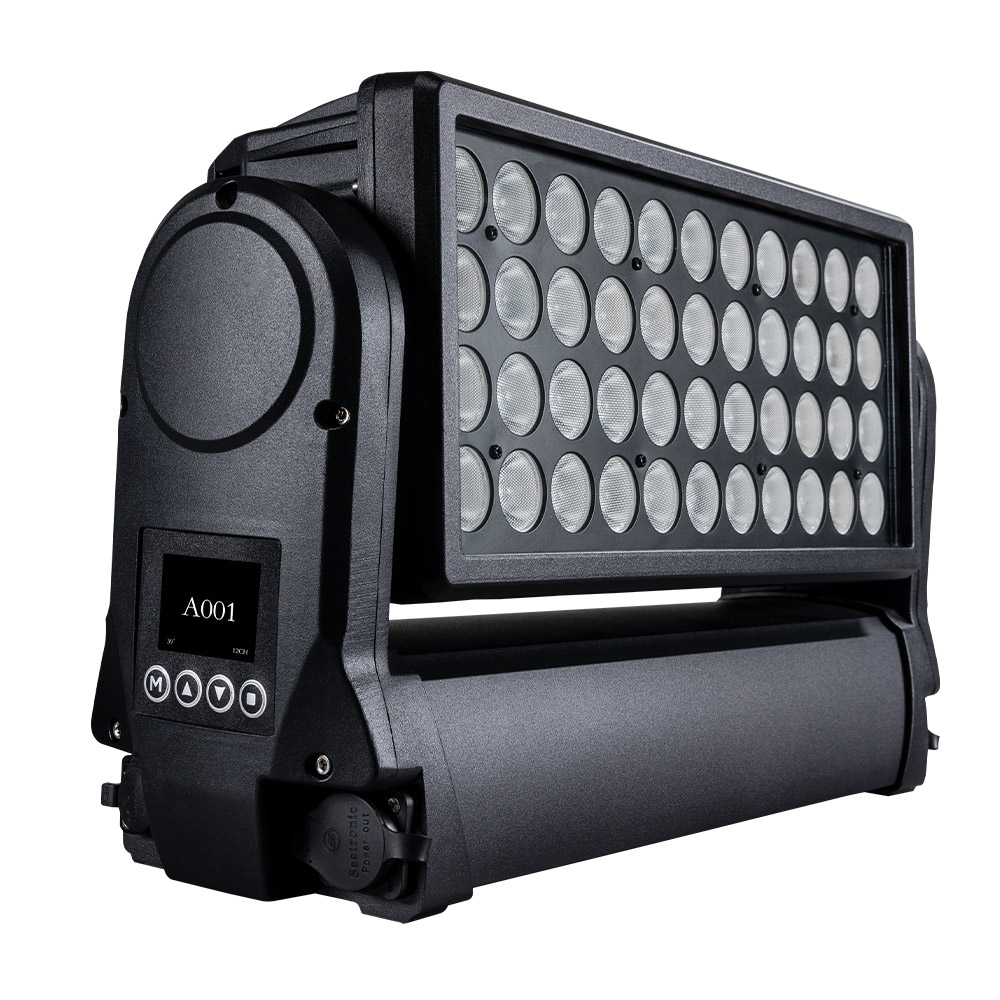
The following fixtures are listed as moving-head wash products in the Colorful Light backend. Their published power configurations, environmental ratings and control references are provided as product-specific examples rather than claims about every fixture in the category. Selecting between them still requires venue geometry, expected visual effects and a review of their current manuals.
DMX512, RDM, Segments and Show Programming
A moving wash fixture usually needs more than basic red, green and blue dimmer channels. Depending on the model, the console may control movement, master dimming, zoom, individual LED segments, macros, strobe and other functions. DMX512 is common in professional rigs, while RDM can assist with bidirectional discovery and configuration when the console and fixture support it. The fixture profile and channel chart are more important than assuming a standard channel count.
For instance, the 32x25W model identifies five-segment control and DMX512/RDM, whereas the published 44x10W model references DMX512 control. Those listings do not establish that they use identical personality files. Before programming a show, confirm the chosen channel mode, data topology, fixture addresses, patch, power distribution and movement limits. For complex cues, test the transition from narrow zoom positions into the widest wash rather than assuming a preset will look the same on every stage.
IP65 vs. IP20: Choosing Indoor or Outdoor Moving Head Wash Lights
IP ratings describe tested resistance to solids and liquids, not the entire operating environment. IP65 signifies dust-tight protection and resistance to water jets under specified conditions. It does not mean a light can be submerged, left in every kind of storm or installed with unsuitable connectors. A rated fixture still needs correct mounting, protected power distribution, cable routing, ventilation and maintenance in accordance with the manufacturer instructions.
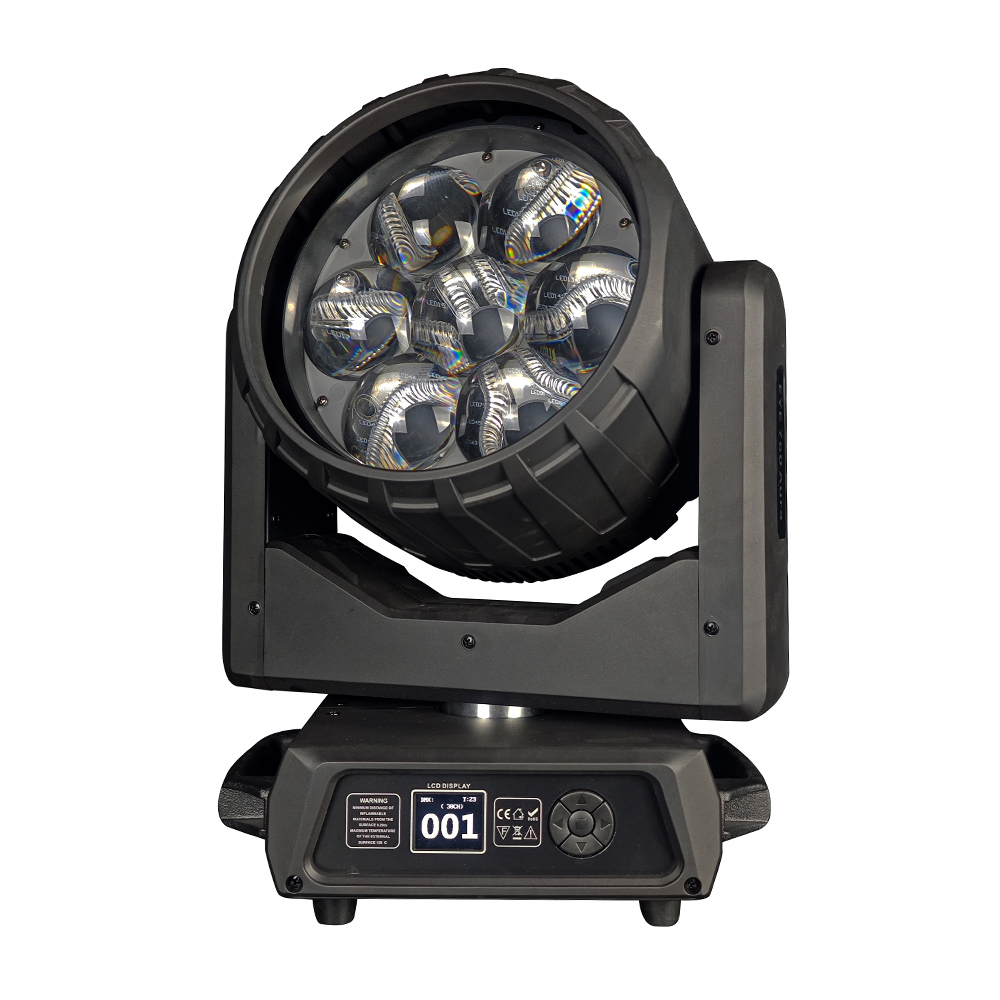
An IP20 model has a different protection level and must not be assumed to offer rain or weather protection. The 7x60W Aura Bee Eye Zoom Moving Head is listed as IP20 and is therefore an indoor or suitably sheltered option, even though its product narrative mentions outdoor event applications. For a festival with exposed trussing, review models that explicitly carry the necessary outdoor rating and verify site safety arrangements.
IMPORTANT PRODUCT BOUNDARY
An IP65 wash fixture, an IP20 Aura/Bee Eye fixture and a static wall washer are three distinct choices. Do not apply the specifications of one product to another, even if all three generate colored wash effects.
Cooling, Rigging and Camera Compatibility
Moving-head fixtures combine high-output light sources, electronics and mechanical movement. Long-term operation requires suitable cooling and attention to the approved installation orientation. The cooling arrangement, noise behavior, servicing intervals and access to replaceable components vary by model. No universal operating-life figure can be inferred from LED wattage, so rental businesses should evaluate service records, maintenance access and current manufacturer documentation.
For overhead use, the truss, clamps, mounting brackets and independent secondary retention must be selected and installed for the verified load by qualified personnel. Power and data connectors need protection compatible with the site conditions. Moving head pan or tilt clearance must be checked across the full programmed range so that cables, scenic objects and neighboring fixtures cannot obstruct the fixture.
LED dimming may be implemented with pulse-width modulation or other driver methods. A setting that looks steady to the eye can still interact with camera shutter timing and produce banding or flicker. For broadcast and streaming projects, request the exact model's dimming information and test at the intended frame rate and shutter speed. Do not advertise a fixture as universally flicker-free without suitable evidence.
B2B Moving Head Wash Light Buying Checklist
A useful request for quotation includes the application, target effect, stage dimensions, throw distance, installation location, controller type and expected fixture quantity. Those requirements make it possible to compare equipment on practical performance instead of a single wattage number. Before approving a rental fleet or permanent installation, buyers should clarify delivery configuration and the documents needed for commissioning and service.
| Procurement factor | Questions worth asking | Reason |
|---|---|---|
| Beam and zoom | What are the published beam/field angles and output at the required throw? | Confirms useful coverage, overlap and brightness |
| Color system | Which LED channels and calibration or color-quality data are available? | Helps match fixtures and camera requirements |
| Movement | What are the available movement ranges and approved installation orientations? | Supports reliable cueing and safe placement |
| Control | Which DMX profiles, RDM functions and segment options are supported? | Avoids incorrect patching or unavailable effects |
| Environmental rating | Is the exact model IP20 or IP65, and how must connections be protected? | Prevents misapplication in outdoor settings |
| Electrical and rigging | What are the rated input, weight, mounting points and secondary retention instructions? | Supports an accurate power and structural plan |
| Support and purchasing | What documentation, accessories, service options and order conditions apply? | Helps evaluate lifecycle and supply needs |
Frequently Asked Questions About Moving Head Wash Lights
What is the difference between a moving head wash light and a static wall washer?
A moving head wash light changes its direction through motorized movement and is used for flexible stage looks. A static wall washer illuminates a fixed surface or backdrop. The most suitable format depends on whether the lighting direction needs to change during the show.
What beam angle should I select for moving head wash lighting?
Start with stage dimensions, fixture position and throw distance. A narrow angle creates a smaller area of coverage, while a wider angle covers more of the stage. A published motorized zoom range adds flexibility, but verify beam and field angles and output at the intended distance.
Does an RGBW moving head wash light guarantee natural white light?
No. The extra white channel can broaden color-mixing choices, but accurate whites and skin tones depend on the actual LED spectrum, calibration and measured color rendering. Request photometric information or test samples where broadcast and theater color quality matters.
Can moving head wash fixtures be used outdoors?
Only when the selected model and full installation meet the required environmental conditions. IP65 models offer tested dust and water-jet resistance; this does not mean they can be submerged or exposed to every weather condition. IP20 models should not be treated as weather-rated outdoor fixtures.
Do moving head wash lights work with DMX512 consoles?
Many professional models support DMX512; some also offer RDM. Check channel modes, fixture libraries, connection types, addressing, pixel or segment functions and the exact manual before programming. Features vary among models.
How can I prevent flicker when recording LED moving wash effects?
Ask for the fixture's current dimming and PWM options and test with the actual camera, frame rate and shutter settings. A high-frequency claim alone cannot guarantee flicker-free output in every recording setup.
What information should a rental company request before ordering?
Request the exact model datasheet, fixture weight, mounting instructions, electrical input, DMX channel chart, available zoom range, spare-part and service information, accessories and packaging options. Confirm the outdoor rating and delivery arrangements for the destination market.
Related Stage Wash and Effect Fixtures
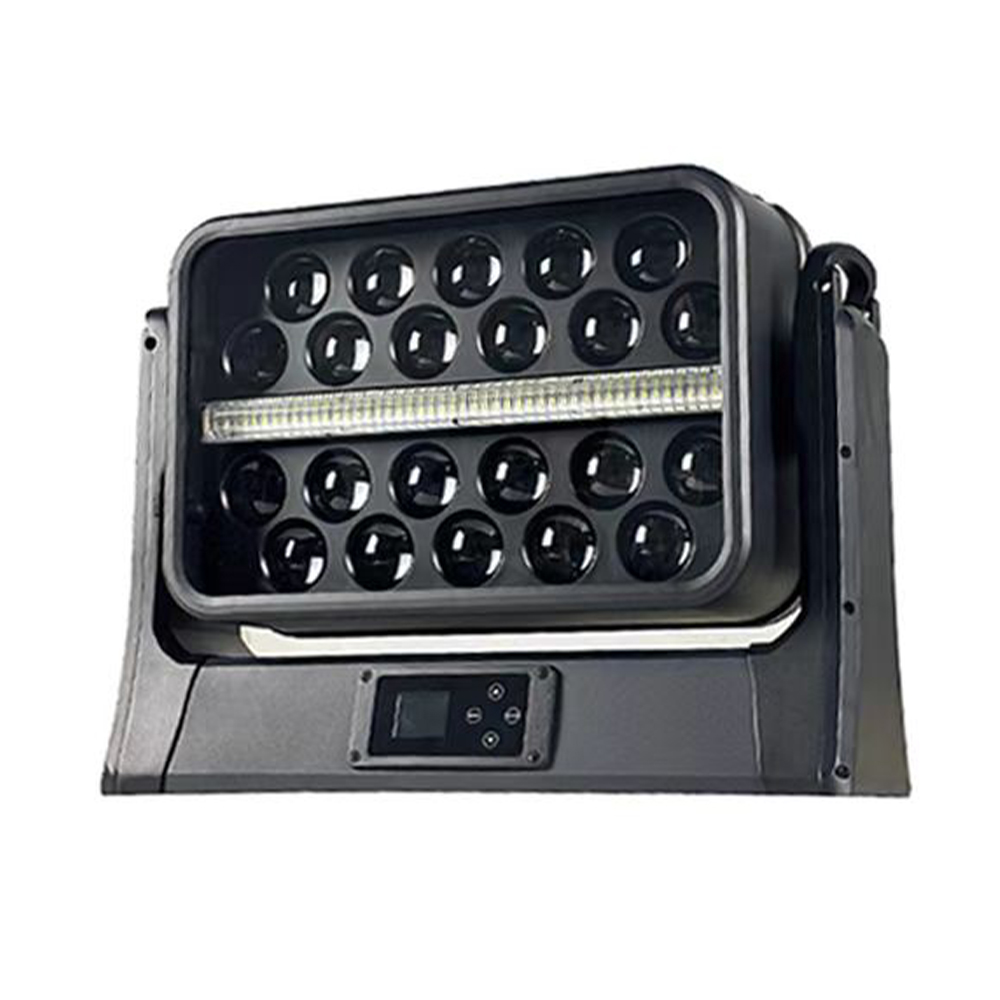
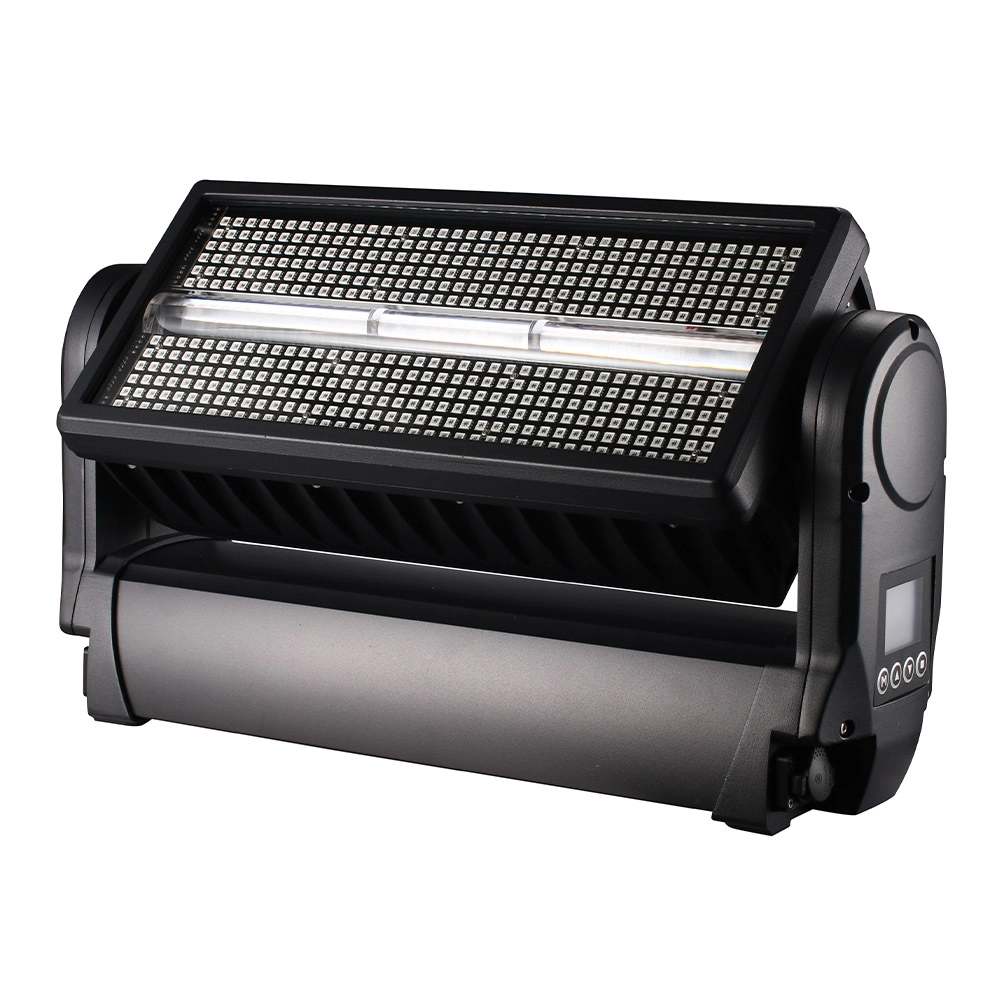
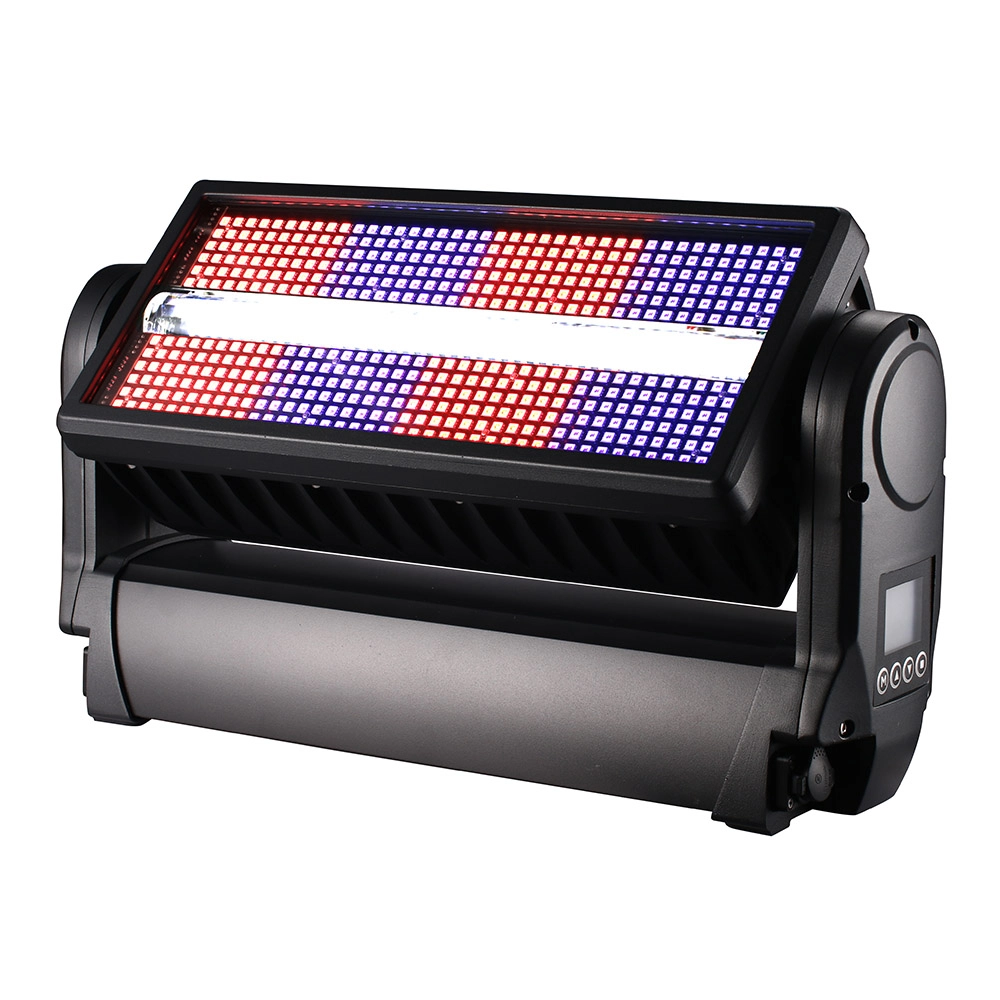
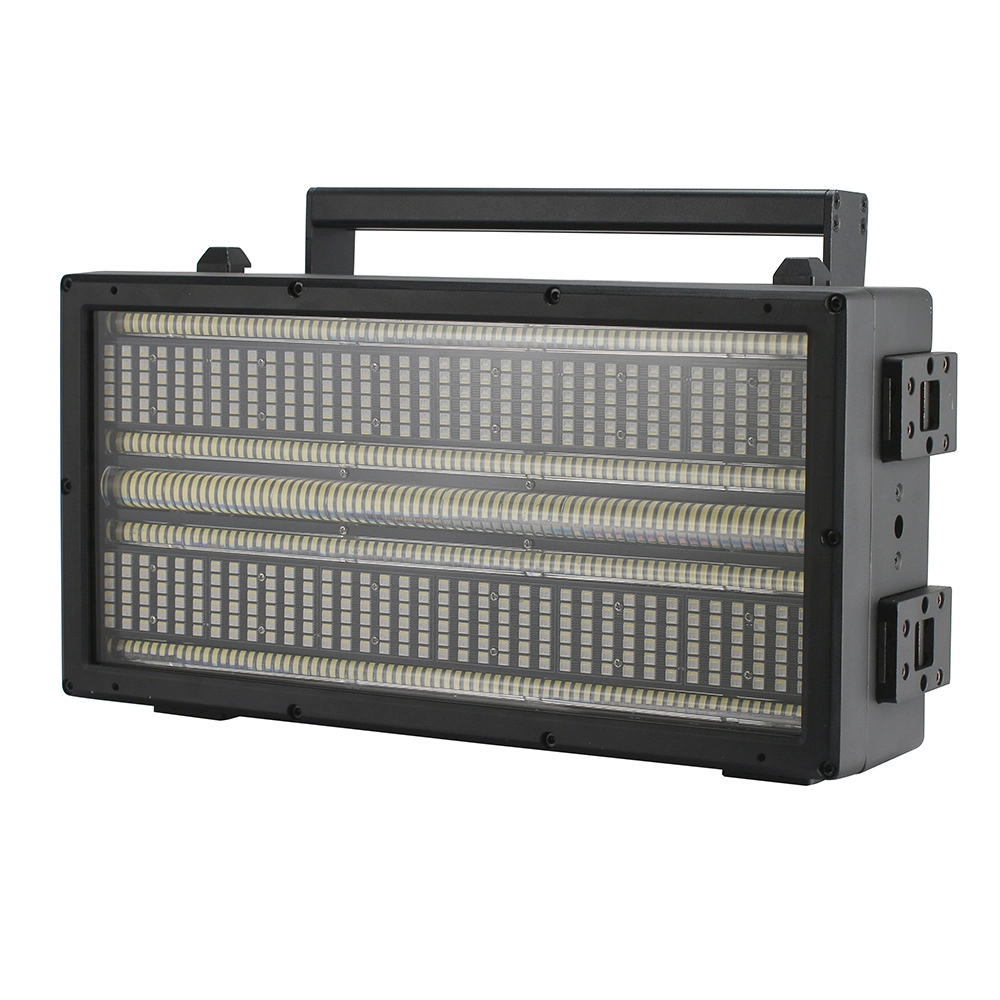
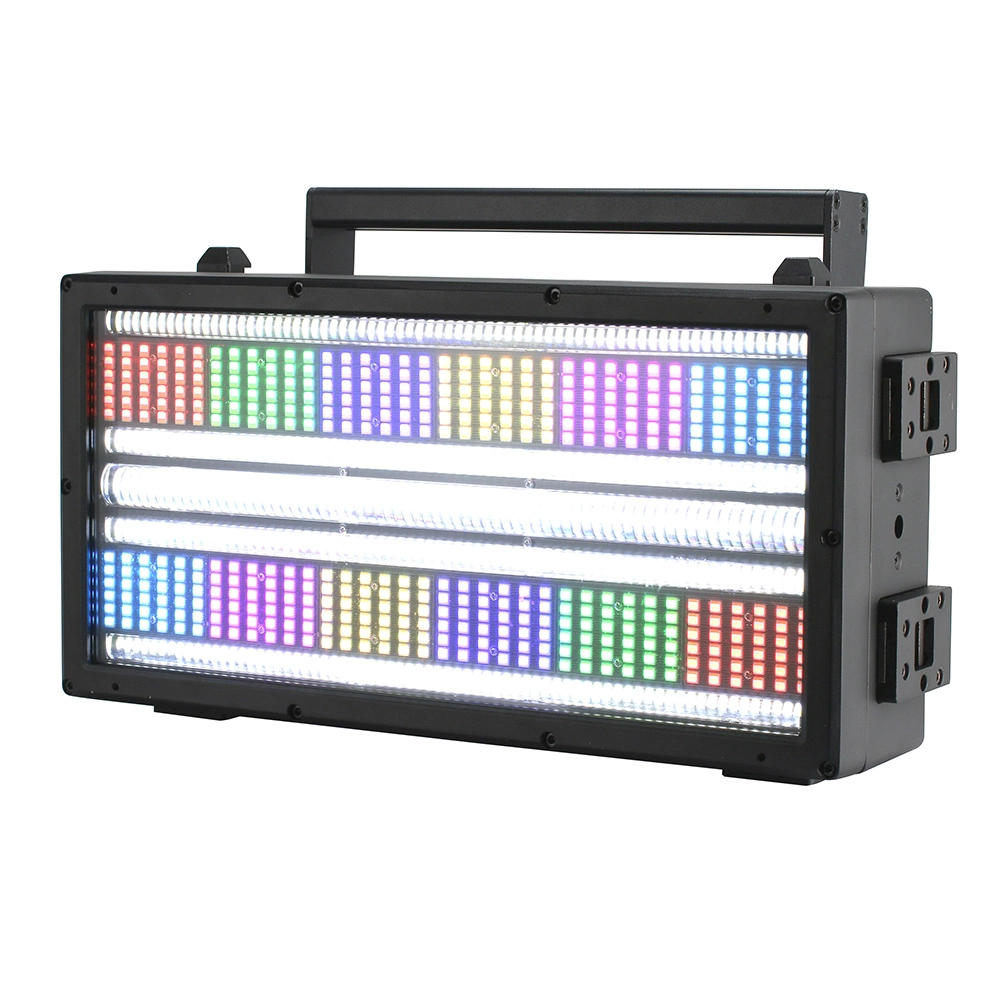
The following verified products illustrate two adjacent lighting choices: an indoor Aura/Bee Eye moving head, a hybrid IP65 wash-and-strobe design and a static RGBW wall washer. They are not substitutes for one another in every lighting plot. Review their product details and compare the actual IP rating, optics and show-control capabilities before specifying equipment.
Discuss Your Stage Wash Lighting Requirements
For model selection, share stage dimensions, desired narrow and wide wash effects, DMX console details, fixture quantities and whether any installation is exposed to weather. Ask for current datasheets and control charts before confirming the chosen fixture and accessories.
Request Product Specifications →Frequently Asked Questions
What is the difference between a moving head wash light and a static wall washer?
A moving head wash light changes its direction through motorized movement and is used for flexible stage looks. A static wall washer illuminates a fixed surface or backdrop. The most suitable format depends on whether the lighting direction needs to change during the show.
What beam angle should I select for moving head wash lighting?
Start with stage dimensions, fixture position and throw distance. A narrow angle creates a smaller area of coverage, while a wider angle covers more of the stage. A published motorized zoom range adds flexibility, but verify beam and field angles and output at the intended distance.
Does an RGBW moving head wash light guarantee natural white light?
No. The extra white channel can broaden color-mixing choices, but accurate whites and skin tones depend on the actual LED spectrum, calibration and measured color rendering. Request photometric information or test samples where broadcast and theater color quality matters.
Can moving head wash fixtures be used outdoors?
Only when the selected model and full installation meet the required environmental conditions. IP65 models offer tested dust and water-jet resistance; this does not mean they can be submerged or exposed to every weather condition. IP20 models should not be treated as weather-rated outdoor fixtures.
Do moving head wash lights work with DMX512 consoles?
Many professional models support DMX512; some also offer RDM. Check channel modes, fixture libraries, connection types, addressing, pixel or segment functions and the exact manual before programming. Features vary among models.
How can I prevent flicker when recording LED moving wash effects?
Ask for the fixture's current dimming and PWM options and test with the actual camera, frame rate and shutter settings. A high-frequency claim alone cannot guarantee flicker-free output in every recording setup.
What information should a rental company request before ordering?
Request the exact model datasheet, fixture weight, mounting instructions, electrical input, DMX channel chart, available zoom range, spare-part and service information, accessories and packaging options. Confirm the outdoor rating and delivery arrangements for the destination market.
◼
Product Recommendations
You May Also Like

◼
Get in Touch
Get Started with Stage Lighting Project
Want to transform your stage or venue with Colorful Light?
Explore our solutions and let us create a memorable lighting experience for your event.
Colorful Light is a professional LED stage lighting manufacturer that provides dynamic and reliable lighting solutions to customers worldwide.
© 2026 Colorful Light. All Rights Reserved.

Facebook
Instagram
LinkedIn
YouTube
Tik Tok