


Stage Wash Lights: Beam Angle, Color, DMX and Selection
- Quick Answer: What Is a Stage Wash Light?
- Stage Wash, Spot and Beam Lights: Different Jobs on the Same Rig
- Beam Angle, Field Angle and Throw Distance
- Color Mixing, White Light and Dimming
- Moving Head Wash Lights Versus Static Wall Washers
- Choosing IP Ratings for Indoor and Outdoor Stages
- DMX512, RDM and Control-System Compatibility
- Power, Cooling, Weight and Rigging
- Product Examples from the Current Colorful Light Range
- How to Compare Quotations for a B2B Stage Wash Project
- Conclusion
- Stage Wash Light FAQs
Quick Answer: What Is a Stage Wash Light?
A stage wash light illuminates a broad area with a relatively even field of light rather than creating a tightly defined beam or projection. It may be used to light performers, give a backdrop consistent color, or build a base layer beneath beams, strobes and scenic effects. Choosing one is not simply a matter of selecting the highest LED wattage on a catalog page. The useful specification is the combination of coverage, color, dimming behavior, control, mounting position and conditions in which the fixture will operate.
For venues and equipment buyers, the first question should be what surface needs to be lit and from where. A short-throw wall wash, a moving head wash above a festival stage, and a front-lighting fixture in a theatre all solve different problems. Their beam distributions, noise profiles and rigging requirements can be quite different even when all three are marketed as wash lights. Confirm the exact model's photometric and electrical documentation rather than treating a nominal LED power rating as a substitute for measured performance.
Stage Wash, Spot and Beam Lights: Different Jobs on the Same Rig
Wash lights create large areas of color and illumination, often with soft edges that blend when adjacent fixtures overlap. Spotlights concentrate the viewer's attention on a performer or scenic object and may offer gobos or a more defined edge. Beam fixtures use comparatively narrow optics to create conspicuous shafts of light, especially in haze. A complete stage system usually combines these roles instead of expecting one light type to do everything equally well.
A moving head wash offers pan and tilt so that one unit can address different stage zones during a show. A static LED wash or linear wall washer may be simpler when the illuminated area does not change between cues. For live productions with rapidly changing arrangements, the flexibility of a moving fixture can justify the extra weight, power and maintenance planning. For a permanent façade or a fixed backdrop, a simpler stationary unit may offer more predictable coverage.
Beam Angle, Field Angle and Throw Distance
Beam angle describes the central, more intense portion of the output, while field angle generally covers a wider area down to a lower intensity threshold. Manufacturers do not always present these angles using the same conventions, so check how the figures were measured. At a given throw distance, a wider angle spreads illumination across more space but generally reduces intensity at any one point. A narrower angle may retain more punch at the same distance while producing smaller pools of light that require more careful overlapping.
For an approximate first pass, the illuminated diameter of a symmetrical beam can be estimated as twice the throw distance multiplied by the tangent of half the beam angle. This geometric estimate describes the nominal cone and does not account for lens-edge falloff, asymmetrical optics, diffusion or real photometric distribution. To specify an array for a stage, obtain beam diagrams and illuminance data at realistic mounting positions, then test the overlap on a drawing. Do not apply one universal overlap percentage to every fixture and venue, because the required uniformity changes with lens design and how the performers move.
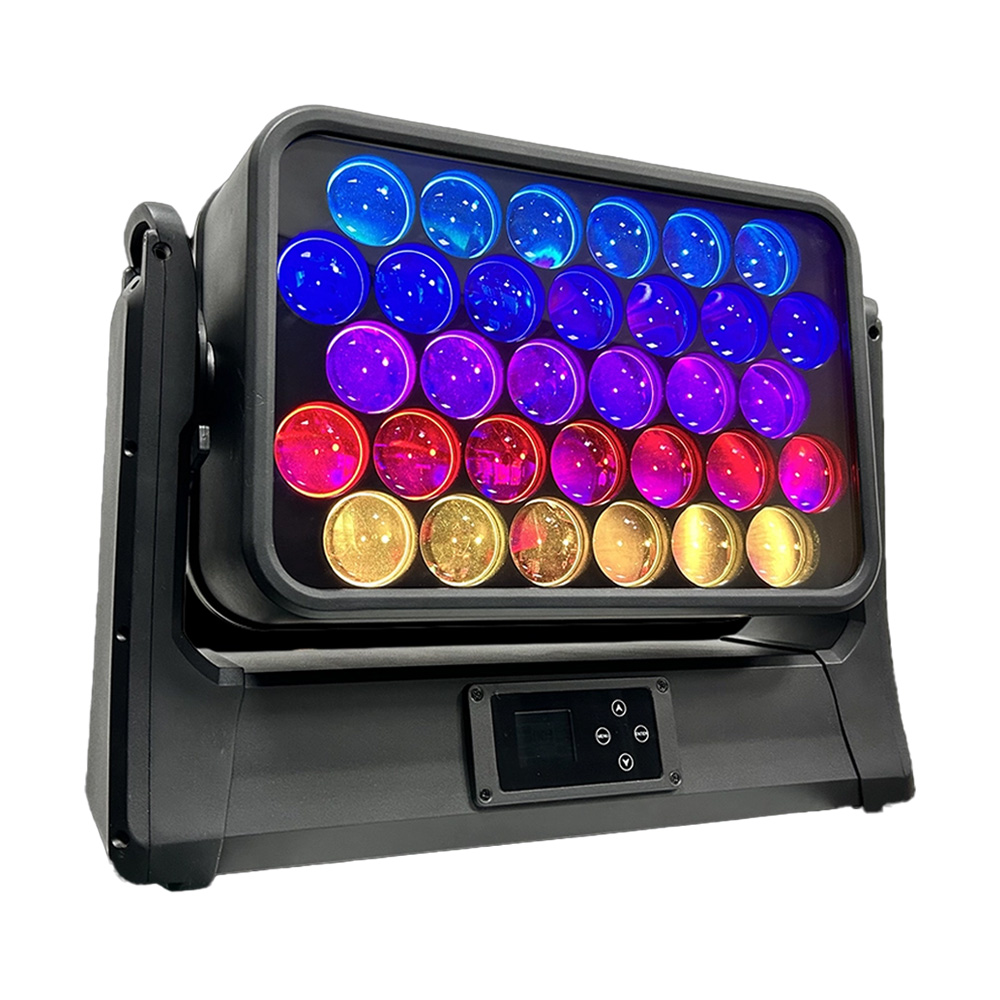
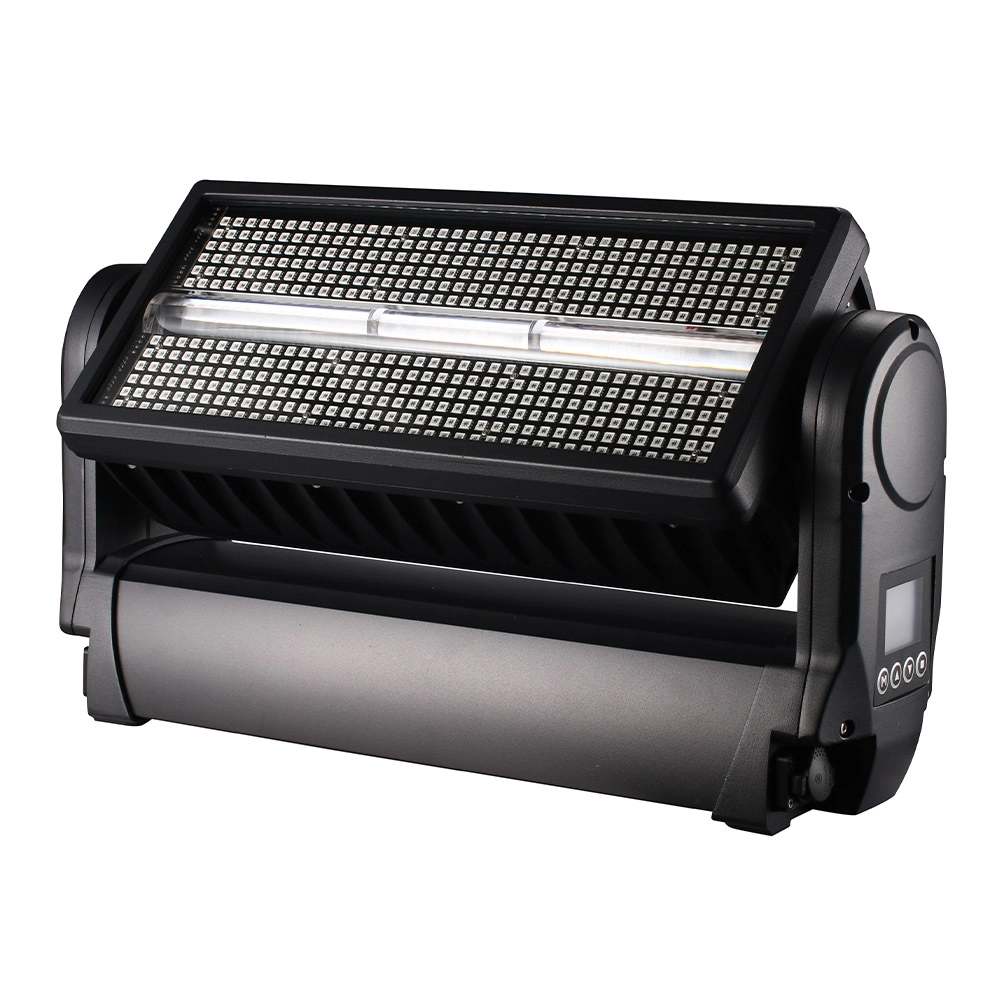
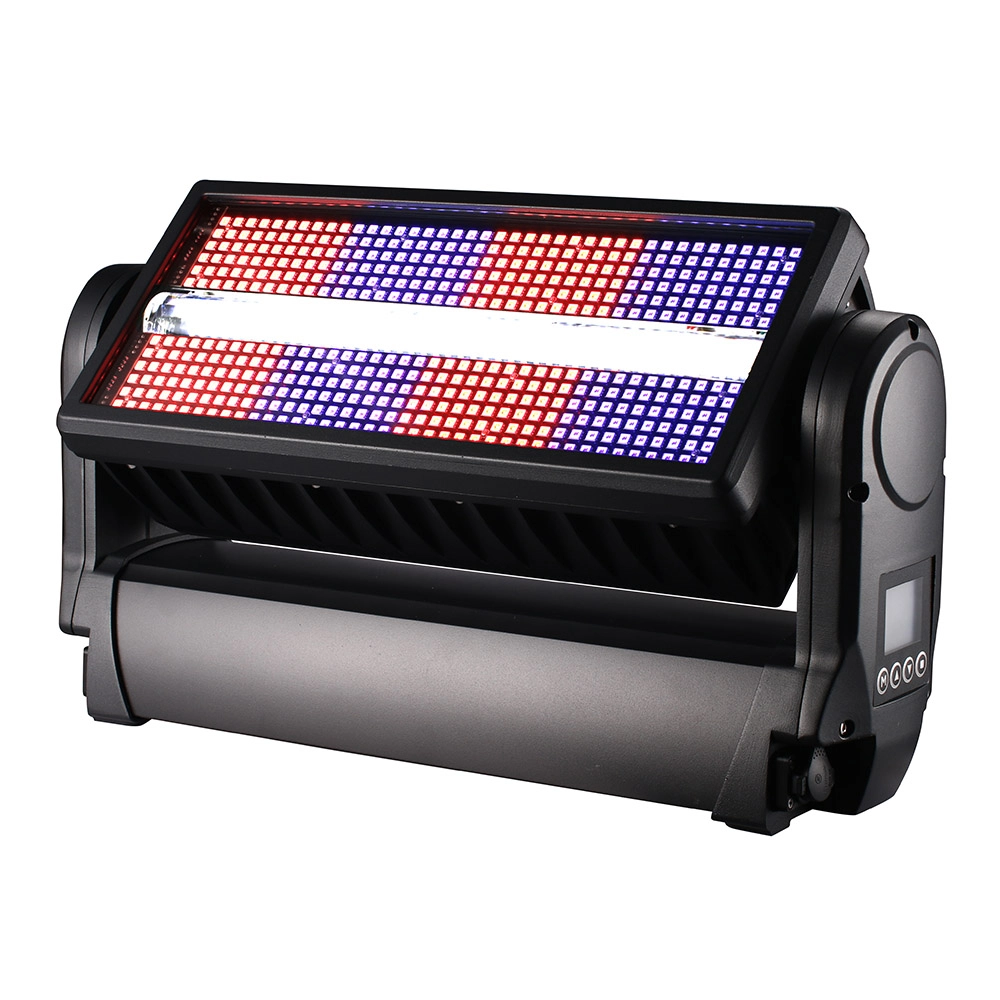
Zoom is valuable when a rental fixture must adapt to different room sizes and mounting heights. The 32×25W RGBW IP65 Moving Head Wash Light, for example, is listed in the current Colorful Light backend with a 4°–60° zoom range and five control segments. Those figures make it worth considering for projects that need both concentrated and broad looks, but they do not establish actual lux levels without a photometric test. Ask for a current DMX chart and lens data when the optical requirements are central to the purchase decision.
Color Mixing, White Light and Dimming
RGB and RGBW fixtures can create a broad range of colored stage looks, but the presence of a white LED channel does not automatically guarantee a particular color rendering index. For front lighting on people, ask for measured spectral and color-quality information if accurate garment colors or skin tones are important. Consistency between fixtures matters as much as a single attractive demonstration color, especially when multiple units form one continuous wash. Rental and installation buyers should request sample tests in which several fixtures display the same white and pastel targets side by side.
Dimming curves affect how smoothly a fixture fades through low levels, which can be especially noticeable during theatre transitions. Strobe frequency, LED refresh behavior and camera shutter settings can also affect how a fixture looks on video, but a high quoted PWM value is not a blanket guarantee against flicker. Test the selected fixture with the cameras and frame rates actually used in the production. For live streaming, record sample footage at several dimmer levels and with different colors rather than relying only on an empty-stage visual inspection.
When planning a large RGBW wash, specify the control granularity that the show needs. A fixture with separately addressable segments can build more complex patterns than one in which every LED follows a single RGBW value. That flexibility increases channel counts and programming work, so it should be chosen for a reason rather than treated as an automatic advantage. Confirm that the lighting console, patch file and crew workflow can manage the selected modes before buying dozens of units.
Moving Head Wash Lights Versus Static Wall Washers
A moving head wash is most useful when its light must travel with performers or change positions across the stage. Pan, tilt, zoom and electronic color functions allow one fixture to create multiple looks, but these advantages also introduce moving parts and additional rigging considerations. When selecting a moving head, check its movement range, resolution, noise and physical clearance above adjacent scenery. The nominal head movement range should be reviewed alongside the actual space available to avoid collisions and blocked output.
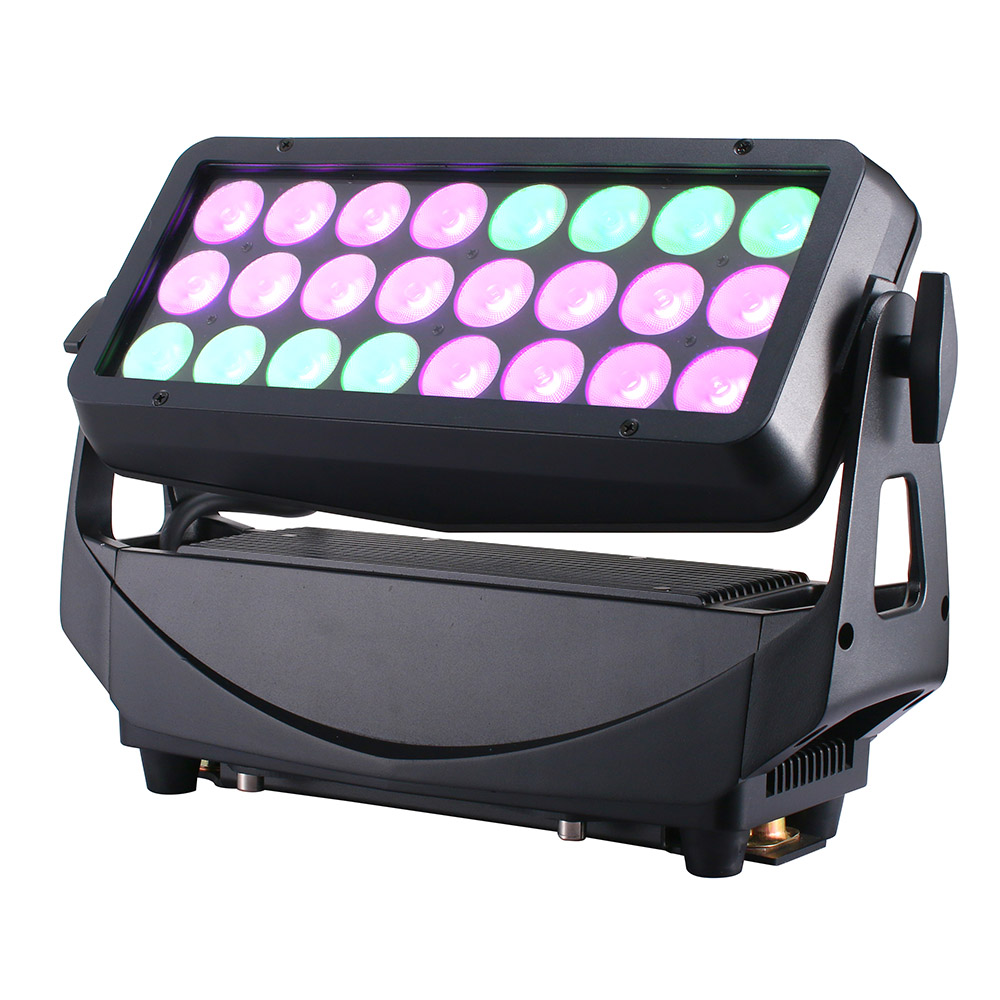
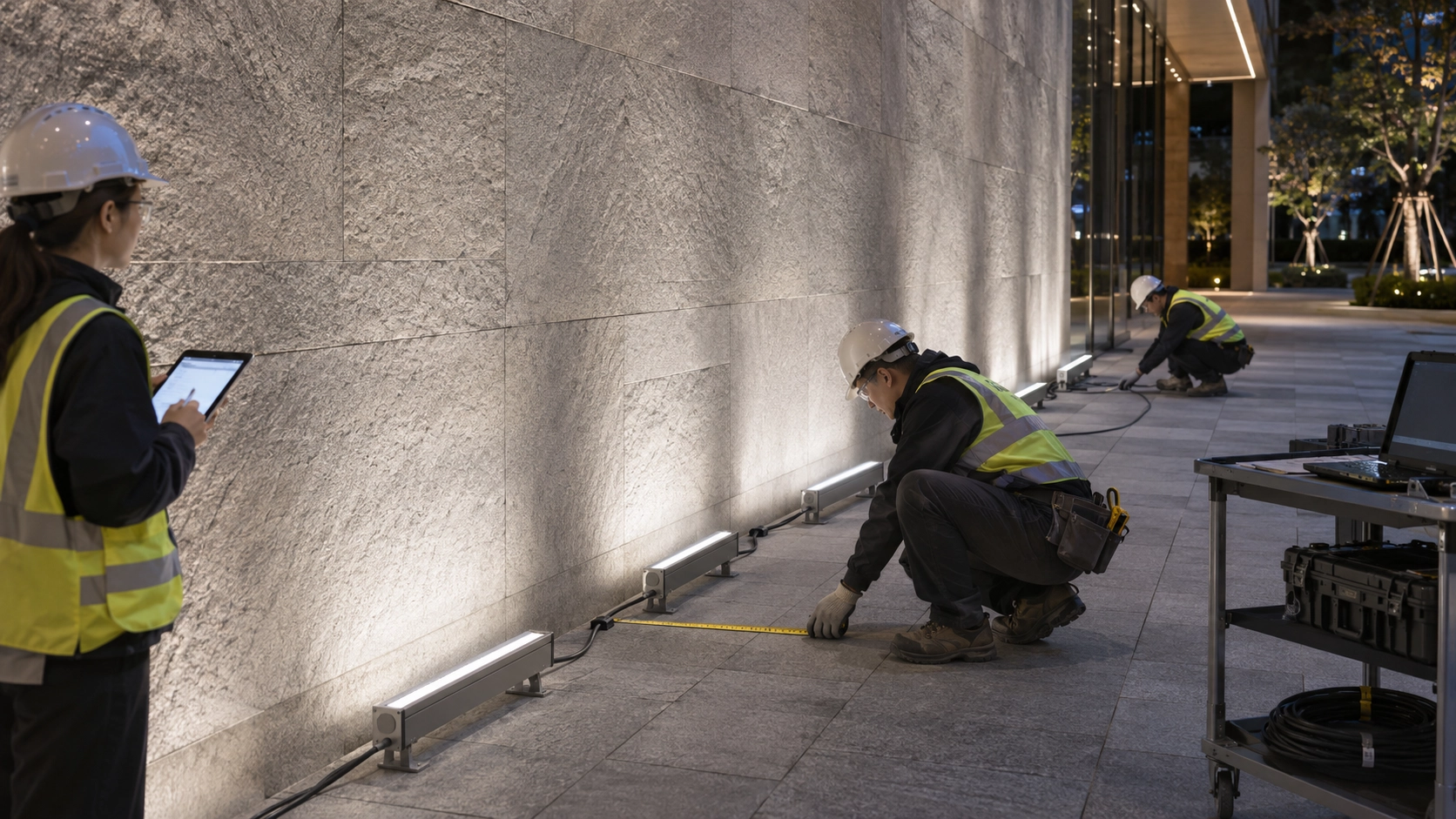
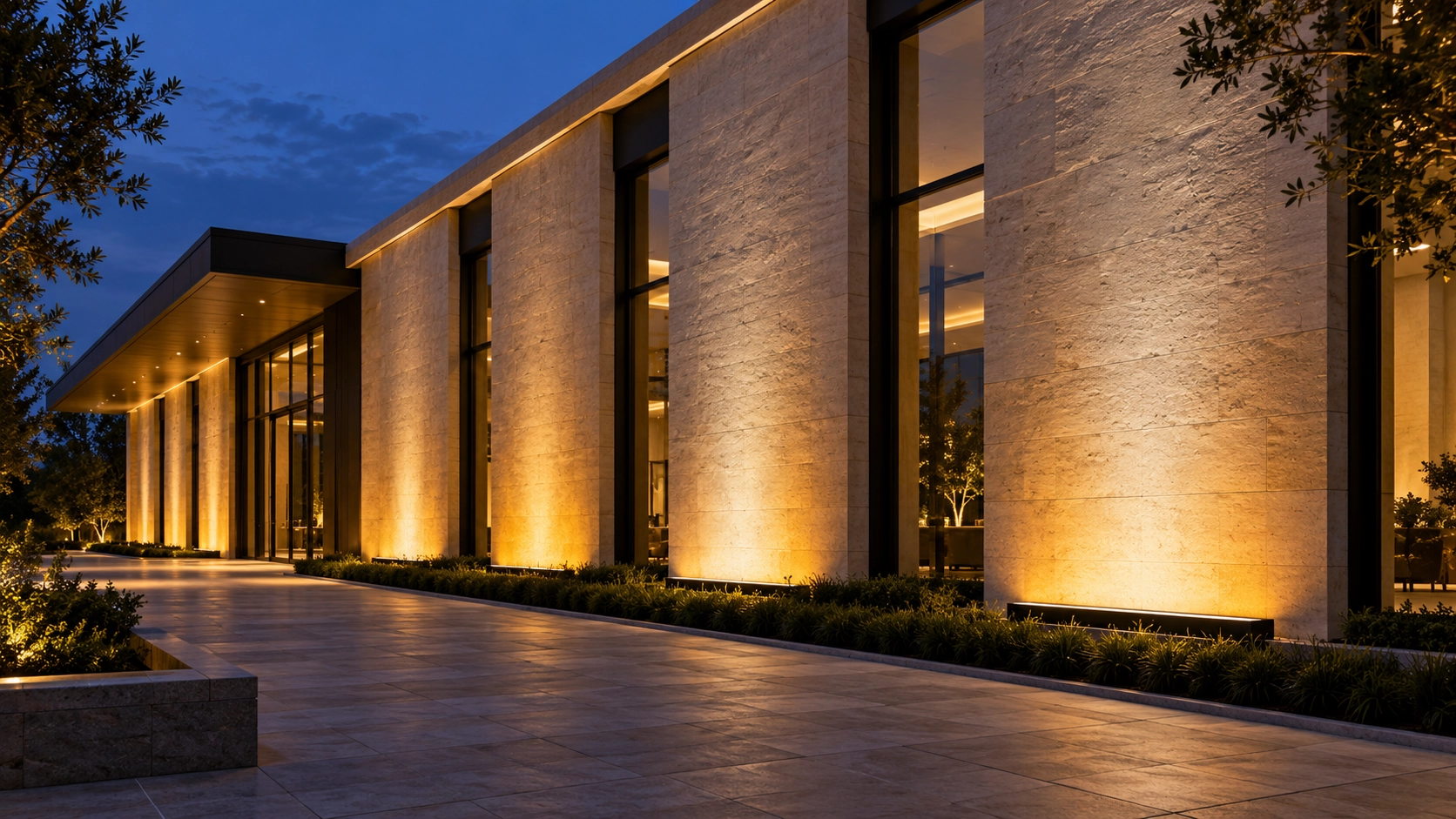
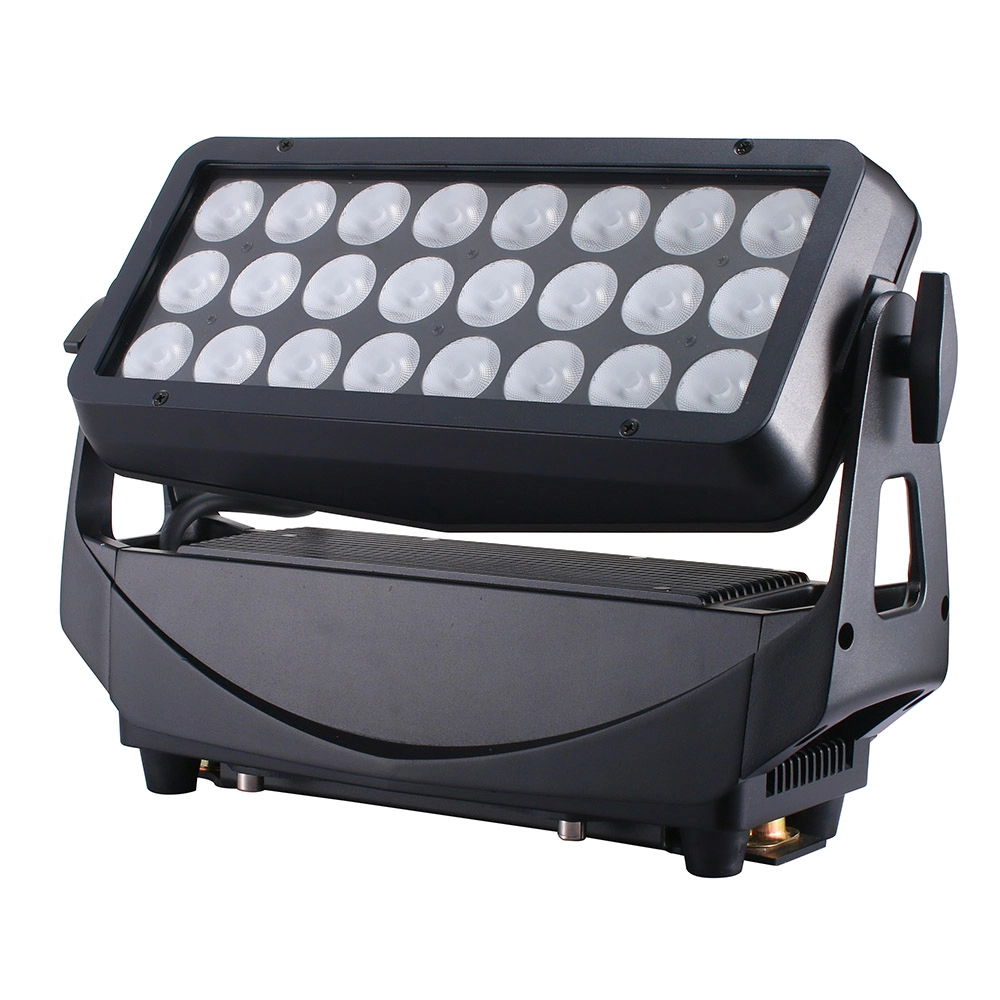
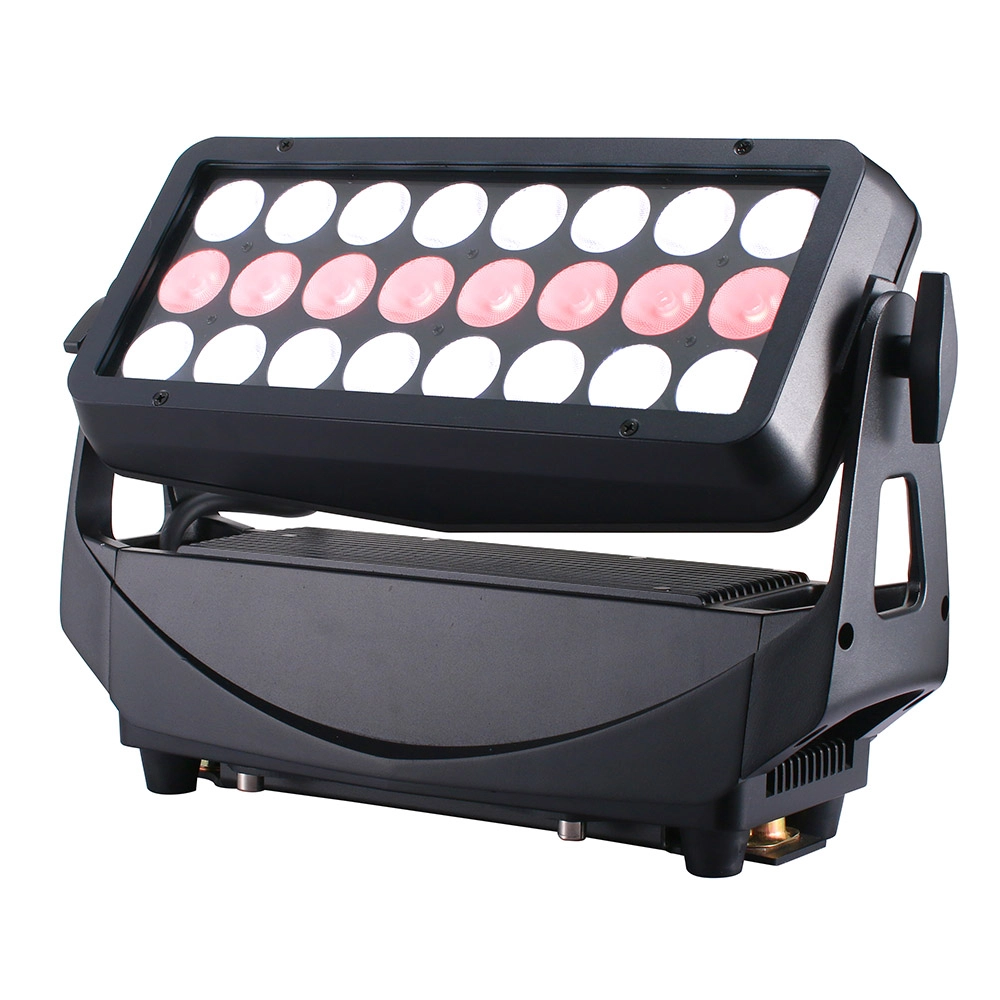
By contrast, a linear or static wall washer can provide a stable band of color along a backdrop, truss, building surface or scenic wall. The 24×20W RGBW IP65 Wall Wash with six segments is listed in the backend with individually controllable segments, DMX512/RDM and optional wireless DMX. Its technical table describes a 600W power supply, which should not be confused with a verified maximum fixture consumption value. For a multi-unit installation, verify the exact lens option, spacing, electrical load and weatherproof connector arrangement.
Choosing IP Ratings for Indoor and Outdoor Stages
Indoor stages and exposed outdoor venues have different environmental risks, and the IP rating must apply to the complete fixture rather than merely its connectors. An IP20 unit may be suitable for a dry, protected theatre or nightclub location but must not be presented as rainproof. An IP65-rated fixture is designed for a different level of dust and water ingress protection, although the rating alone does not settle questions about cable entry, salt exposure, immersion or installation orientation. Request model-specific documentation and follow the actual manufacturer instructions rather than assuming every fixture labeled 'waterproof' is suitable for every condition.
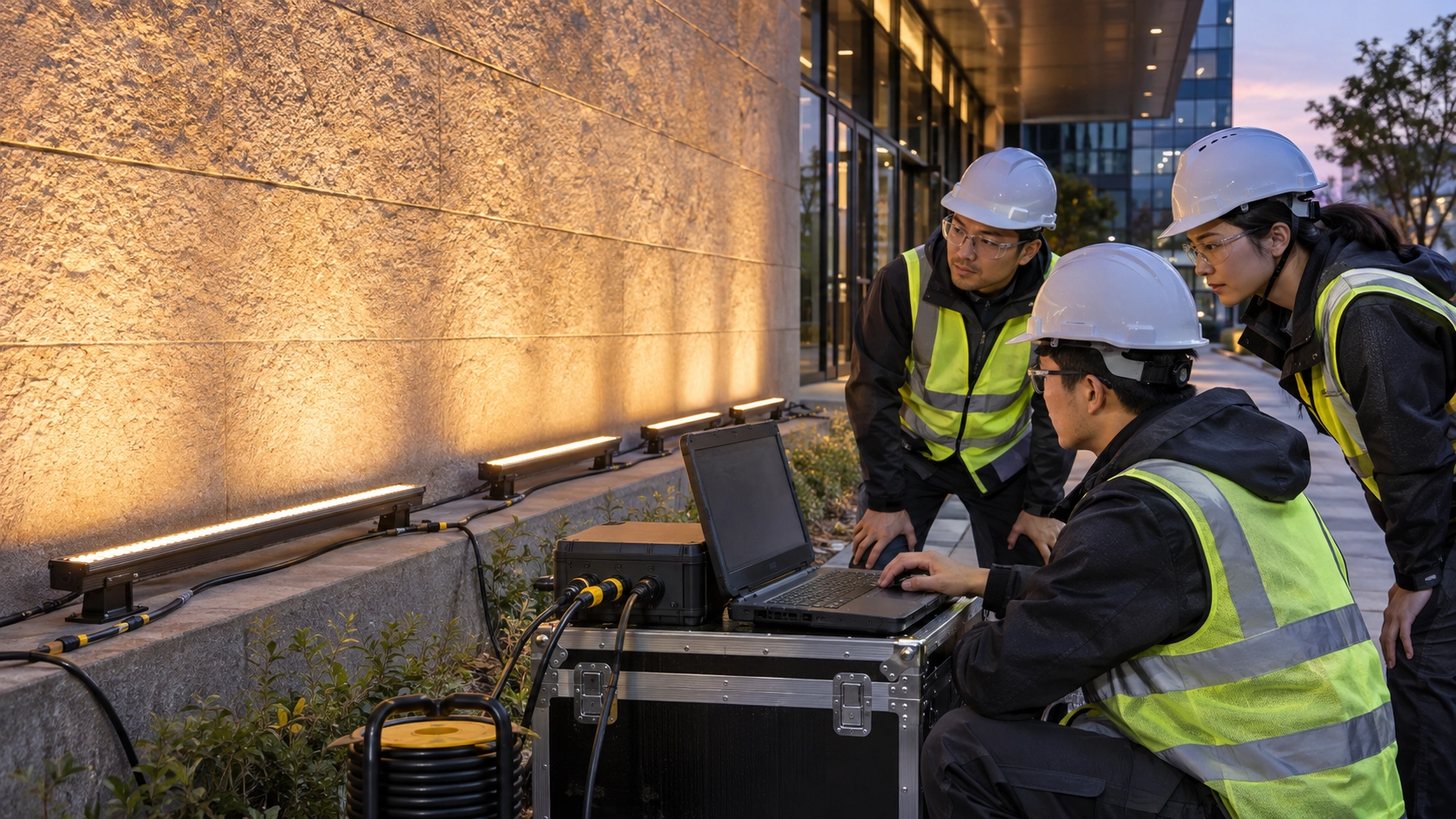
For outdoor projects, evaluate the full installation path: fixture housing, connectors, cable glands, suspended cable loops, rigging hardware and access for maintenance. An IP-rated fixture still requires appropriate power distribution, safe attachment and protection against mechanical damage. Salt air, freezing conditions, intense sun and sustained weather exposure may impose requirements beyond a basic ingress-protection test. Ask the supplier to confirm the exact model version and environmental conditions supported by its current documentation.
DMX512, RDM and Control-System Compatibility
DMX512 is widely used to send channel values to stage lighting fixtures, while RDM can provide bidirectional configuration or monitoring on compatible equipment. A fixture may offer multiple channel modes so that operators can trade fine control for a smaller patch footprint. Compare those modes with the console's available universe capacity, fixture library and programming plan before specifying a system. The label 'DMX compatible' does not by itself establish that all advanced functions or RDM commands are supported by every device.
Some professional fixtures also support network protocols such as Art-Net or sACN, but availability is model-dependent and sometimes optional. Plan address assignments, cable routing, splitters, termination, network topology and technician access during the design stage. For touring inventory, keep the approved DMX chart and firmware version with the case or digital equipment record. A controlled document version helps prevent setup errors when the same product family has different channel personalities or revisions.
Power, Cooling, Weight and Rigging
LED source wattage and whole-fixture electrical consumption are different specifications, and both may appear in a manufacturer's table. Drivers, fans, movement motors and other electronics consume power in addition to the LED modules. Calculate power distribution using the correct fixture-level figure and applicable electrical guidance, not just the headline product name. For a large rig, also ask about power factor, inrush current, permitted linking and the approved connector configuration for the supplied version.
Cooling behavior matters because heat can change light output and component life during long shows. Active fans may be appropriate on a loud festival stage but less desirable in a quiet theatre or broadcast position. Evaluate thermal protection settings, expected ambient temperature and access for cleaning while the rig is being planned. A well specified fixture still needs sufficient clearance and a realistic maintenance schedule to perform as intended.
For overhead mounting, verify the fixture weight, clamp interface, approved orientation and secondary safety attachment. Moving heads require clearance through their entire movement range, not just their static footprint. Route power and data cables so that they cannot be pinched by movement, truss hardware or other stage equipment. Final rigging and electrical work should be performed by qualified technicians using the applicable local standards and the model's installation instructions.
Product Examples from the Current Colorful Light Range
The current backend product catalog gives buyers several different wash-light formats to compare. The 32×25W RGBW IP65 moving head wash is listed with five segments, a 4°–60° zoom range and DMX512/RDM control. The 24×20W RGBW IP65 six-segment wall wash is a different type of fixture intended for more stationary background and architectural-style coverage. These are not substitutes for one another without considering throw, required movement, channel count and physical mounting.
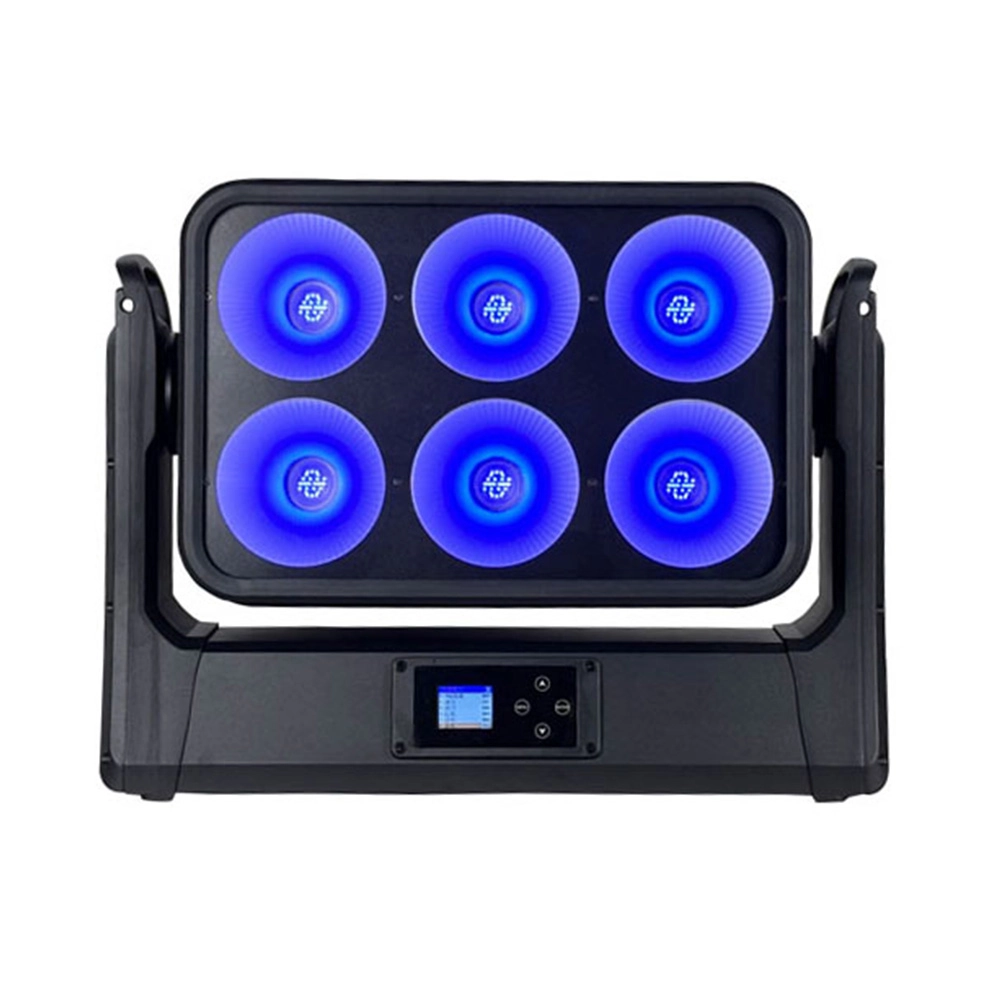
A further example is the 24×15W RGBW IP65 moving head wall washer, for which the backend lists 185° tilt movement and DMX512/RDM. For dry indoor stages, the 7×60W Aura Bee Eye moving head uses a different optical concept and is explicitly rated IP20. This distinction is critical when an event specification includes outdoor exposure or water effects. Check each linked product's current specification and model-specific manual before committing it to a bill of materials.
How to Compare Quotations for a B2B Stage Wash Project
Send the same technical brief to every supplier so that quotations can be compared on a consistent basis. Include venue or stage dimensions, fixture positions, throw distance, intended lighting purpose, control protocol, target color behavior and expected environmental conditions. Provide an approximate quantity and identify whether the installation is permanent, touring or temporary. This gives the supplier enough context to recommend an appropriate fixture format instead of simply quoting the most powerful model in the catalog.
Ask for the model revision, optical data, correct fixture power consumption, DMX channel chart, installation manual, ingress-protection documentation where relevant, weight and mounting accessories. Confirm which items are standard, which are optional and which require a separate quotation. Service terms, replacement parts, lead times and shipment packing should be recorded at the same time because they affect the total acquisition cost. For demanding installations, request sample testing or a small pilot before finalizing a large order.
When reviewing samples, use a repeatable checklist rather than relying solely on what looks impressive in a dark showroom. Test beam coverage at the proposed throw distance, white and pastel matching across units, smooth fades at low levels, noise and camera behavior where relevant. Verify channel operation with the actual console or playback system and inspect mounting access before the fixtures are approved. Record any differences against the supplier's current specification so that purchasing and production teams share one validated equipment baseline.
Conclusion
The best stage wash light is the one that achieves the desired coverage and visual consistency within the venue's control, power and environmental limits. Moving heads, static wall washers and effect-oriented wash fixtures each provide useful capabilities, but the right choice depends on the job. Technical tables should be checked for model-specific accuracy, especially when LED source wattage, fixture consumption or IP claims are presented in different ways. For a project-specific quotation from Colorful Light, share your rig layout, intended use, required quantity and documentation needs so the team can recommend suitable current products.
Stage Wash Light FAQs
What is the difference between beam angle and field angle on a stage wash light?
Beam angle typically describes the more intense central output, while field angle describes a wider portion of the emitted light. Measurement conventions may differ among manufacturers. Use actual photometric data and the proposed mounting distance to check coverage and uniformity instead of comparing angles alone.
Does adding RGBW or RGBAW+UV LEDs automatically improve color rendering?
No. Additional LED colors provide more mixing possibilities, but CRI, TM-30 performance, spectral quality and consistency depend on the complete optical and electronic system. Request measured data or test samples when accurate skin tones, costumes or broadcast colors matter.
How should I check whether an LED stage wash light will flicker on camera?
Test the chosen model using the cameras, frame rates and shutter settings planned for the production. LED refresh frequency, dimming mode, color setting and driver behavior can all affect recorded results. A single high PWM number does not guarantee flicker-free output in every shooting condition.
What is the difference between IP20 and IP65 stage wash lights?
IP20 is intended for protected, dry environments and should not be exposed to rain. IP65 denotes a much higher level of dust and water-jet ingress protection when it applies to the complete fixture. Verify the model-specific enclosure rating, connectors, installation orientation and manufacturer operating guidance before outdoor use.
Can RDM simplify setup of a large DMX512 wash-light rig?
Where supported by the fixture, network and console, RDM can assist with device identification, addressing and model-dependent monitoring or configuration. The exact supported commands vary, and not every DMX512 fixture provides the same RDM functions. Request the current fixture chart and test the proposed control topology.
How many wash lights are needed for a stage?
Quantity depends on stage dimensions, throw distance, beam and field distribution, desired uniformity, mounting options and the role of the fixtures. Use photometric plots and a lighting plan to estimate coverage, then confirm it through a venue or sample test. A fixed overlap percentage is not reliable for every fixture or layout.
◼
Product Recommendations
You May Also Like

◼
Get in Touch
Get Started with Stage Lighting Project
Want to transform your stage or venue with Colorful Light?
Explore our solutions and let us create a memorable lighting experience for your event.
Colorful Light is a professional LED stage lighting manufacturer that provides dynamic and reliable lighting solutions to customers worldwide.
© 2026 Colorful Light. All Rights Reserved.

Facebook
Instagram
LinkedIn
YouTube
Tik Tok