


Outdoor Moving Head Installation & Maintenance Checklist
- Quick Answer: What Should Crews Check Before Running Outdoor Moving Heads?
- 1. Start with the Exact Fixture Model and Revision
- 2. Inspect Equipment Before It Reaches the Truss
- 3. Review the Site and the Weather Plan
- 4. Verify Rigging, Tilt Clearance and Secondary Safety
- 5. Check Electrical Load and Connector Compatibility
- 6. Set Up DMX512 and RDM in a Controlled Sequence
- 7. Test Movement, Optics and Color Before Rehearsal
- 8. Monitor Temperature, Moisture and Unusual Behavior
- 9. After Rain or Transport, Repeat the Relevant Inspections
- 10. End-of-Show Shutdown and Storage
- 11. Handover Records for Permanent Installations
- 12. What to Confirm with the Supplier Before Approval
- Conclusion
- Outdoor Moving Head Installation FAQs
Quick Answer: What Should Crews Check Before Running Outdoor Moving Heads?
Outdoor moving head lighting should be commissioned as a complete stage system, not simply powered on after a rainproof-looking fixture has been hung. The crew needs to verify the exact model, approved mounting method, electrical and signal connections, movement clearance, environmental conditions and control profile. These checks matter before the first cue and again after transport, weather changes or a fixture replacement. A site-specific risk assessment and the current manufacturer's operating instructions take priority over any generic installation checklist.
This article concentrates on outdoor moving head installation and maintenance: receiving inspection, pre-show setup, fault isolation and equipment records. For comparisons of beam versus wash roles, LED source power, optics and buying decisions, use the Outdoor LED Moving Head Buying Guide. For basic ingress-protection questions, see the Waterproof Moving Head Technical FAQ. Keeping these subjects distinct makes it easier for buyers and technicians to find the information appropriate to their stage of a project.
1. Start with the Exact Fixture Model and Revision
A product-family name is not enough to commission a lighting rig safely. Check the fixture label, supplied user manual, electrical rating, ingress-protection statement and DMX chart against the exact unit received. Keep a record of firmware versions and any accessories or optional communication hardware that affect configuration. Different revisions can share similar product names while differing in connectors, channel modes or permissible operating conditions.
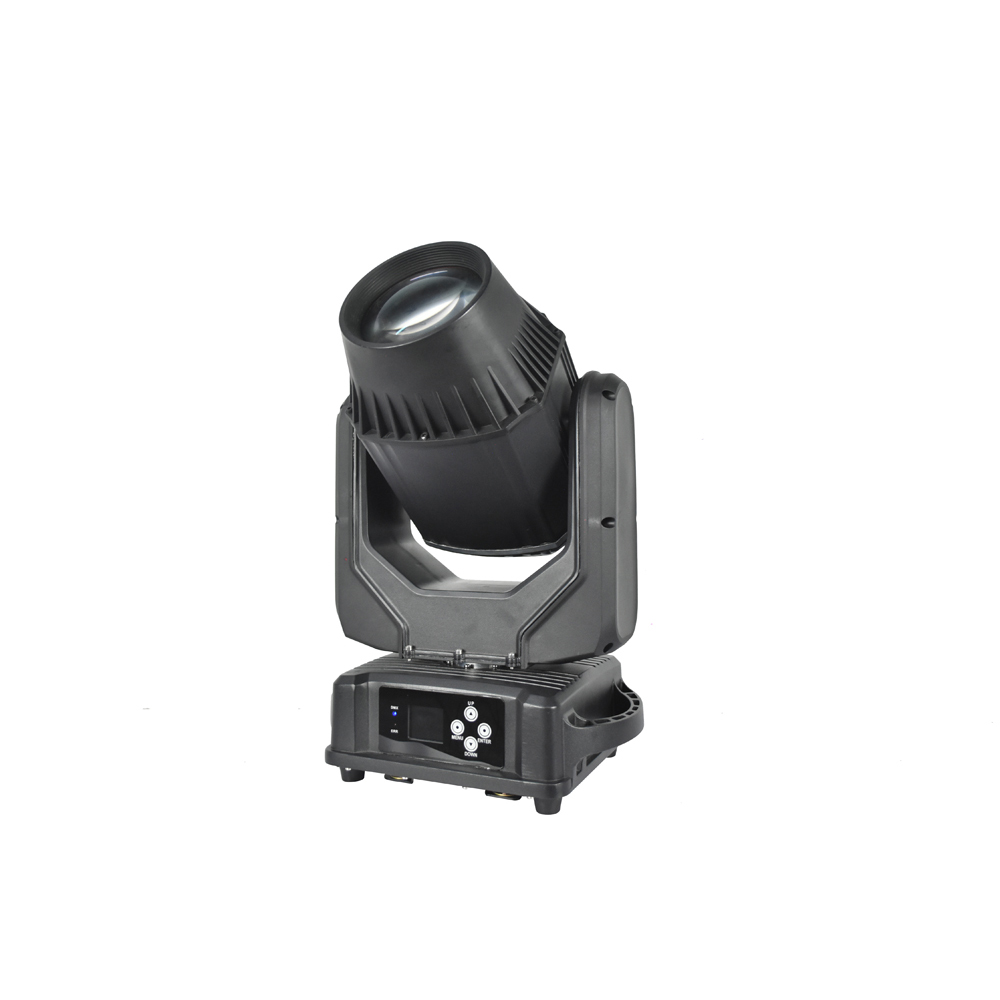
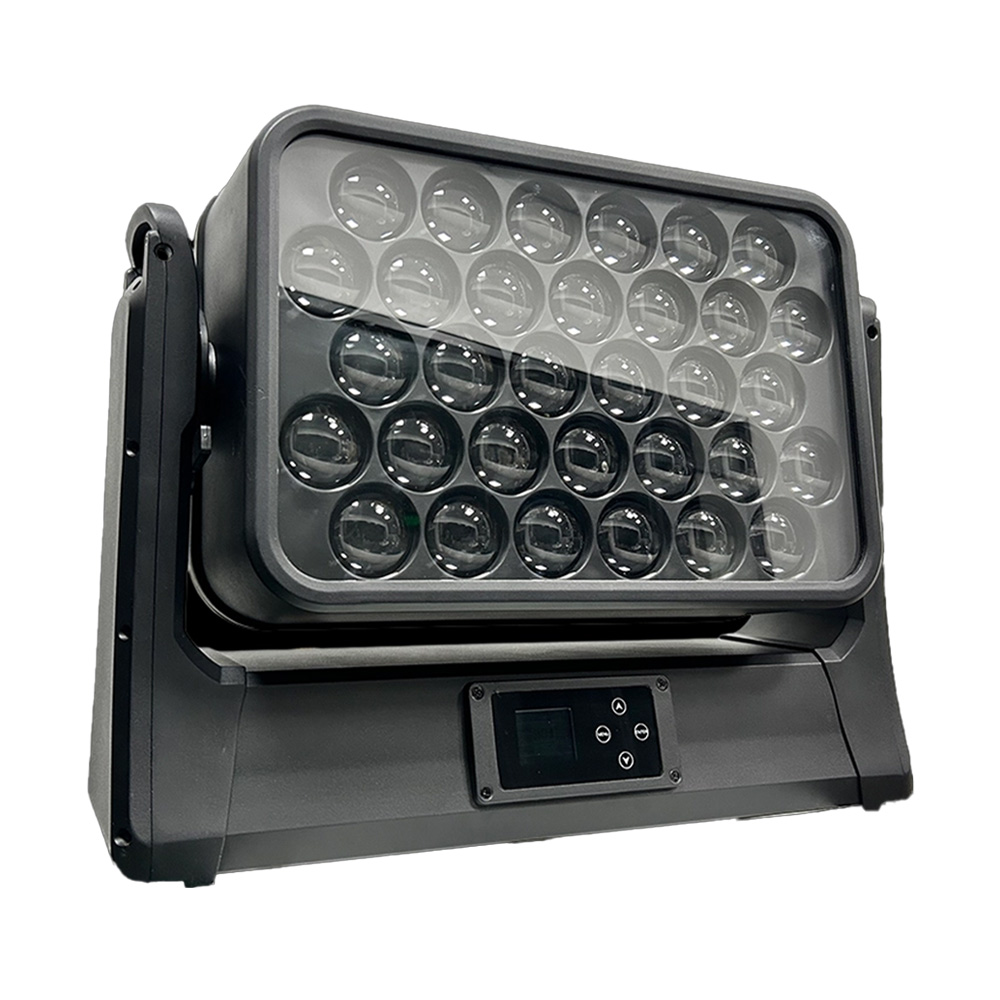
The current Colorful Light catalog includes several IP65 moving head formats, but their functions and power figures are not interchangeable. For example, the 300W Mini Beam Spot has a narrow 1.6° listed beam and 16-channel DMX512/RDM control. The 32×25W RGBW Moving Head Wash provides five color-control segments and several DMX channel modes. The two fixtures therefore require different patch files, performance tests and optical expectations.
2. Inspect Equipment Before It Reaches the Truss
Receiving checks should start before a fixture is lifted into place. Inspect the carton or flight case for impact signs, record the unit's identifier and visually check the housing, lens, handles, mounting points and external connectors for damage. Confirm that supplied clamps, brackets and safety attachments match the manual and the approved rigging method. A damaged or uncertain unit should be assessed by qualified personnel before it becomes part of an overhead installation.
Keep the inspection consistent across a shipment rather than opening one representative box and assuming the rest are identical. Compare the delivered accessories and cable types with the agreed bill of materials. Confirm which elements are standard and which options were actually ordered, especially where wireless control or specialized connectors may differ by model. Report discrepancies while product identification and shipping records are still easy to reconcile.
3. Review the Site and the Weather Plan
The operating environment includes more than the chance of rain. Consider installation height, nearby structures, audience access, drainage, ambient temperature, humidity and the weather procedures established for the event. IP65 is not a claim that a complete stage rig may operate in any storm or that the equipment is safe to immerse. Where site conditions exceed the manufacturer's documented limits, the production team should choose a more suitable arrangement or suspend operation as required by its safety plan.
Wind deserves a dedicated review because a moving head is a component of a larger suspended system. Assess the support structure, attachment arrangement and operational thresholds under applicable engineering guidance rather than treating a fixture's motor torque as proof of wind resistance. Movement during a show can change the head's physical profile, which reinforces the need for clearance and rigging review. Establish who monitors changing conditions and who is authorized to stop the show before the equipment is put into service.
4. Verify Rigging, Tilt Clearance and Secondary Safety
The fixture's approved orientation and mounting interface should be taken from its current manual. Check the loading and security of the supporting structure, the appropriate clamps or brackets and the specified secondary safety attachment before a unit is suspended. Confirm that the moving head has adequate room to pass through the full intended pan and tilt range without touching scenery, adjacent fixtures or power cables. The clearance test should include actual show cues, not merely the parked position.
Routing a cable alongside moving machinery requires particular attention. Secure cables using approved practices that avoid tension at connectors and prevent snagging or abrasion during movement. Do not use a power cord or data cable as a structural attachment. Any lifting, electrical connection or overhead work must be performed by appropriately qualified technicians following local requirements and the manufacturer's instructions.
5. Check Electrical Load and Connector Compatibility
Electrical planning must use verified fixture-level input and consumption information, not simply the wattage appearing in a product name. A moving head also contains drive motors, power supplies, cooling equipment and control electronics that affect the total load. Review the specified voltage, electrical protection, permissible connectors and any limits on linking multiple fixtures. The power-distribution design and installation should be checked by qualified personnel before equipment is energized.
On the current Colorful Light product record, the 300W IP65 Mini Beam Spot lists a 200W white LED source module while its whole-fixture consumption is 300W. The 32×25W RGBW moving wash has a different construction and lists 1200W power consumption. These numbers illustrate why a mixed rig cannot be planned from the source wattages alone. Require the current technical sheet for each ordered model and build circuit schedules using the actual supplied configuration.
6. Set Up DMX512 and RDM in a Controlled Sequence
Addressing errors are easier to diagnose when a rig is commissioned one zone at a time. Begin with a known-good data path, the approved console personality and a fixture configured to the intended start address. Test master dimmer and shutter functions before moving into pan, tilt, zoom, color and effect channels. Record the successful configuration so the same result can be recreated after a unit is swapped or the show file is restored.
RDM may allow compatible fixtures to identify themselves and support model-specific configuration or diagnostic functions, but available commands vary. Do not assume that every DMX512 device offers the same RDM features or that all current Colorful Light models have identical personalities. On the 32×25W RGBW IP65 Moving Head Wash, the current backend table lists 11, 22 and 37 channel modes. Confirm the supplied fixture's matching channel chart before building a console patch, particularly when segmented control is part of the show design.
7. Test Movement, Optics and Color Before Rehearsal
A control signal reaching the fixture does not prove that the full installation is ready. After rigging and setup, check the intended movement range at a safe test speed, verify the optical function and confirm that the output reaches the required stage positions. Compare dimming fades and color transitions against the show cues rather than relying only on full-intensity demonstrations. If cameras are used, include realistic shutter and frame-rate settings in the test because electronic light modulation can interact with recording equipment.
For a moving head wash, compare color output and zoom at several positions on the stage. The 32×25W RGBW IP65 Moving Head Wash lists 4°–60° zoom and five color segments, making segment behavior relevant to programming. Those specifications do not guarantee uniform coverage or accurate skin-tone rendering under every setup. Use actual lighting samples and, where relevant, photometric measurements before a large run is approved.
8. Monitor Temperature, Moisture and Unusual Behavior
During rehearsals and operation, watch for unexpected reductions in brightness, diagnostic warnings, abnormal fan behavior or inconsistent motion. Some fixtures include thermal protections that affect performance when their operating limits are approached. If a fixture behaves abnormally, isolate it using the manufacturer's safe shutdown procedures and investigate the problem before returning it to a show. Avoid treating a protection warning as merely a software nuisance that can be ignored to continue operation.
Condensation can also require investigation, especially when a fixture moves between warm storage and a humid outdoor environment. An IP rating relates to defined ingress tests, not a guarantee against every form of moisture-related problem or damage. If internal moisture, compromised seals or corrosion are suspected, use qualified service personnel and approved maintenance methods. Do not dismantle a sealed enclosure during a live event as an improvised troubleshooting step.
9. After Rain or Transport, Repeat the Relevant Inspections
Inspection frequency depends on manufacturer guidance, site conditions and how often equipment is handled. Following transport or unusual environmental exposure, check for visible damage, disturbed connectors, cable strain, lens contamination and movement restrictions before reuse. Do not spray water into connectors or apply unapproved cleaning chemicals in the belief that an IP rating makes the fixture immune to them. Keep any weather-related incidents in the service history so recurring faults can be recognized.
Touring crews should use a consistent equipment-identification process across cases and venue dates. Document which fixture was installed in which rig position, what DMX mode was used, and whether any maintenance warning or abnormal behavior was reported. If a unit is replaced, verify that the replacement has the correct configuration before treating it as interchangeable. A clear service log is more valuable than an informal note that a light seemed to work after a quick power cycle.
10. End-of-Show Shutdown and Storage
Shutdown procedures should follow the manufacturer's instructions for the actual model, including any required cooling or safe power-isolation steps. Disconnecting and handling equipment while it is still hot or energized can introduce avoidable hazards. Before packing, inspect fixtures and accessories for damage, account for all removable hardware and protect optical surfaces from impact. Equipment should be dry and suitable for storage according to its model-specific requirements before it is enclosed for transport.
Store approved manuals, DMX profiles and service records with the equipment documentation so that the next crew can reproduce the accepted setup. Keep optional parts and controls identified rather than assuming they are standard across the full inventory. Where a fixture has shown repeated error conditions, flag it for inspection rather than placing it directly back into the rental rotation. This reduces the chance that an unresolved issue becomes an operational problem at the next site.
11. Handover Records for Permanent Installations
A permanent installation needs an accessible record of mounting locations, the approved power and control design, fixture identifiers and model revisions. Include the appropriate DMX addressing schedule, firmware details, manuals and documented operating limits. Identify which party performs routine inspections, which party can authorize service, and how weather-related shutdown decisions are communicated. These records help the operator distinguish an installation issue from a fixture fault months after the original commissioning team has left.
Provide the venue with an understandable set of procedures, not only a pile of technical PDFs. Record how to recognize and report moisture, movement, temperature or control faults without encouraging unqualified staff to open electrical or sealed equipment. If the system includes multiple fixture models, the handover should show which procedures and documents apply to which unit. Treat future changes to firmware, control hardware or physical rigging as modifications that need appropriate validation and record updates.
12. What to Confirm with the Supplier Before Approval
A B2B purchase should establish what the supplier has actually tested and documented. Ask for the current model-specific manual, approved IP documentation where necessary, electrical ratings, control protocol and channel chart, mounting instructions and supported environmental limits. Verify whether required accessories such as clamps, safety hardware, protective cases and optional wireless functions are included in the commercial quotation. Service availability, lead time and warranty terms should be confirmed for the relevant order rather than treated as universal guarantees.
For a broader decision on which effect and fixture family to specify, review the Outdoor LED Moving Head Buying Guide. If an existing outdoor rig is being evaluated, provide the supplier with photographs of the correct equipment, its identification details, operating environment and a description of observed faults. The project brief should distinguish confirmed facts from assumptions about product names or ratings. That helps the support team give an applicable answer without mixing instructions from another model.
Conclusion
Reliable outdoor moving head operation depends on a repeatable process of inspection, installation, commissioning and maintenance. The same rig may combine narrow-beam effects, RGBW moving washes and strobes, but the safe operating procedures and control profiles must be matched to each model. Recording the approved setup makes later touring, repair and replacement decisions more predictable. For model documentation or project-specific installation questions, use the Colorful Light contact page and provide the full fixture and venue details.
Outdoor Moving Head Installation FAQs
What should be checked before rigging an outdoor LED moving head?
Verify the exact model and current manual, inspect the fixture and accessories, confirm the approved mounting method and secondary safety attachment, and assess movement clearance and the supporting structure. Qualified personnel should handle overhead rigging and power installation according to applicable rules.
Can an IP65 moving head be operated in heavy storms?
IP65 is a defined ingress-protection rating, not a blanket approval for all storm, wind or site conditions. Apply the venue's safety and weather procedures and the model's documented operating limits. Stop or modify the installation when conditions exceed those limits.
Why is my moving head not responding after being connected to DMX?
Check the console patch, start address, universe, selected channel personality and signal path with a known-good cable. Test one fixture in a controlled setup and verify dimmer or shutter channels first. Use the manual matching that model and firmware revision.
How often should outdoor moving head seals and connectors be inspected?
Follow the manufacturer's model-specific maintenance intervals and add inspections after transport, damage or unusual weather exposure. Look for visible signs of compromised connectors, seals or cable strain without opening a sealed or energized fixture. Use qualified service personnel when the protection system may be affected.
What do I do if an outdoor moving head shows a temperature warning?
Follow the documented safe shutdown and diagnostic procedure for that model. Check permitted external ventilation conditions and recorded status information without bypassing protective controls. Seek qualified service if the warning returns or if the unit has signs of damage.
What should an installation handover file include?
Include fixture model and revisions, identifiers, mounting positions, power and DMX layouts, selected channel modes, manuals, relevant environmental limits and inspection records. Also identify service responsibilities, shutdown procedures and the supplier's agreed support arrangements. Keep the documentation updated when the setup changes.


◼
Product Recommendations
You May Also Like

◼
Get in Touch
Get Started with Stage Lighting Project
Want to transform your stage or venue with Colorful Light?
Explore our solutions and let us create a memorable lighting experience for your event.
Colorful Light is a professional LED stage lighting manufacturer that provides dynamic and reliable lighting solutions to customers worldwide.
© 2026 Colorful Light. All Rights Reserved.

Facebook
Instagram
LinkedIn
YouTube
Tik Tok