


Waterproof Moving Head Light FAQ: IP65 vs IP66 & Sealing
- Quick Answer: What Does a Waterproof Moving Head Light Actually Mean?
- IP65 vs IP66: What Changes in the Water-Protection Test?
- Does IP67 Automatically Make a Better Outdoor Stage Fixture?
- Whole-Fixture Protection Is Different from Connector Protection
- Why Can Condensation Appear Inside an IP-Rated Moving Head?
- How Do Sealed LED Moving Heads Dissipate Heat?
- What About Coastal Corrosion, Cleaning Chemicals and UV Exposure?
- Can an IP65 or IP66 Moving Head Start in Freezing Conditions?
- How Often Should Waterproof Seals and Gaskets Be Inspected?
- Real Product Comparison: IP65 Moving Heads and an IP20 Indoor Model
- What Documents Prove a Water-Protection Claim?
- How Should Buyers Compare Outdoor Moving Head Quotations?
- Conclusion: Verify the Fixture, Not Just the IP Label
- Waterproof Moving Head Technical FAQs
Quick Answer: What Does a Waterproof Moving Head Light Actually Mean?
A waterproof moving head light is a stage luminaire whose tested enclosure protection matches the environmental conditions expected in the installation. The word waterproof should not be treated as an unlimited performance promise because water exposure varies substantially between rain, water jets, high-pressure washing and immersion. A model advertised as IP65 has a defined dust-tight and water-jet protection classification when that rating applies to the complete assembly. Buyers should connect the published rating to the exact product revision, the approved connections and the manufacturer's installation limits.
The first step in checking an outdoor moving head is therefore a documentation check rather than a comparison of headline wattage. Ask which complete fixture was tested, whether required connector caps or mating cables formed part of that configuration, and which operating orientations are permitted. A moving head combines electrical parts, optics, control hardware and mobile mechanical elements that must work together in the intended environment. The answer should identify the actual unit being purchased, not merely an IP-rated accessory or another model from the same supplier.
IP65 vs IP66: What Changes in the Water-Protection Test?
The IP code defined by IEC 60529 uses separate numerals for solids and water ingress protection. In IP65 and IP66, the first digit six denotes dust-tight protection, while the second distinguishes between water jets and more powerful water jets under standardized testing. IP66 therefore reflects a more demanding water-jet condition than IP65 within that classification. Neither code promises survival during every storm, operation under water, or unlimited cleaning pressure.
These codes also do not measure the complete quality of an outdoor moving head. One IP65 fixture might provide better optics or a more appropriate console personality for a particular touring production than a different model carrying an IP66 claim. Suitability additionally depends on electrical input, weight, cooling, permitted temperatures, connectors and rigging instructions. A supplier comparison should therefore examine the tested product and site exposure rather than automatically selecting the larger IP number.
Does IP67 Automatically Make a Better Outdoor Stage Fixture?
IP67 addresses a defined temporary immersion condition, which differs from the jet-based conditions represented by the water-protection digits five and six. It is not sound engineering practice to assume that a product carrying an immersion rating has necessarily passed every more powerful jet test without confirming the relevant documentation. The expected hazard should determine which protection evidence is required. For most stage projects, installers must examine rain exposure, electrical connections and permitted operation before they worry about underwater use.
If the event includes fountains, water screens, performers throwing water or routine washdown, tell the supplier precisely how the fixture will be exposed. Ask whether its tested configuration and manufacturer guidance cover the actual distance, direction and duration of exposure. Even a fixture selected for outdoor work must remain compatible with the venue's safety and power-distribution procedures. A broad statement that a product is waterproof cannot replace a project-specific evaluation involving water effects.
Whole-Fixture Protection Is Different from Connector Protection
An IP65 XLR or power connector describes the protection capability associated with that connector, not automatically the rating of the whole moving head. A complete unit has other possible ingress paths, such as housings, joints, lenses, displays, access covers and cable entry interfaces. Its laboratory configuration may also require fully secured connectors, specific mating parts and a permitted orientation. Check the complete enclosure record before converting connector information into a claim about the luminaire itself.
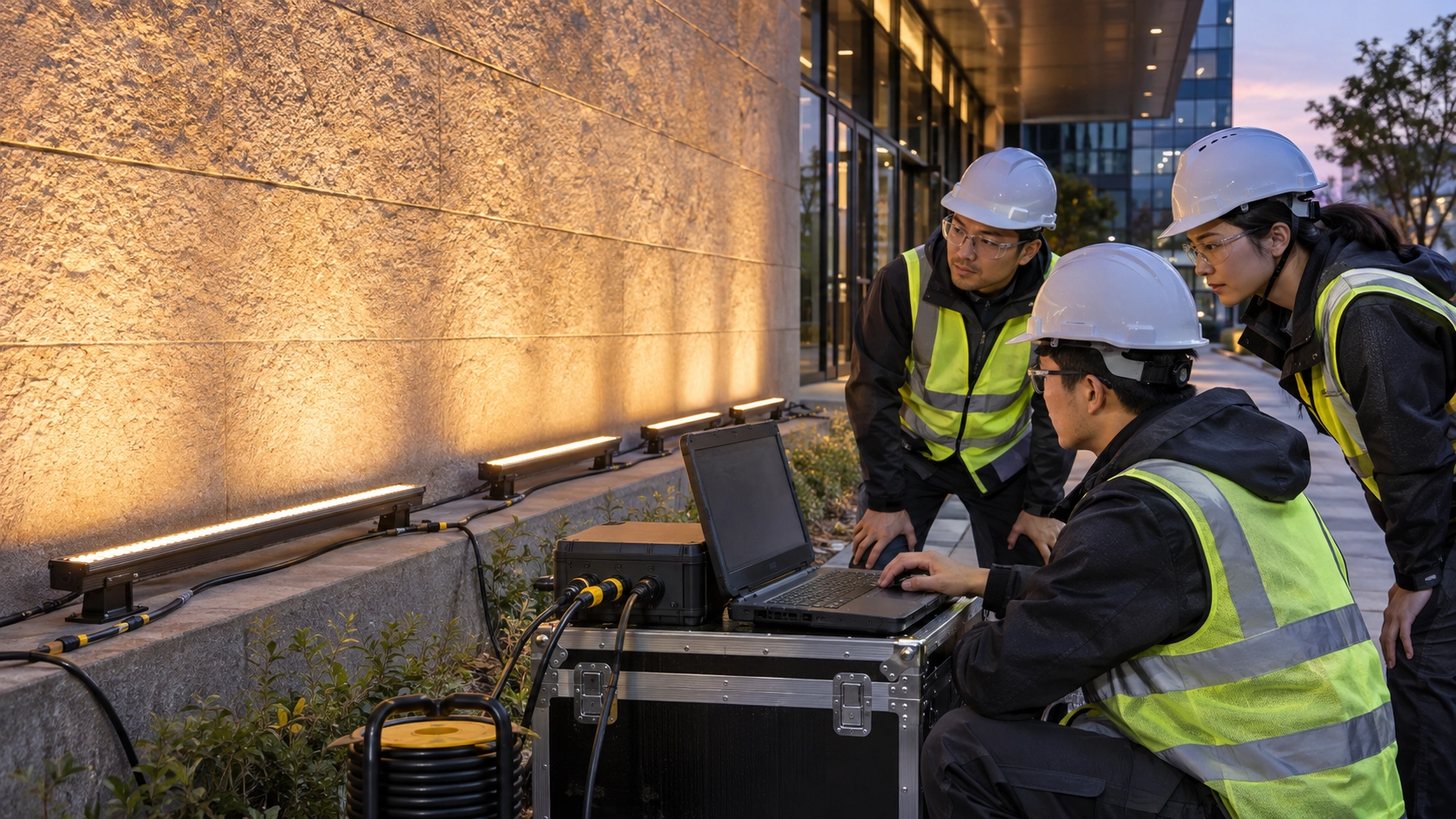
Installation conditions matter because a fixture can be connected differently in the field than it was in a laboratory. Open covers, unmatched connectors, damaged mating surfaces and strained cables can undermine a weather-resistant design. The exact handling rules should come from the supplied installation manual, not from a generic description of IP65 or IP66. When several moving head models share a rig, keep their approved connector arrangements documented separately rather than assuming every assembly is identical.
Why Can Condensation Appear Inside an IP-Rated Moving Head?
Condensation is linked to moisture and temperature changes, so its mechanism is not necessarily the same as a jet of rainwater entering through a failed external seal. A fixture moved between humid outdoor air and a colder environment can experience a different set of risks from one exposed briefly to rain. Some enclosure designs may include pressure-equalization features or other measures to control moisture, but their presence depends on the actual model. An IP65 or IP66 marking alone does not prove that the fixture has such a component or that lens fogging can never happen.
When fogging occurs, record the environmental conditions and the timing of the symptom before taking corrective action. Persistent internal moisture, visible corrosion or abnormal electrical behavior calls for an assessment under the manufacturer's safe servicing procedures. Do not open a sealed housing during an energized show or improvise changes that would compromise its tested protection. A documented inspection by qualified personnel is more useful than assuming that all observed moisture can be removed by warming the fixture.
How Do Sealed LED Moving Heads Dissipate Heat?
Weather-resistant moving heads still generate heat through LED modules, drivers, power supplies, movement motors and associated electronics. Enclosure designers may use heat sinks, internal circulation, temperature monitoring or active fans, depending on the exact design. These solutions can be effective without establishing that every IP-rated fixture contains heat pipes, a particular membrane or a fixed cooling assembly. The buyer should request the operating instructions and thermal performance information applicable to the actual product.
Continuous high output, direct sunlight and high ambient temperature can all affect operating conditions even when a fixture has an ingress-protection classification. Some electronic systems may reduce output or report warnings when protection thresholds are reached. That behavior should be assessed using the model's own diagnostic and maintenance information rather than treated as a general defect. An advertised LED-source lifetime is not a guarantee that the complete lighting fixture will require no service during that period.
What About Coastal Corrosion, Cleaning Chemicals and UV Exposure?
An ingress-protection test does not by itself establish how well a stage fixture resists long-term salt spray, coating damage or chemical contamination. Coastal environments can expose fasteners, finishes, connectors and optical surfaces to conditions that differ from ordinary rain. Projects with such requirements may need additional material specifications, protective-finish details or corrosion-test evidence. It is not appropriate to claim that a particular Colorful Light model has undergone salt-spray testing without documentation tied to that model.
An occasional outdoor concert and a permanent seaside installation create very different maintenance and environmental demands. Buyers should describe the site's atmosphere, expected exposure and service-life requirements to suppliers in writing. Cleaning methods should also be checked because inappropriate chemicals or water pressures can affect coatings, seals and connectors. The IP number remains one part of this evaluation, but cannot substitute for evidence about corrosion or long-term environmental compatibility.
Can an IP65 or IP66 Moving Head Start in Freezing Conditions?
An ingress-protection classification does not specify a moving head's minimum startup temperature or its ability to operate during freezing weather. Motors, seals, lubricants, displays and electronic components may have environmental limits that vary between product versions. Some equipment may provide heating or special cold-start behavior, but neither function can be assumed merely because the enclosure is weather-resistant. The approved startup and working-temperature ranges should be requested from the supplier for the actual product.
Storage temperature and operating temperature should not be treated as interchangeable values. A fixture that can be stored at a low temperature may still need different conditions before it can be powered or moved safely. If freezing conditions are expected, include them in the technical specification and follow the documented model-specific procedure. Production staff should also evaluate weather and venue safety rules rather than relying on the IP marking as evidence of cold-weather reliability.
How Often Should Waterproof Seals and Gaskets Be Inspected?
Seal maintenance intervals depend on product construction, usage, transport history, weather exposure and the manufacturer's instructions. There is no universal calendar interval or mandatory pressure-test schedule that can be assigned to every waterproof moving head. Touring equipment may need additional inspections after handling, transport damage or unusual exposure, while permanent installations require an appropriate documented maintenance plan. Qualified service technicians should perform work that might affect enclosure integrity.
An effective service record identifies the exact fixture, model revision and relevant observations. It can include visible damage, unusual fogging, connector problems, corrosion signs and service actions taken by authorized personnel. If the enclosure has been opened for repair, verify whether additional sealing checks or revalidation are required before returning the light to outdoor use. This protects the integrity of the technical claim far better than applying an unsupported one-size-fits-all maintenance promise.
Real Product Comparison: IP65 Moving Heads and an IP20 Indoor Model
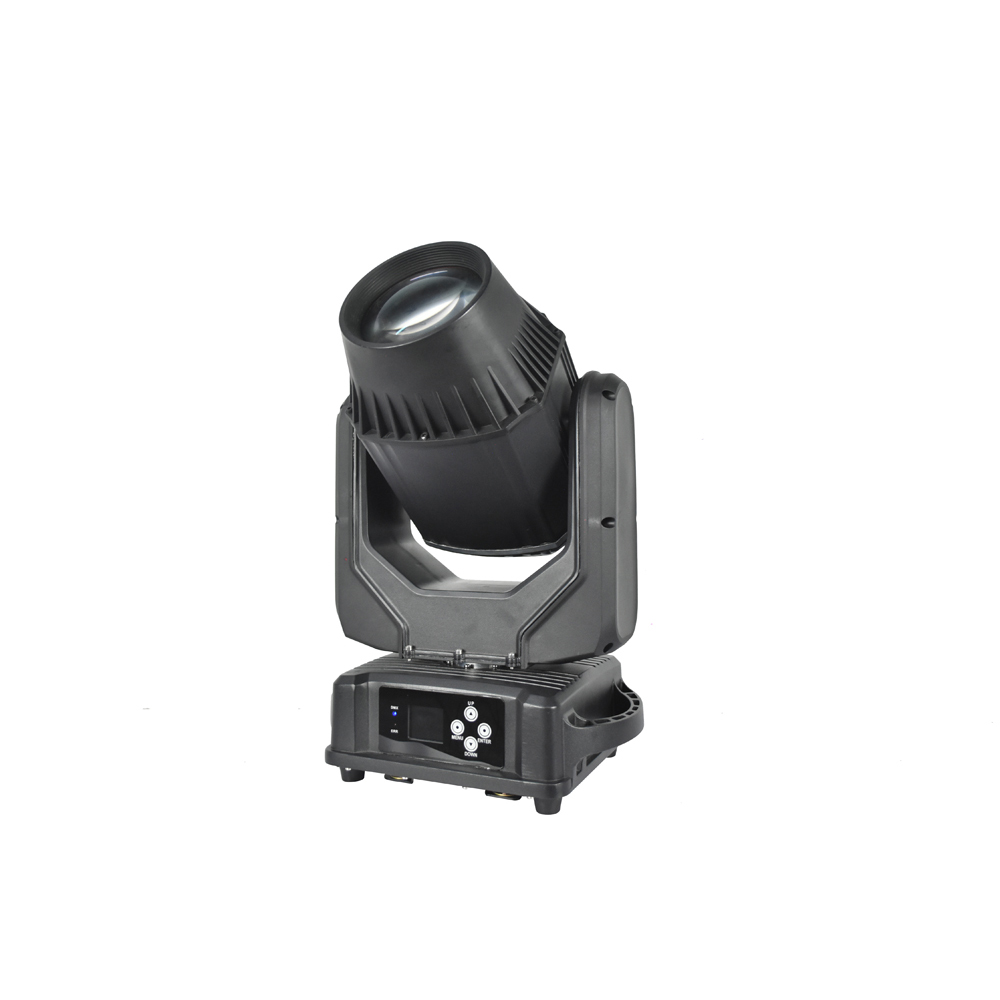
Colorful Light's current product backend lists a 300W IP65 Mini LED Moving Head Beam Spot with a 1.6-degree beam and DMX512/RDM control. Its technical specifications separately describe a 200W white LED module and 300W whole-fixture power consumption. This model illustrates an outdoor-oriented beam fixture whose optical and electrical functions still need to be verified alongside its exact enclosure documentation. A buyer should not infer an IP66 rating simply because IP66 is discussed in this technical FAQ.
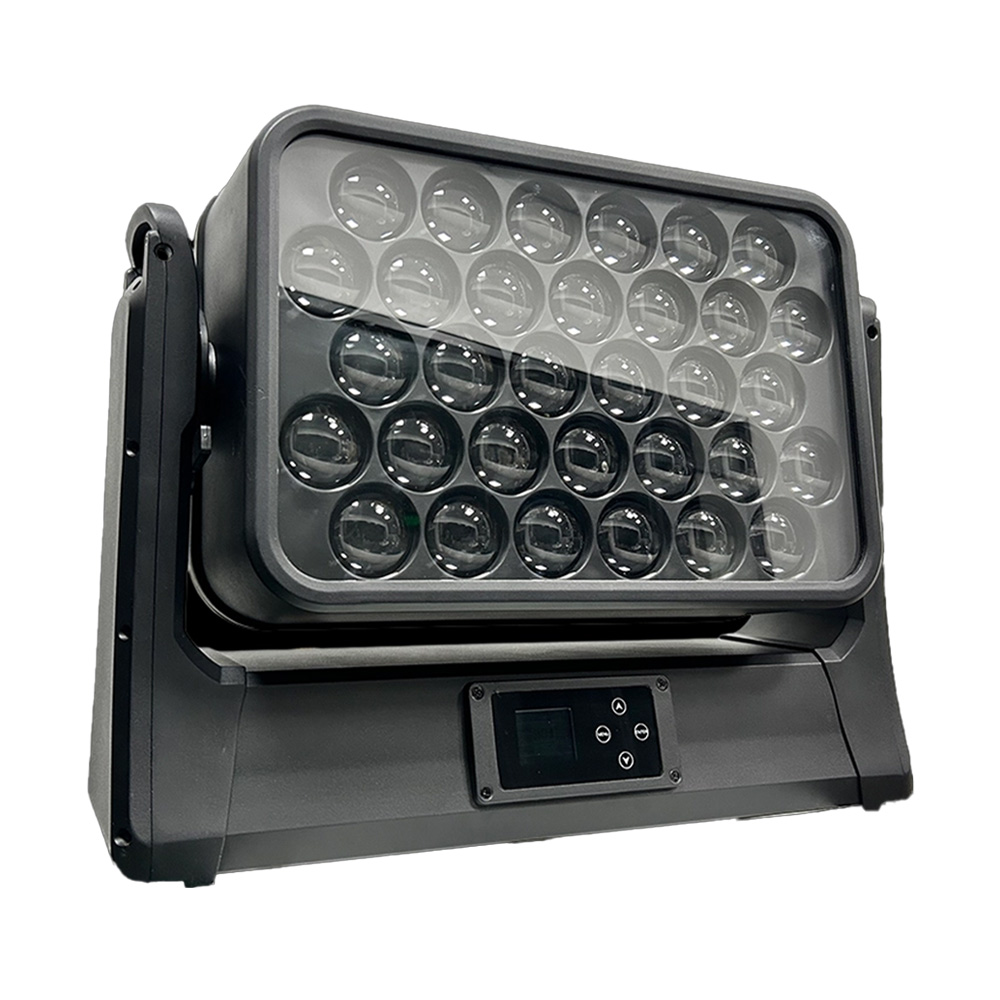
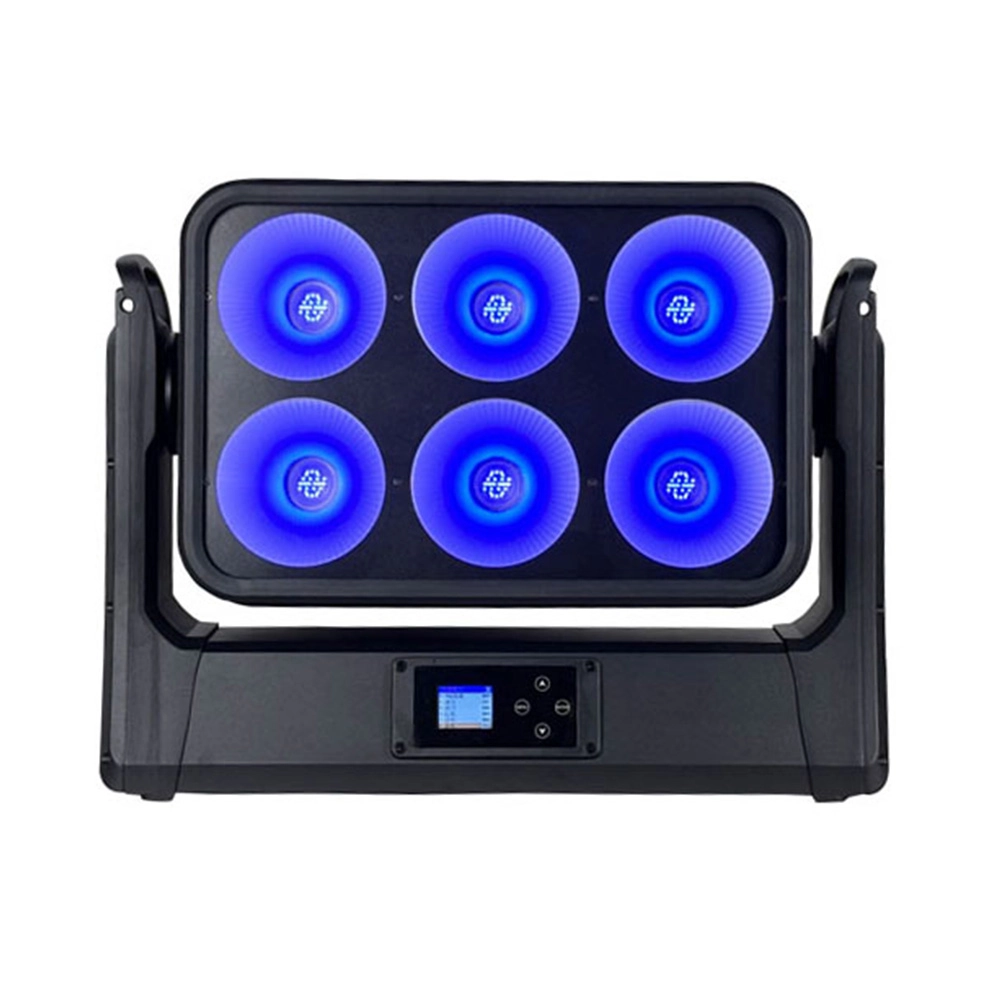
The same catalog lists a 32-by-25W RGBW IP65 Moving Head Wash Light with five control segments, a 4-to-60-degree zoom range and DMX512/RDM support. By contrast, its 7-by-60W Aura Bee Eye Moving Head is rated IP20 and intended for dry indoor environments. These fixtures may all create stage lighting effects, but their declared exposure limits are not interchangeable. Comparing them helps show why a project team should establish environmental suitability before evaluating color effects, zoom ranges and fixture quantities.
What Documents Prove a Water-Protection Claim?
The most useful evidence identifies the specific tested model, standard, test configuration and relevant product revision. Ask for a model-level technical sheet, applicable ingress-protection report or other supporting evidence, the installation manual and the approved connection arrangement. A general company certificate does not necessarily establish that every product in a catalog has passed a particular enclosure test. Check that the technical file and commercial quotation describe the same fixture version.
Keep electrical ratings, control charts, ambient operating limits and mounting instructions alongside the ingress-protection evidence. For special exposure, request any additional corrosion, temperature or water-effects documentation separately instead of assuming it was included in the standard IP test. A supplier should distinguish mandatory installation conditions from optional accessories such as special cable sets or control modules. This information gives designers, purchasers and service personnel a single verified baseline for decision-making.
How Should Buyers Compare Outdoor Moving Head Quotations?
Send each supplier a brief that states the fixture role, quantity, expected exposure, mounting positions, control network, electrical constraints and intended service arrangement. For water resistance, describe whether the light faces occasional rain, persistent humidity, direct spray or other effects instead of specifying a generic waterproof requirement. Ask for the exact model documents and clearly identify which features are confirmed and which are optional. A consistent request makes commercial comparisons more meaningful than choosing whichever quotation uses the strongest marketing language.
A useful evaluation also considers access for maintenance and the availability of replacement parts. Compare the current operating and installation instructions with the venue plan before committing to a large order. If the project has unusual exposure or safety requirements, arrange a sample review and additional documentation where appropriate. Record all assumptions and exceptions in writing so that purchasing decisions do not inadvertently become unsupported engineering claims.
Conclusion: Verify the Fixture, Not Just the IP Label
IP65 and IP66 are useful technical classifications, but they only address defined categories of enclosure ingress protection. A reliable outdoor moving head specification also requires accurate connection details, temperature limits, model identification and appropriate installation methods. The Outdoor LED Moving Head Buying Guide provides fixture-selection context, while the Outdoor Moving Head Installation and Maintenance Guide addresses field procedures. For a product-specific inquiry, share the exact model and exposure details through the Colorful Light contact page.
Waterproof Moving Head Technical FAQs
How does IP65 differ from IP66 on a moving head light?
Both are dust-tight classifications when applied correctly under IEC 60529. IP65 addresses defined water jets, while IP66 addresses more powerful jets. Neither permits unrestricted pressure-washing or immersion. Verify the model-specific complete enclosure test evidence and installation conditions.
Does an IP65-rated connector prove the entire moving head is IP65?
No. A connector rating is not evidence that the whole luminaire has the same protection. The test must relate to the correct assembled fixture and its required connections. Confirm the test configuration, model designation and current installation manual.
Will an IP65 waterproof moving head ever have condensation?
It can be affected by moisture and temperature changes depending on the design and environment. Some fixtures may use pressure-equalization features, but they are not universal or guaranteed to eliminate fogging. Persistent moisture requires diagnosis using model-specific service procedures.
Can IP66 stage lighting operate in salt spray or freezing temperatures?
Not solely on the basis of IP66. Ingress protection does not establish a product's corrosion rating, long-term salt exposure resistance or permissible cold-start temperature. Ask for separate model-specific environmental evidence and instructions before use in these conditions.
How often should a waterproof moving head be pressure-tested?
Follow the manufacturer's maintenance and inspection instructions for the actual model and service conditions. There is no universal pressure-test or seal replacement schedule that fits every moving head. Additional checks may be required after repairs, damage or unusual exposure, performed by qualified personnel.
Are Colorful Light moving head lights all waterproof?
No. The 300W Mini Beam Spot and 32x25W RGBW Moving Head Wash are listed as IP65, while the 7x60W Aura Bee Eye is rated IP20 for dry indoor applications. Do not copy an enclosure rating from one model to another. Verify the supplied fixture's current technical documents.
Is an IP67 moving head always more suitable for an outdoor stage than IP65?
Not automatically. IP67 concerns temporary immersion under defined conditions, while IP65 concerns water-jet exposure. The most relevant evidence depends on the actual water exposure and overall installation. Check the exact tests covered rather than treating the largest number as universally best.
Which documents should buyers request for an outdoor moving head?
Request the specific product technical sheet, relevant ingress-protection test evidence, current user and installation manual, electrical rating, operating-temperature limits and approved connector configuration. Obtain additional corrosion or special-exposure evidence when the site requires it. Confirm the documents match the ordered model revision.

◼
Product Recommendations
You May Also Like

◼
Get in Touch
Get Started with Stage Lighting Project
Want to transform your stage or venue with Colorful Light?
Explore our solutions and let us create a memorable lighting experience for your event.
Colorful Light is a professional LED stage lighting manufacturer that provides dynamic and reliable lighting solutions to customers worldwide.
© 2026 Colorful Light. All Rights Reserved.

Facebook
Instagram
LinkedIn
YouTube
Tik Tok